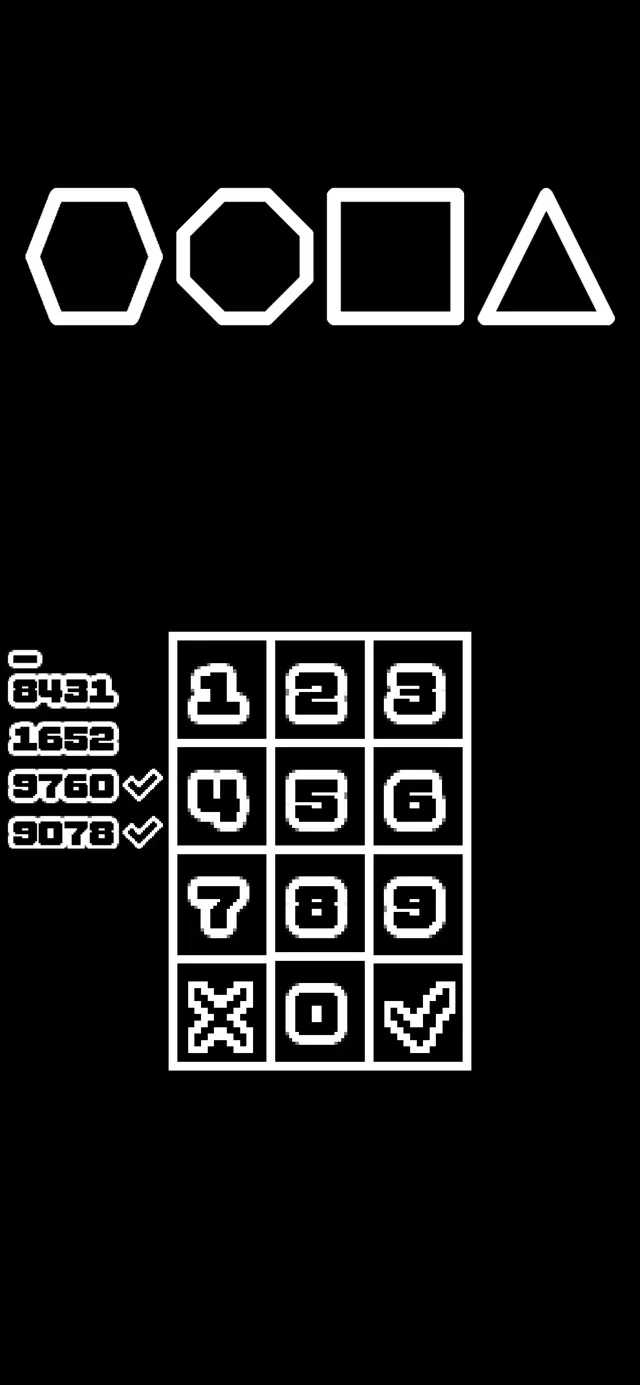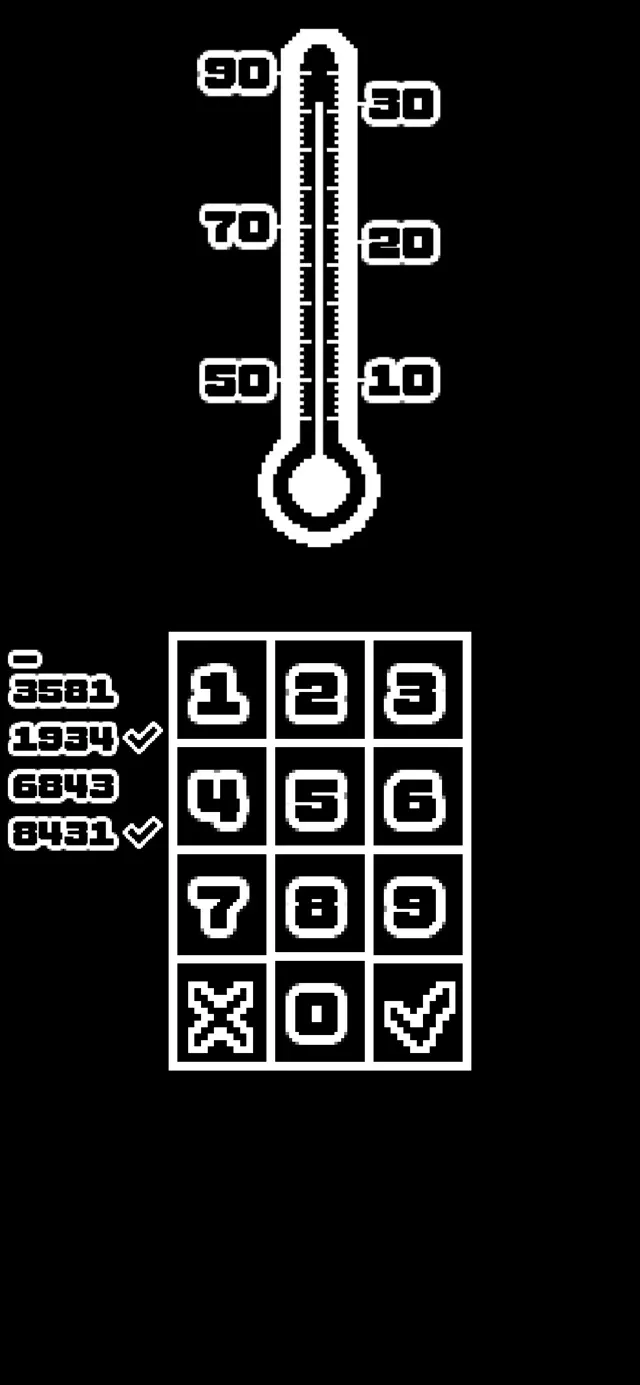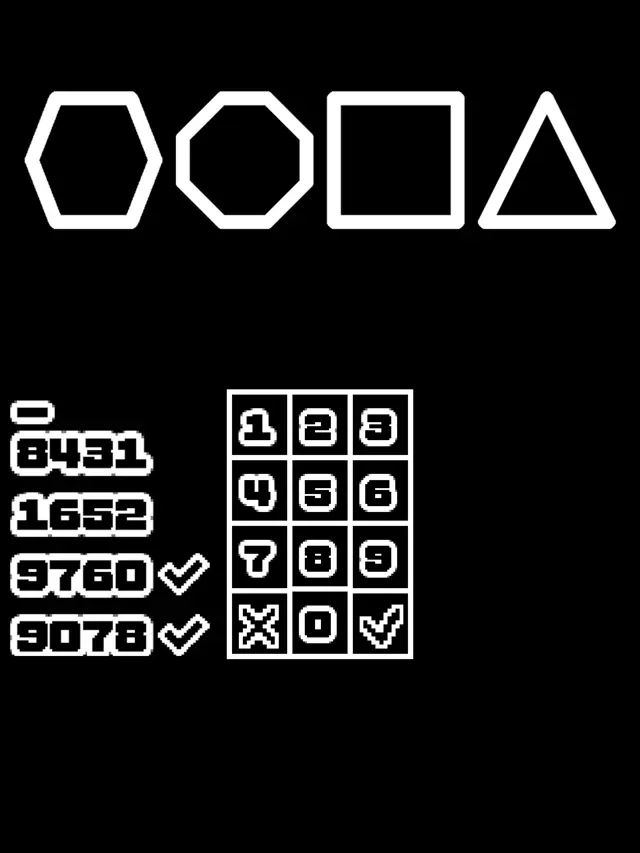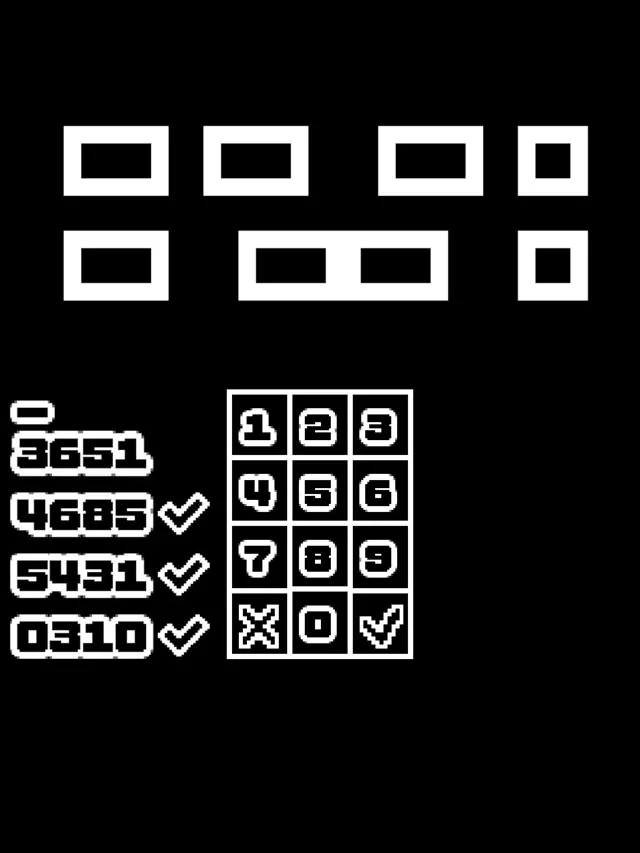
Trampoline Tales delivers a masterclass in elegant, hyper-focused puzzle design with What's the Password?. In an era where mobile games constantly bombard players with flashing colors, daily login timers, and intrusive monetization, this title stands out by doing the exact opposite. Its clean, minimalistic black-and-white visual style strips away every ounce of unnecessary friction, leaving you alone with pure, satisfying logic puzzles that respect your intellect.
The 100-puzzle progression is tightly paced, wrapping up in a clean two-hour window that never overstays its welcome. What makes the design so clever is the randomization engine; you can't simply look up a guide online if you get stuck because the exact numerical solutions change. Instead, you have to truly master the deductive rules the game teaches you. The optional hint system is gracefully integrated, providing just enough of a nudge to help you cross a mental finish line without robbing you of that brilliant 'aha!' feeling. For anyone who misses the golden era of clever, distraction-free mobile puzzle games, this is an absolute gem.
After getting completely burned out on modern mobile games that feel like thinly veiled slot machines, it is incredibly refreshing to run into a premium, self-contained puzzle game like What's the Password? TrampolineTales dropped all the fluff here. You are just looking at a stark, high-contrast interface decoding four-digit logic sequences. It is essentially an advanced, highly refined iteration of traditional codebreaking and Mastermind mechanics, and it works beautifully. The inclusion of randomized solutions is a stroke of design genius—it forces you to actually learn the underlying logical deduction principles rather than just looking up a text walkthrough when you hit a wall. The jazzy soundtrack is fantastic and sets a great, focused mood that makes you feel like an old-school cryptographic investigator. My main complaints are entirely on the presentation side. The minimalism is functional, but it occasionally crosses the line into looking cheap, and the font scaling on smaller phone screens can make certain readouts unnecessarily difficult to read comfortably. At a flat premium price tag, it is a tight, elegant package that challenges your brain without trying to pick your pocket. It is over in a few hours, but it leaves a much better aftertaste than 99 percent of the app store.
Performance: Flawless technical performance. The simple 2D rendering pipeline consumes minimal battery power and produces zero system lag. Scaling optimization could be improved for smaller mobile aspect ratios.
Buy if: You love pure, quiet logic puzzles like Sudoku, Mastermind, or Wordle variations and want a premium app with no ads or gating.
Skip if: You require vibrant visuals, narrative context, or explosive sensory rewards to stay engaged with a puzzle game.
Available on: iPhone, iPad, iPod
Version 1.0.14Fri May 29 2026
Localization fixes
Requires iOS 14.0 or later. Compatible with iPhone XS, iPhone XS Max, iPhone XR, iPhone 11, iPhone 11 Pro, iPhone 11 Pro Max, iPhone SE (2nd generation), iPhone 12 mini, iPhone 12, iPhone 12 Pro, iPhone 12 Pro Max, iPhone 13 Pro, iPhone 13 Pro Max, iPhone 13 mini, iPhone 13, iPhone SE (3rd generation), iPhone 14, iPhone 14 Plus, iPhone 14 Pro, iPhone 14 Pro Max, iPhone 15, iPhone 15 Plus, iPhone 15 Pro, iPhone 15 Pro Max, iPhone 16, iPhone 16 Plus, iPhone 16 Pro, iPhone 16 Pro Max, iPhone 16e, iPhone 17 Pro, iPhone 17 Pro Max, iPhone 17, iPhone Air, iPhone 17e, iPad Pro (11‑inch), iPad Pro (11‑inch) Wi‑Fi + Cellular, iPad Pro (12.9‑inch) (3rd generation), iPad Pro (12.9‑inch) (3rd generation) Wi‑Fi + Cellular, iPad mini (5th generation), iPad mini (5th generation) Wi‑Fi + Cellular, iPad Air (3rd generation), iPad Air (3rd generation) Wi‑Fi + Cellular, iPad Pro (11‑inch) (2nd generation), iPad Pro (11‑inch) (2nd generation) Wi‑Fi + Cellular, iPad Pro (12.9‑inch) (4th generation), iPad Pro (12.9‑inch) (4th generation) Wi‑Fi + Cellular, iPad Air (4th generation), iPad Air (4th generation) Wi‑Fi + Cellular, iPad (8th generation), iPad (8th generation) Wi‑Fi + Cellular, iPad Pro (11-inch) (3rd generation), iPad Pro (11-inch) (3rd generation) Wi‑Fi + Cellular, iPad Pro (12.9-inch) (5th generation), iPad Pro (12.9-inch) (5th generation) Wi-Fi + Cellular, iPad mini (6th generation), iPad mini (6th generation) Wi-Fi + Cellular, iPad (9th generation), iPad (9th generation) Wi-Fi + Cellular, iPad Air (5th generation), iPad Air (5th generation) Wi‑Fi + Cellular, iPad (10th generation), iPad (10th generation) Wi‑Fi + Cellular, iPad Pro (11‑inch) (4th generation), iPad Pro (11‑inch) (4th generation) Wi‑Fi + Cellular, iPad Pro (12.9‑inch) (6th generation), iPad Pro (12.9‑inch) (6th generation) Wi‑Fi + Cellular, iPad Air 11-inch (M2), iPad Air 11-inch (M2) Wi-Fi + Cellular, iPad Air 13-inch (M2), iPad Air 13-inch (M2) Wi-Fi + Cellular, iPad Pro 11-inch (M4), iPad Pro 11-inch (M4) Wi-Fi + Cellular, iPad Pro 13-inch (M4), iPad Pro 13-inch (M4) Wi-Fi + Cellular, iPad mini (A17 Pro), iPad mini (A17 Pro) Wi-Fi + Cellular, iPad (A16), iPad (A16) Wi-Fi + Cellular, iPad Air 11-inch (M3), iPad Air 11-inch (M3) Wi-Fi + Cellular, iPad Air 13-inch (M3), iPad Air 13-inch (M3) Wi-Fi + Cellular, iPad Pro 11-inch (M5), iPad Pro 11-inch (M5) Wi-Fi + Cellular, iPad Pro 13-inch (M5), iPad Pro 13-inch (M5) Wi-Fi + Cellular, iPad Air 11-inch (M4), iPad Air 11-inch (M4) Wi-Fi + Cellular, iPad Air 13-inch (M4), and iPad Air 13-inch (M4) Wi-Fi + Cellular."What's the Password?" is a minimalistic puzzle game where you decode 4-digit passwords. Featuring over 100 puzzles!
Features:
A satisfying experience that can be completed in about 2 hours.
100 tricky puzzles that will make you go "aha!"
Black and white graphics that are easy on the eyes.
Puzzles that have randomized solutions for extra replayability.
Optional hints that help with especially difficult puzzles.
Achievements that make your brain feel good.
If you've read this far, you probably like puzzle games that make you think a little bit. This game has a lot of that!


What's the Password? is a sleek, minimalistic puzzle game that challenges players to decode complex 4-digit passwords. Featuring a visually clean, high-contrast black and white art style that is incredibly easy on the eyes, the game delivers over 100 intricate logic puzzles specifically designed to trigger satisfying 'aha!' moments. Perfect for a focused brain workout, the experience can be completed in about 2 hours. To ensure long-term replayability, the solutions to the puzzles are completely randomized, meaning the logic path remains fresh on subsequent attempts. The game also includes an optional hint system to help navigate especially difficult encryption layers, rewarding puzzle enthusiasts with built-in achievements that celebrate intellectual triumphs.
Over 100 handcrafted, tricky logic puzzles designed to test deductive reasoning
Elegant, high-contrast black and white graphics tailored for reduced eye strain
Randomized puzzle solutions providing enhanced replayability across multiple playthroughs
Satisfying, streamlined pacing ideal for a focused 2-hour gameplay session
Intuitive, optional hint system built to assist with high-difficulty logic walls
Full puzzle achievement system integrated directly to track cognitive mastery
When tackling the initial stages of What's the Password?, examine the environmental clues and contrast rules presented on the screen. Enter numerical variations using the keypad and observe how the grid responds. Because solutions are randomized, look for underlying logic patterns rather than static answers. If you find yourself stuck on a tricky combination, toggle the optional hint menu to reveal the next logical step without spoiling the entire code sequence.
The centralized portal for indie studio TrampolineTales, detailing patch notes, press kits, and upcoming logic titles.
Gameplay consists of pure, unadulterated deductive reasoning across a 100-puzzle gauntlet. Each level tasks you with breaking a 4-digit security code using deductive indicators, spatial hints, and math riddles. The interface strips away all visual clutter to let you focus entirely on number patterns, while built-in system achievements track your progress as the deductions scale in complexity.
No, the solutions are randomized to ensure that even if you replay the game, you must reuse your deductive logic rather than memorizing old answers.