Vignettes is a masterclass in minimalist design and playful curiosity. It’s a game that removes everything traditional—text, characters, HUDs—and leaves you with nothing but a beautiful object and your own sense of wonder. The core mechanic of rotating an object until it 'snaps' into a different object is like a digital magic trick that never gets old.
What makes Vignettes truly special is how it maps its 'kaleidoscope of moods.' One moment you’re re-enacting the moon landing, and the next you’re exploring a witch’s lair. It captures the feeling of playing with toys as a child, where a cardboard box could be a spaceship. The sound design is immersive and tactile, providing just enough feedback to make every discovery feel earned. It’s a short, brilliant, and deeply emotional experience that everyone should play at least once.
Dinsun here. I usually prefer my games to have clear objectives and a challenge, but Vignettes is a rare exception that held my attention. It’s a game of 'what if?' What if I turn this lamp? Oh, it’s a globe now. It’s incredibly satisfying to watch the smooth transitions between objects.
That said, it is very short. You can see almost everything it has to offer in a single afternoon. For some, the lack of traditional 'game' elements might make it feel like a glorified tech demo. But for me, the craftsmanship in the transitions and the clean aesthetic are worth the entry price, even if it’s more of a coffee-break distraction than a deep experience.
Performance: Flawless performance; perfectly suited for touch interaction.
Buy if: You enjoy clever indie puzzles and experimental art styles.
Skip if: You need clear goals, long campaigns, or deep mechanics.
Available on: iPhone, iPad, iPod
Version 1.2.1Thu Mar 07 2019
Content update! A new area has been added to the game, with 6 new playful objects to explore. Dive under the sea and meet a joyful little troupe of planktonic musicians~
Requires iOS 9.0 or later. Compatible with iPhone, iPad, and iPod touch.Vignettes is a casual but unique exploration game without text or characters, where objects shapeshift as you spin them around to wander through a kaleidoscope of different moods and settings.
An accessible, colorful experience for all to enjoy, filled with playful interactions and hidden secrets.
Drag your finger on the screen to rotate an object, and tap to interact.
Here are some neat things you can do in Vignettes:
• Rescue a stray cat
• Re-enact the moon landing
• Take a selfie on top of a mountain
• Awaken an ancient snake spirit
• Travel back in time
• Conduct biological studies
• And lots more!
"Remarkably clever"
-TouchArcade
"An artistic puzzle game that looks and plays amazingly well"
-Slide to Play
"I haven’t been so entranced by a iOS game in a long time"
-MacStories
No in-app purchases or ads.
**iPhone 5/iPad Mini 2 or higher recommended**


Vignettes is a casual but deep exploration game without text or characters. Gameplay revolves around rotating 3D objects; as their silhouettes change, they shapeshift into entirely new items, leading you through different 'vignettes' or settings. From rescuing a stray cat to traveling through time, the game is filled with playful interactions and hidden secrets. With its accessible mechanics and vibrant art style, it offers a meditative yet challenging puzzle experience that rewards curiosity.
Unique perspective-based shapeshifting
No text or characters - purely visual
Dozens of interactive objects and secrets
Vibrant, colorful art style
Immersive, tactile sound design
Multiple areas including a Witch Lair and Under the Sea
Nighthawks review – a series of vignettes that sometimes excel but more often falter Rock Paper Shotgun
Rock Paper Shotgun - Tue Sep 22 2026
In Sound Mind uses its unique vignette structure to change things up Epic Games
Epic Games - Wed May 27 2026
‘Mixtape’ ignites debate over video game length NME
NME - Mon May 11 2026
Each Orioles player has a story, and his glove helps to tell it The Baltimore Banner
The Baltimore Banner - Fri Apr 17 2026
New Reports Reveal What WWE's Mysterious Walking Vignettes Are For Sports Illustrated
Sports Illustrated - Mon Oct 27 2025
The Sequel To A Wildly Experimental Narrative Game Gives You More Control, But That Could Be A Huge Mistake Inverse
Inverse - Thu Oct 02 2025
Nisha’s Mumbai: Nisha JamVwals Vignettes From A Week Of Gatherings, Bonds And Healing Free Press Journal
Free Press Journal - Sat Jul 12 2025
After four years, these two KC area bars will close at the end of this month Kansas City Star
Kansas City Star - Fri Jun 20 2025
Concord Deserved A Second Chance, But We Didn’t Give It A First thegamer.com
thegamer.com - Sun Dec 15 2024
Concord Post-Launch Roadmap Revealed, Season 1 Kicks off in October GamingBolt
GamingBolt - Wed Aug 14 2024
Certain objects have extra interactions—tap on them after they transform to trigger special events, like launching a rocket or awakening a spirit.
No, the game is entirely wordless. You learn by doing and experimenting with rotations.
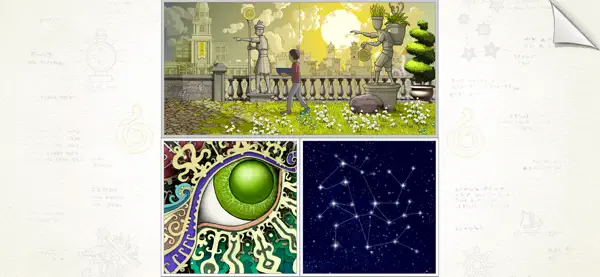
I don't often call games 'art,' but Gorogoa deserves the title. The way the panels interact—zooming in, sliding across, and layering over one another—is nothing short of magical. It requires a type of lateral thinking that most modern 'puzzlers' don't even attempt. Every frame is hand-drawn and meticulously detailed, making the act of discovery a genuine pleasure. However, I have to be the voice of reason here: it is incredibly short. I finished the entire experience in under two hours. For a premium-priced game, that’s a tough pill to swallow, no matter how beautiful the art is. There is zero replay value once you know the solutions. It’s a masterful experience while it lasts, but once the credits roll, you're left wishing there was ten times more content. It’s a high-quality product, but the value-to-playtime ratio is disappointing.
I usually have no patience for 'zen' games, but Shadowmatic is legitimately impressive. It’s one of the few games where the touch interface feels like an enhancement rather than a handicap. Manipulating the abstract objects with multi-touch gestures is tactile and satisfying. The lighting engine is top-tier; the way the shadows soften and sharpen based on the distance from the wall is a technical marvel for a mobile app. It’s not perfect. Some of the later levels rely on very specific, unintuitive angles that feel more like pixel-hunting than logic. It can occasionally cross the line from relaxing to irritating when you know what the shape is but can't get the object to click into place. But as a showcase for what a modern smartphone can do with lighting and spatial puzzles, it’s a standout. It’s sophisticated, which is a word I rarely use for App Store titles.
Now this is something I can respect. Windosill isn't trying to sell you coins or show you ads; it’s trying to show you a vision. It’s short—you can finish it in under an hour—but every moment feels handcrafted. The puzzles aren't 'puzzles' in the sense of math or riddles; they are about curiosity. You poke at a thing, see how it moves, and eventually, a door opens. The vector art is crisp and timeless. It doesn't age because it doesn't try to be realistic. My only real complaint is the length. As a consumer, I like to feel like I’m getting a full meal, and this is more of an appetizer. But the quality is undeniable. It’s the kind of game that reminds you mobile devices can actually be used for art, not just exploitative gambling clones. It’s weird, it’s quiet, and it’s very well executed.
I've grown weary of modern puzzle games that hold your hand and treat you like a child. The Guides is the antidote to that. It’s stark, quiet, and genuinely difficult. It requires you to actually use your brain—and occasionally a notebook. The aesthetic is clean and fits the 'secret agent' or 'hacker' vibe perfectly. However, there are moments where the logic feels a bit too leap-of-faith for my tastes. A good puzzle should make you feel smart when you solve it, not like you finally guessed what the developer was thinking. While 90% of the game is brilliant, that final 10% can be a slog of trial and error. It’s a very specialized experience; if you aren't the type to enjoy looking up Morse code charts in your spare time, stay far away.
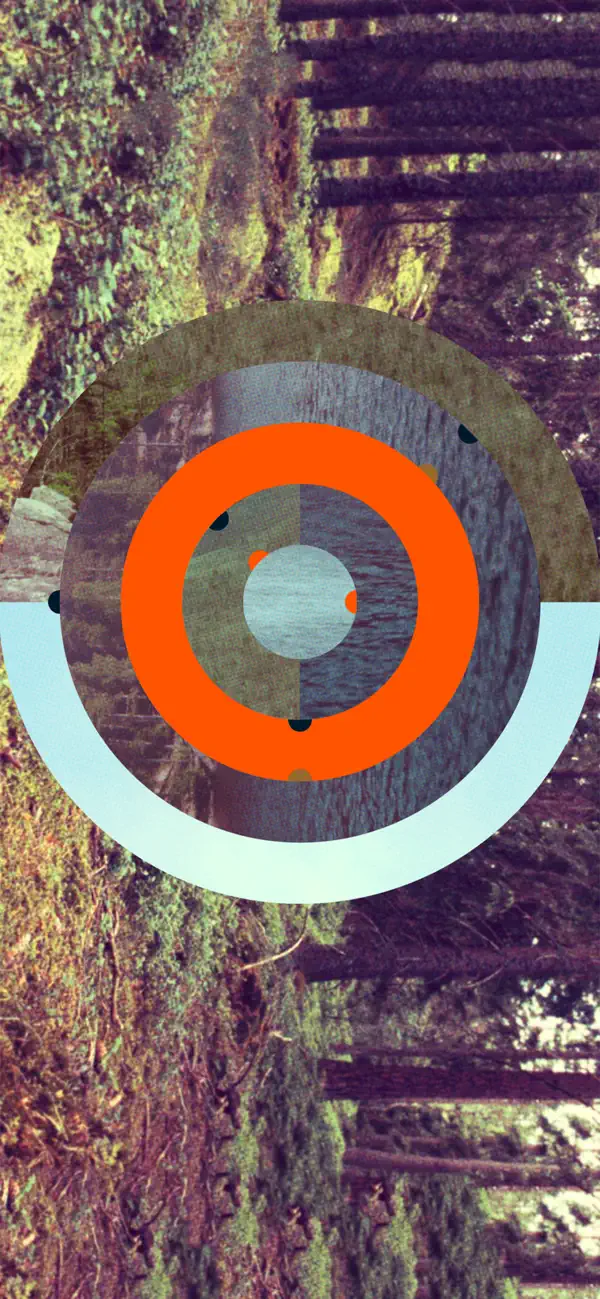
Dinsun here. I usually don't care for 'artsy' games, but Song of Bloom is different. It’s incredibly short—maybe 45 minutes—but every second is packed with creativity. It’s a puzzle game that asks you to think outside the box, literally. The way it transitions between art styles is seamless and technically impressive. It’s a single-purchase game with zero ads. For the price of a coffee, you get a unique experience. My only gripe is that once it’s over, it’s over. No replay value. But for those 45 minutes, it’s a masterpiece.
Calling this a 'game' is generous. It’s an interactive short film, a piece of performance art on your phone. The minimalist black-and-white aesthetic is striking, I'll give it that. Watching the little characters swarm, fall, and merge is hypnotic in a strange, clinical way. It makes you think about conformity and the individual—concepts I appreciate in my media. But as an interactive experience? It’s hollow. You can finish the entire thing in 15 minutes. There’s no challenge, no real choice, and zero replayability. It’s a 'one-and-done' curiosity. While I respect the artistic intent, I struggle to justify the price tag for what essentially feels like a glorified screensaver. Interesting, but ultimately unsubstantial.
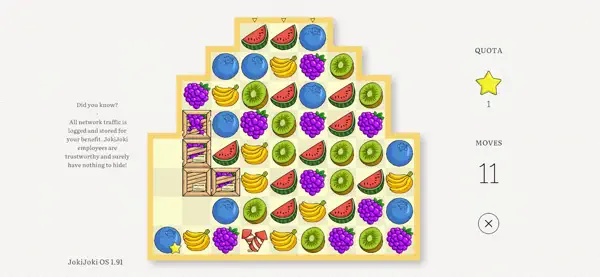
Dinsun here. This one caught me off guard. It uses the most generic mechanic in mobile history—match-3—and uses it as a metaphor for the repetitive nature of a corporate job. It’s brilliant, actually. The story is told through a messaging app interface that feels uncomfortably real. It captures that feeling of trying to maintain a personal life while your 'productivity' is being monitored. It’s not for everyone. If you’re playing games to escape your 9-to-5, this might hit a little too close to home. The match-3 parts are intentionally a bit tedious to reinforce the theme, which is a ballsy move. I appreciate a game that has something to say, even if the 'game' part of it is something I usually despise. It’s well-written, cynical, and grounded. I respect it immensely.
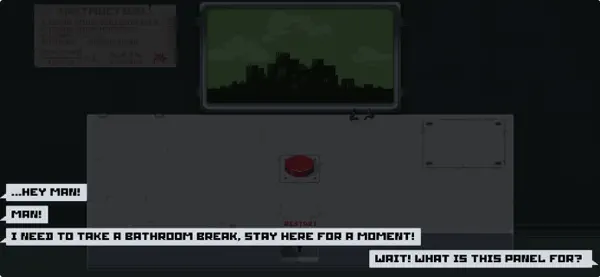
The concept is simple: you’re told not to touch a button, so naturally, you spend the next hour touching everything. It’s a clever little logic box. Every action has a reaction, often leading to some catastrophic or bizarre ending. I like the pixel art; it reminds me of the Commodore era without trying too hard to be 'trendy.' However, some of the puzzles are a bit too obscure. I’m all for a challenge, but when the solution requires a leap in logic that borders on the psychic, it loses me. It’s a short experience designed for multiple playthroughs to find all 25+ endings. Once you've seen the endings, there's zero reason to go back. It's a neat digital novelty, but it’s more of a toy than a game with meat on its bones. Worth it if you like the 'Escape Room' vibe, but don't expect it to last a weekend.