Anti-Pong is a refreshing deconstruction of a classic. For decades, we've been trained to hit the ball; here, that instinct is your enemy. The game feels like a bullet-hell shmup trapped inside a 1970s arcade cabinet. You control a paddle and must move out of the way of a ball that gets faster and more erratic with every bounce.
The minimalism is its strength. There are no power-ups or flashy distractions, just pure mechanical skill and reaction time. The local multiplayer mode is especially brilliant, turning a solitary exercise in frustration into a hilarious competitive dodge-fest. It’s a great example of how a simple 'what if' can create a completely new and compelling gameplay loop from a 50-year-old concept.
Dinsun here. I have a soft spot for games that take a fundamental concept and flip it on its head. Anti-Pong does exactly that. We’ve spent forty years training our brains to hit that white square, and this game makes you unlearn it. It’s a simple reflex tester, but the psychological friction of *avoiding* the ball makes it more engaging than it has any right to be.
The minimalist aesthetic works in its favor—no clutter, just you and the ball. It’s perfect for short bursts of play. However, like many of these 'twist' games, it lacks long-term depth. Once the novelty of the inverted objective wears off, you’re left with a fairly basic arcade game. Still, it’s a respectable effort and worth a look for anyone tired of the same old mobile formulas.
Performance: Perfect frame rate; optimized for high refresh rate displays.
Buy if: You like minimalist arcade games and enjoy having your gaming instincts challenged.
Skip if: You need complex mechanics or a game that provides a sense of permanent progress.
Available on: Apple TV, iPhone, iPad, iPod
Version 2.0.1Wed Jun 12 2024
Bug fixes and performance improvements.
Requires iOS 15.0 or later. Compatible with iPhone, iPad, and iPod touch.Last one standing wins!
Anti Pong is a new and unique take on the classic game of Pong.
Move your paddle up and down to dodge the balls bouncing on the screen. Balls that hit your paddle will take away bricks similar to a Breakout game, so you have to try your best to avoid the ball. The last person standing wins. Play single-player against a machine learning opponent, locally with a friend, or online with other players. With 5 game modes, this game is perfect to fill in the passing time. How long can you last?
Everything from the art to audio to feedback has been refined for a modern look and feel on a classic and popular game. Anti Pong comes with three difficulty settings for players that are looking for a more casual experience or a challenging match. And because Anti Pong was made for the newest features in mind, the game has options for a beautifully smooth dark mode, iPad, and Apple TV support.
Features:
• 5 unique game-modes
• Local multiplayer
• Dark mode support
• Haptic feedback
• iPad support
• Apple TV support
• 120Hz support


Anti-Pong takes the familiar mechanics of the first-ever video game and turns them upside down. Instead of trying to keep the ball in play, you must dodge it. The paddle moves at your command, and you must survive increasingly chaotic patterns and speeds in this minimalistic, high-score chaser.
Simple one-touch controls
Clean, minimalist aesthetic
Challenging endless gameplay
Competitive local leaderboards
Every ten seconds, the ball increases in velocity. Use the edges of the screen to trap the ball in a predictable loop if you can, giving you more time to react.
Yes, Anti-Pong includes a local 2-player mode where you compete to see who can dodge the longest.
Duet is trying very hard to be 'deep' with its voiceover narration about the stages of grief or whatever, but I’m just here for the dodging. The mechanic is simple: left rotates CCW, right rotates CW. It sounds easy until the blocks start moving, and then your brain melts. It’s got that 'one more try' factor that mobile games used to have before they were all flooded with ads. It's clean, it’s polished, and it’s difficult. I could do without the therapy session in between levels, but as a pure skill-based arcade game, it’s competent.
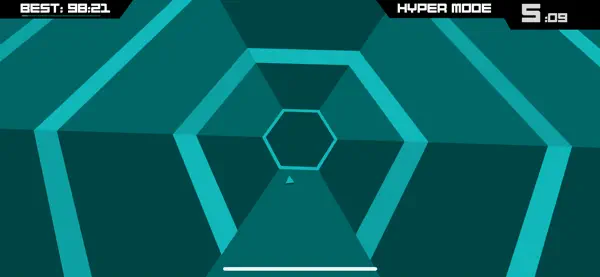
I don't hand out scores this high often. Super Hexagon is a masterclass in 'less is more.' It doesn't waste your time with stories or tutorials. It just asks: 'Can you survive for 10 seconds?' and when you fail, it lets you try again instantly. This is the kind of design that was lost when games started trying to be movies. The synergy between the visuals and the music creates a flow state that few games can match. It’s infuriating, yes, but it’s never unfair. If you die, it’s because you weren't fast enough. My only complaint is that after an hour, your eyes feel like they’re going to bleed from the screen shaking. It's a game for the patient and the skilled, a rare breed in the mobile space.
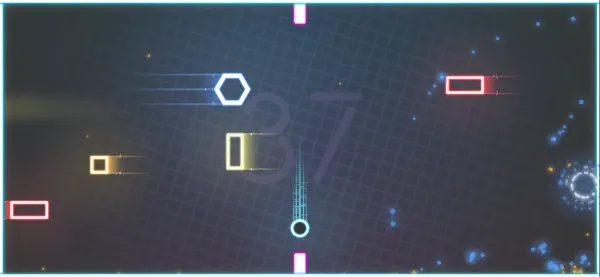
Dinsun here. I’ve seen enough 'one-more-go' arcade clones to last a lifetime, but Ding Dong XL manages to maintain its dignity through sheer mechanical purity. It doesn't pretend to be anything more than a test of your twitch reflexes. You tap, you move, you die, you repeat. The neon visuals are sharp and don't clutter the screen, which I appreciate in an era where mobile games try too hard to be eye candy. However, it’s a bit thin on the bones. Once you’ve settled into the rhythm, the lack of varied game modes becomes apparent. It’s a solid time-waster for the commute, but don't expect it to hold your attention for more than fifteen minutes at a time. It’s well-made, but ultimately a very small snack in a market full of buffets.
Poosh XL doesn't try to fool you with complex stories or flashy cutscenes. It’s just you, a button, and a wall of obstacles. I respect that. It reminds me of the golden age of arcade games where the only thing that mattered was the leaderboard. It’s tough, and you will die a lot, but the deaths feel fair—it was always your timing that was off. The soundtrack is a bit much for my taste, but the gameplay loop is solid. It’s a clean, well-coded piece of software that does one thing and does it well. It’s not a masterpiece, but it’s a respectable distraction.
I remember the real arcade machines—the smell of stale popcorn and the heavy thud of the ball against the rim. This digital version tries hard to capture that, and technically, the physics aren't bad. The flick gesture is responsive enough. However, once you’ve made ten shots, you’ve essentially seen everything the game has to offer. It’s a repetitive loop that lacks any meaningful progression system. For a 40-year-old gamer like me, I appreciate the purity of the mechanics, but I can't ignore the lack of meat on the bones. It feels like a mini-game that should be part of a larger collection rather than a standalone app. It's functional and polished for what it is, but 'what it is' just isn't very much. It’s an okay way to kill time in a waiting room, but don't expect it to hold your attention for a serious gaming session.
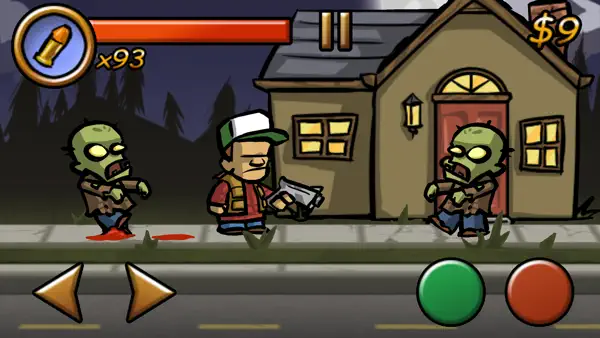
Zombieville USA is one of the few early mobile games that actually feels like a game and not a tech demo. Mika Mobile's art style is iconic—clean lines and expressive characters that haven't aged as poorly as the 3D junk from 2009. The gameplay is simple: walk right, shoot things, don't run out of ammo. It’s a loop that works, though it gets repetitive fast for anyone used to more complex systems. My main gripe is the lack of depth. Once you’ve unlocked the heavy hitters, the challenge curve flattens out. It’s a 'pick up and play' title in the truest sense, but as a guy who likes a bit more meat on the bones of his action games, I find the stay in Zombieville to be a short one. Still, it’s a classic for a reason.
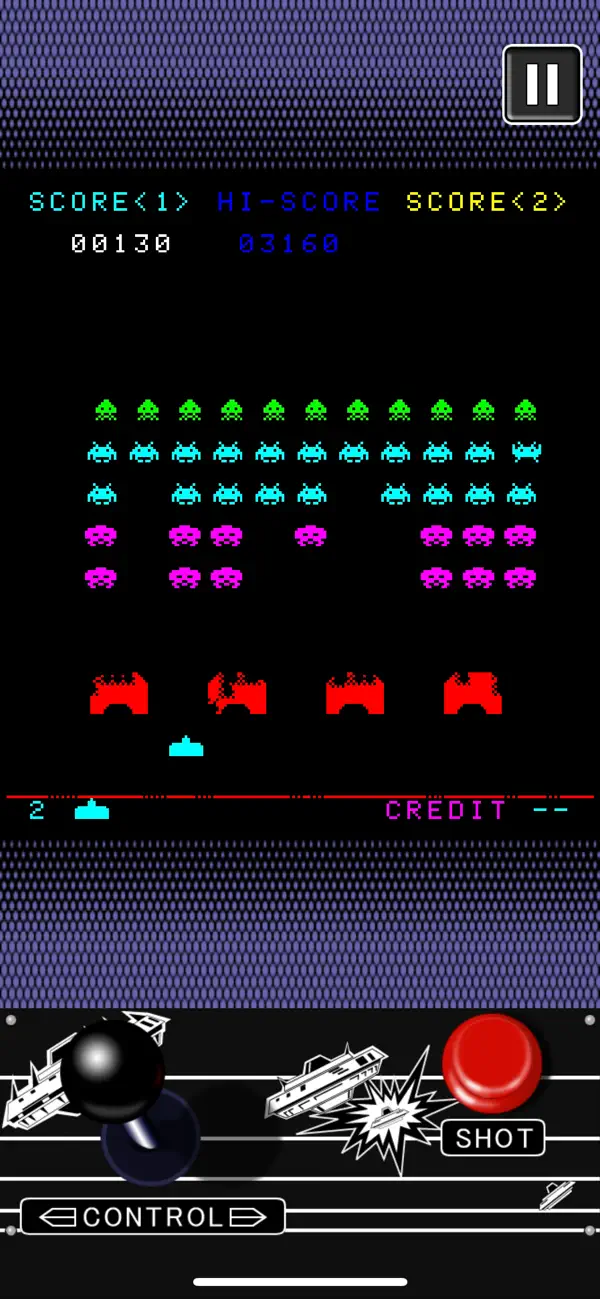
I respect the history here. Space Invaders is the foundation of the industry. But playing it on a touchscreen? It’s a compromise I’m not entirely comfortable with. Taito did a decent job with the controls—giving you a few different layouts—but you simply cannot match the precision of a physical stick and button. The input lag is minimal, yet the 'feel' is off. Graphically, it's exactly what you'd expect: black background, green pixels. It’s austere and demanding. It’s also incredibly difficult, which I appreciate, but the difficulty feels artificial when you're fighting the screen as much as the aliens. It's a nice museum piece to have in your pocket, but I'd rather play this on a cabinet any day of the week.
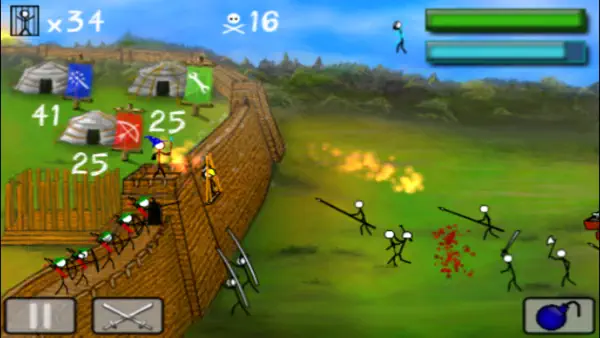
StickWars is a simple game from the early era where 'flicking' was the big gimmick. It's essentially a stress-relief tool. You flick little stick figures, they go 'splat,' and you buy a better gate. It’s mindless fun for a few minutes, but the lack of strategic depth makes it feel hollow after a while. The stickman aesthetic is the ultimate sign of 'budget' development, and while it's nostalgic, it doesn't hold up as a premium experience today. It’s okay, but I wouldn't call it 'good.'