
Fish Tycoon 2 Virtual Aquarium is a virtual aquarium tycoon from LDW Software, LLC (Last Day of Work): breed pet fish, sell them from your own store, and spend the money on better tanks, research and renovations until your little shop can keep the rarest species alive. It is a sequel to the PC classic Fish Tycoon, and the core idea is the same — cross two fish, watch what hatches, and discover new species — but this time the breeding puzzle sits inside a free-to-play economy with real-time wait timers, premium currency, and ads. The breeding itself is genuinely interesting. The waiting is not. This guide explains how the game actually works and how to play it well, because there are no fixed levels to walk through one by one — the walkthrough below teaches the game in phases, from your first eggs to the Golden Guppy of Isola, instead of pretending there are per-level solutions.
One honest note up front: our Dinsun critic scored Fish Tycoon 2 42 out of 100 and rated its value proposition "Skip", calling the wait timers and the premium-currency economy the thing that suffocates an otherwise charming genetics puzzle — hours of real time for fish to mature, with the game offering to sell you the shortcut. If you remember the premium PC original fondly, this one may frustrate you. If you like slow, check-in-a-few-times-a-day tycoon games and you know what you are getting into, this guide is for you.
Quick Facts
Developer: LDW Software, LLC | Price: Free, with in-app purchases (coin and gem packs from $1.99 to $49.99) | App Store rating: 4.25 out of 5 (3,816 ratings in the US; 4.07 in Canada) | Size: about 223 MB | Requires iOS 13.0 or later | Age rating: 4+ | Playtime: endless — 400+ species to discover, no fixed levels. Current version is 1.11.6 (October 28, 2025). The game runs in real time even when you are not playing.
Get Fish Tycoon 2 Virtual Aquarium on the App Store
This is an unofficial fan guide and is not affiliated with LDW Software, LLC. How the game works comes from the App Store listing (version 1.11.6) and LDW's own support articles; the breeding combinations and money tips below come from community player guides and are labelled as such wherever they appear, because they are community-tested rather than official. Prices and version details change with updates, so treat the numbers below as current as of November 2026, not gospel.
Watch the game first
There is no official trailer from LDW on YouTube that we could find, so the two videos below are real gameplay walkthroughs of this exact game — the first episode of a playthrough, and a fresh start from the beginning. They show the tanks, the breeding tank, and the store exactly as you will see them. Click a picture to watch on YouTube.
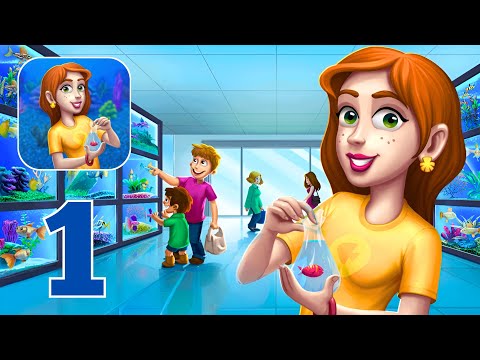 ▶
Watch: Fish Tycoon 2 Virtual Aquarium — Gameplay Walkthrough Part 1 (fan gameplay, KamalGameplay)
The second video is another from-the-start playthrough, and it is worth watching for the early game: the starter eggs, the first fish, and the first sales. Notice how much of the opening is spent waiting — that is the real rhythm of this game, and the strategies below are mostly about making the waiting work for you instead of against you.
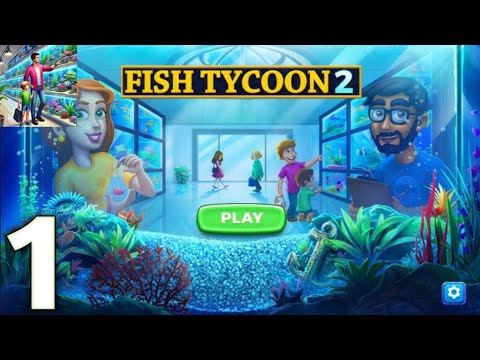 ▶
Watch: Fish Tycoon 2 — Part 1, Starting Our Own Virtual Aquarium (fan gameplay, Play gaming)
A note on structure: Fish Tycoon 2 has no levels. Progress is measured in species discovered (400+ in total), store renovations completed, and the in-game Goals the game hands you. The "walkthrough" below therefore follows the game's own arc — starting out, the breeding and selling loop, research and upgrades, the magic fish, and the endgame chase — rather than giving fixed per-level solutions that do not exist.
Strategy 1: Research Environment first — rare fish die without it
This is the single most important rule in the game, and it comes from both LDW's own support articles and the player guides: at Environment Research Level 1, only common fish are fully healthy. Hatch or breed a rare fish before you have levelled up your Environment Research and it will get sick and die. The player guides' advice is to take the free Environment Research upgrade first, then spend 200 coins on the next level, and to hold off on the Food and Advertising research tracks until the environment can actually support what you are breeding. LDW puts it bluntly in its own support notes: focus on breeding and selling common breeds in the beginning so you can afford to upgrade your aquarium's environment to sustain the rarer breeds. Do that, and the rare fish stop dying on you.
Strategy 2: Breed common fish, sell them, and let the money fund the upgrades
The early economy is a loop: breed common fish, sell them, spend the coins on the things that make breeding better. Common fish sell for only about $4–$7 each, according to the player guides, so this phase is slow — but it is the only phase where your fish are safe. The guides suggest a buying order once you have some coins: Plant of Nutrition first, then the Cleaning Snail, then Environment Research Level 2, then repair the fountain and start working on the Sell section of the store. Do not spend your starting gems on decorations or on skipping timers early. The guides are consistent on this: invest in income-boosting upgrades first, and watch the rewarded video ads for early gold if you need a top-up.
Strategy 3: Learn the breeding system — it is predictable, and that is the fun
Breeding works the same way it did in the original Fish Tycoon, and LDW confirms it: tap and hold a fish, drag it into the small breeding tank at the lower right, drag a second fish in, and a timer runs. When it finishes, the second fish pops back to the main tank and the pregnant fish stays in the breeding tank until you drag it back. Pregnancy takes 30 real-time minutes. Here is the part that makes it a puzzle rather than a lottery: you can predict the fish you will get from a breeding pair, unless a mutation is in play. So breeding is not random guessing — it is a genetics problem you can work out, and the 400+ species are discovered by finding the right pairs. Fry age in real time too, and their species stays hidden as "??????" until they reach adulthood: roughly an hour to age 6, and almost 3.5 real hours from hatching to adult at age 20. The InstaBirth, InstaHatch and InstaGrow formulas skip those waits instantly, but they cost premium currency, so save them for the fish that actually matter.
Strategy 4: Keep the tanks fed, clean and under capacity — or fish die
Fish die for three reasons, according to LDW's support: a bad environment, over- or under-feeding, and breed rarity. Three numbers govern this. A tank holds 21 fish, babies included — and babies with no free space simply disappear, so never breed into a full tank. Feeding is manual unless you buy help: drop food in the tank and the fish eat automatically, and you can check the Fed Meter to see where you stand; overfeeding can kill fish just as surely as starving them. And when a fish does die, tap the skeleton and use Autopsy — the game tells you the cause of death and how to prevent it next time, which is genuinely useful. You can revive a dead fish with gems or by watching a video ad, or delete it — but remember a dead fish still takes up tank space until you do one of those things. The upgrades that automate this are worth buying early: the auto-feeder feeds fish on a schedule, the cleaning snail keeps every tank clean and takes no tank space, and the tank filtering and air system cleans the water and reduces the negative health effects that kill rarer fish.
Strategy 5: Chase the magic fish — they are the money and the safety net
There are seven magic fish in the game, each with a passive bonus: Nutrition (Striped Tigerfish), Recuperation (Peachy Goldshark), Vigor (Tangerine Goldfish), Maturity (Canary Carp), Spawning (Razorback Flashfish), Transformation (Imperial Foxface), and the Golden Guppy of Isola (Sapphire Angelfish). Your very first magic fish — the Magic Fish of Nutrition — comes from the starter egg, and it matters more than any other early fish: it protects against starvation, preventing fish from losing health when they go hungry, so it is your safety net while you are still learning the feeding rhythm. The breeding combinations for the magic fish come from community player guides, not from LDW, and different guides disagree on some of them — treat them as community-tested starting points, not gospel. The commonly reported ones are: Nutrition from Royal Tigerfish + Crimson Tigerfish; Recuperation from Silky Fatfish + Daffodil Tigerfish; Vigor from Rusty Beta + Crimson Spotanus; Maturity from Peachy Goldfish + Crimson Stickfish; Spawning from Crimson Goldshark + Silky Stickfish; and Transformation from Peachy Goldfish + Daffodil Spontanus. Magic fish are also where the money is: the guides report common fish selling for $4–$7 while magic fish sell for $50–$350, and one guide's money loop is to keep about 14 magic fish for breeding across two tanks, price them at $50, and sell the rest — roughly $1,400 a batch by their figures. Those are the guide's numbers, not verified in-game, but the shape of the advice is right: magic fish are the business.
Walkthrough 1: The first hour — eggs, the starter tank and your first sales
You start with 500 coins and 100 gems, according to the player guides, and a few eggs. Buy store eggs and hatch them — Common eggs take 5 seconds, Uncommon 5 minutes, Rare 30 minutes — and remember the species is hidden until the fry grows up, so do not judge a hatch by its looks. Your first magic fish, the Magic Fish of Nutrition, comes from the starter egg: keep it. It is your starvation insurance. Spend your first coins on the free Environment Research upgrade, then 200 coins on the next level, and do not breed anything rare yet — at Environment Level 1 only common fish are fully healthy. Sell your first common fish at the prices the game suggests, and check in on the Daily Rewards (they reset 24 hours after you tap, not at a fixed server time) and the in-game Goals, which pay out coins, gems and InstaGrow for simple tasks. Watch the videos above if you want to see this opening played out in real time.
Walkthrough 2: The breeding and selling loop — the middle game
Once the environment can support more than common fish, the loop is: pick a pair, predict the offspring, breed, wait out the 30-minute pregnancy, hatch the fry, wait the ~3.5 real hours to adulthood, and either keep the new species or sell it. The Plant of Fertility from the shop doubles baby production, and a second tank doubles your output again — buy both when you can afford them. Pricing is yours to set: the guides' rule of thumb is to raise the price about 10% if fish sell too fast, lower it if nothing sells, and sell off low earners to free tank capacity for rarer, more profitable fish. The golden seahorse is a useful buy here: it increases the likelihood a customer buys a fish, and it takes no tank space. And because the game runs in real time even when closed, set up your breeding, feeding and full tanks before idle periods — overnight is the obvious one — so the game is working for you while you are away. One player report warns that pausing the game stops aging but does not stop starvation, sickness or death, and that they lost two tanks of fish over a weekend — that is a single player report, not an official mechanic, but it is a good reason not to pause with hungry fish in the tanks.
Walkthrough 3: Research, upgrades and the store — spending your money well
There are three Research tracks under Supplies, all starting at Level 1: Environment (lets rarer fish survive and thrive), Food (better food wards off disease and fish need feeding less often), and Advertising (draws more customers to the store). Environment first, always. After that, the shop upgrades that pay for themselves are the auto-feeder, the tank filtering and air system, the cleaning snail, and the golden seahorse. The store itself can be renovated — the App Store description promises "special surprises" as you renovate — and you can hire a mascot to draw crowds, and buy zen plants and marine life to nurture and cure fish. The Plant of Nutrition is effectively a cheap auto-feeder equivalent that keeps fish fed, and the temperature regulator and extra tanks are worth buying once the basics are covered. The rule from the guides holds through the whole middle game: spend on things that make money or keep fish alive, not on decorations.
Walkthrough 4: The magic fish hunt — the late game
The late game is the magic fish. You already have Nutrition from the starter egg. The other five (Recuperation, Vigor, Maturity, Spawning, Transformation) come from the breeding combinations listed in Strategy 5 — all community-reported, so if a combination does not work for you, try the alternates the guides list (for Nutrition, for example, some guides report Daffodil Beta + Spined Shark, or Magic Fish of Nutrition + Striped Flashfish, instead of Royal Tigerfish + Crimson Tigerfish). Keep your magic fish breeding: the guides suggest keeping about 14 across two tanks and selling the extras at around $50 each. This is also the phase where the Insta formulas earn their keep — InstaGrow on a tank full of magic-fish fry, or InstaBirth when you have several pregnant fish at once, is a better use of gems than skipping a single common fish's timer.
Walkthrough 5: The Golden Guppy of Isola — the endgame
The final chase is the Golden Guppy of Isola, the Sapphire Angelfish, the seventh magic fish and the rarest creature in the game. The easiest reported combination, according to the community guides, is Crimson Goldshark + Magic Fish of Nutrition — which is a nice piece of design, since the Magic Fish of Nutrition is the one you have had since the starter egg. Other reported combinations are Rusty Leaffish + Royal Shark, and Greenfin Shark + Canary Carp (the Magic Fish of Maturity). Sources disagree on the details, so treat these as the community's best-tested routes, not a guarantee. The Golden Guppy sells for around $350, the guides say — or price it at $360 after an InstaGrow, if you want to squeeze it — but honestly, by the time you have bred one, selling it is the last thing on your mind. It is the proof you have finished the collection: 400+ species discovered, the store renovated, and the rarest fish in the game swimming in your tank.
Stuck? A short checklist before you look anything up
First, if your fish keep dying, check the cause: tap the skeleton and use Autopsy, then fix what it tells you — usually your Environment Research is too low for the breed, or the feeding is off. Second, if babies are disappearing, your tank is full — a tank holds 21 fish including babies, so sell or move fish before you breed. Third, if nothing is selling, lower your prices; if everything sells instantly, raise them about 10%. Fourth, if you are out of coins, go back to the common-fish loop: breed, sell, upgrade, repeat — do not spend gems on decorations or on skipping a common fish's timer. Fifth, remember there are no levels to get stuck on: if the game feels stalled, the answer is almost always a Research level or an upgrade you have not bought yet, not a puzzle you have missed. And if the wait timers are the thing putting you off rather than the breeding, that is exactly what our Dinsun critic objected to — the original Fish Tycoon on PC has the same genetics puzzle without the timers, and it is the better game for it.
Have you bred the Golden Guppy of Isola, or are you stuck on a particular magic fish combination? Tell us in the comments — and if you want the next walkthrough, tell us which game from our iOS list you want covered next.