
30 Second Life: Redux is a free life simulator from Bruce Hill that squeezes an entire human life — birth to death — into 30 seconds. At every moment a new life stage appears and you tap a choice: go to school or skip class, work hard or slack off, take the honest job or the risky one. Your choices decide where the life leads. Slack off as a white collar worker and you get laid off; work hard as a cat burglar and you become a criminal mastermind. There are more than 200 life stages with unique graphics, more than 90 unlockable special combos, and over a trillion possible lives to lead — and the game dares you to find the paths to becoming a cyborg, a monk, a tycoon or a messiah. It is free to download, with an in-app purchase to unlock the full game, and a single life takes just 30 seconds, according to our Dinsun critic.
This guide walks through the game in order, phase by phase. A note on honesty first: no published step-by-step text walkthrough exists for this game, and there is a good reason for that — every run is different. The life stages are dealt to you as the 30 seconds tick by, so no two lives play out the same way and there is no fixed list of choices to memorise. Instead of inventing one, this guide teaches the systems each phase is built on — how the clock works, how a life thread is built, how combos unlock and how to steer a life toward the big endings — using the developer's own site, the App Store listing and the game's own description, which agree on how the game works. Our Dinsun critic scored 30 Second Life: Redux 55 out of 100 and called it a "Skip": a thought-provoking, clever idea that runs out of steam after a few lives, with very little agency beyond fast tapping. If you like short experimental games, this guide will help you get the most out of it before that novelty wears off.
Quick Facts
Developer: Bruce Hill | Price: Free, with an in-app purchase to unlock the full game (per the developer's site) | App Store rating: 4.9 out of 5 (29 ratings in Canada) | Size: about 18 MB | Requires iOS 16.0 or later | Age rating: 12+ | Version 3.3.1, updated November 14, 2026 | Playtime: one life takes 30 seconds; our Dinsun critic saw the main endings in about an hour.
Get 30 Second Life: Redux on the App Store
This is an unofficial fan guide and is not affiliated with Bruce Hill. How the game works comes from the developer's own site and the game's App Store listing, which agree with each other; the phases below describe the systems the game runs on, not a fixed solution for each life, because the stages are dealt randomly and no published step-by-step walkthrough exists for this game. The game changes with updates, so treat this as a working route through the game, not gospel.
Watch the game first
No official trailer for this game could be found, so both videos below are fan gameplay videos of the real game — the first shows a full run of the Redux version, and the second shows the game played on iPad. Click the picture to watch on YouTube.
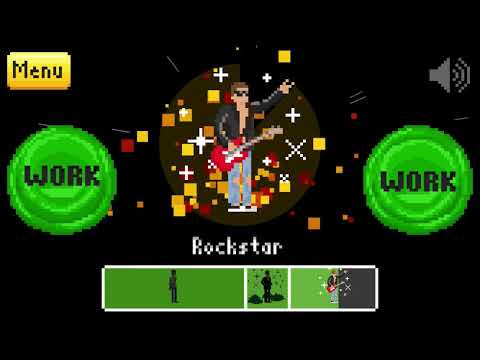 ▶
Watch: 30 Second Life Redux (MaxThePotato Alt)
The second video is iPad gameplay of the original game, and it is the clearest look at the core loop: a stage appears, you tap a choice, the next stage arrives a second later, and a whole life flashes past in half a minute. Watch how fast the choices come — that pace is the whole skill. Click the picture to watch on YouTube.
 ▶
Watch: 30 Second Life — iPad Gameplay Video (lonniedos)
Strategy 1: The clock is the boss — decide in a heartbeat
Every second of the 30 is roughly a year of your character's life, and the game does not wait for you. A stage appears, you pick one of the choices, and the next stage is already arriving. Hesitating costs you a year — or a whole phase of the life. The first skill to learn is not strategy, it is speed: read the two options, commit, tap, move on. Your first few lives will feel like a blur, and that is normal. Watch the iPad gameplay video above first and you will see the rhythm before you feel it: tap, tap, tap, and suddenly you are old and the life is over.
Strategy 2: Follow one thread — dabbling gets you nowhere
The endings come from consistency, not from sampling everything. The developer's own examples make the rule plain: slack off as a white collar worker and you get laid off; work hard as a cat burglar and you become a criminal mastermind. The game remembers the direction your choices point in, and a life that keeps choosing the same kind of option — study, then career, then promotion, then more career — builds toward one ending, while a life that jumps from crime to study to show business ends up ordinary. Before each run, pick one destination (see Walkthrough 4) and then, at every stage, choose the option that pushes that way, even when the other option looks more fun.
Strategy 3: Combos are the real game
Beyond the endings, there are more than 90 unlockable special combos: named results that appear when a life hits a particular sequence of stages. The developer's site shows the Robin Hood combo as an example — the life that steals and gives in the right order earns the name. You cannot plan a combo from a list, because the stages arrive at random, but you can hunt one: decide on a theme for the run, such as crime with a conscience, and keep choosing the options that fit it. When a combo unlocks, the game tells you, and the collection keeps track of what you have found — that collection is the long-term goal once the endings stop surprising you.
Strategy 4: Replay is the whole game — and it is free to replay
A single life is 30 seconds, so "one more run" costs you nothing, and the game is built around that loop. Because there are over a trillion possible lives, you will almost never see the same life twice, and the fun is in the variety: the astronaut one run, the ringmaster the next, the superstar after that. The Redux version also added a full set of female sprites to match every male sprite, so the same life can look different on the next run. Treat the game as a toy to spin, not a mountain to climb — play five quick lives, note which threads led somewhere interesting, then chase those threads on purpose.
Strategy 5: Play free first — unlock only if you are hooked
The game is free to download, and the developer's site says a one-time in-app purchase unlocks the full game on iPhone, iPad and Mac. Our Dinsun critic's warning is worth hearing before you pay: the idea is clever, but it is "an interesting five-minute distraction" that gets repetitive after a few runs, and it scored the game 55 out of 100. So play the free version first. If you are still chasing combos after a dozen lives, the unlock is a small one-time payment for a small game — but if the novelty has already worn off, you have lost nothing.
Walkthrough 1: Your first life — birth to death in 30 seconds
Start a run and the clock starts with it. You are born, and the first stages arrive quickly: childhood choices, then school, then work, then whatever your choices have built toward, then old age and the end screen. The end screen is your report card: it names the life you lived — your ending — and tells you if you unlocked a combo. Your first life will almost certainly end somewhere ordinary, and that is fine; it teaches you the pace.
Three habits will carry you through every life after the first. First, tap the moment you have read the options — the game rewards fast decisions and punishes hesitation. Second, look at the picture, not just the words: every one of the 200+ stages has its own graphic, and the image often makes the choice clearer than the text. Third, when the life ends, read the result before you tap again — the ending name is the clue to what your choices added up to, and it is how you learn which thread you were actually following.
Walkthrough 2: Childhood and school — where the thread starts
The early stages are school and childhood: study or play, behave or cause trouble, join in or stand out. These choices matter more than they look, because they open — or close — the doors the later stages offer. A life that studies gets the office and university stages; a life that causes trouble gets the street and crime stages instead. Neither is better in itself — the criminal mastermind path starts here just as surely as the tycoon path does — but you cannot walk both at once. If you have a destination in mind, let the school stages serve it: study for the career endings, cause trouble for the crime endings, and daydream for the stranger ones.
Walkthrough 3: Work — the career ladder, or the other ladder
The middle of the life is work, and this is where the thread either holds or falls apart. The game offers two kinds of ladder, and the developer's examples describe them exactly: the honest ladder, where you work hard, get promoted and build something; and the other ladder, where you steal, scheme and climb the criminal world instead. Slack off on either ladder and it ends early — the white collar worker who slacks gets laid off, and the same logic applies everywhere. The rule for this phase is simple: when a work stage appears, choose the option that keeps you climbing the ladder you picked at school. A single lazy tap in mid-life can end a run that was heading for a great ending.
Walkthrough 4: The big endings — cyborg, monk, tycoon, messiah and more
The game teases four endings by name — cyborg, monk, tycoon, messiah — and the developer's screenshots show more: criminal mastermind, astronaut, superstar and ringmaster. Each one is the end of a thread you have followed all the way through the life, and each thread is a direction, not a checklist, because the exact stages arrive at random. Here is how to steer toward each one.
Criminal mastermind. The one ending the developer spells out: become a cat burglar, then work hard at it. Choose the trouble and crime options from school onward, keep choosing the bolder crime at every stage, and the life climbs from petty theft to mastermind. This is the easiest big ending to reach, because the crime thread is offered early and often.
Tycoon. The honest ladder taken to the top. Study, take the office job, work hard at every work stage, and keep choosing money and career over leisure whenever the two compete. The tycoon is what the white collar worker becomes if they never slack off — the opposite fate to the layoff the developer warns about.
Monk. The thread of giving things up. Choose the quiet, simple and spiritual options when they appear — turn away from money, career and noise — and keep choosing them. The monk is the hardest ending to steer toward by accident, because the game keeps offering you louder, richer options; you have to refuse them on purpose, run after run, until the thread holds.
Cyborg. The thread of technology. Choose the machine and science options when they appear, and keep choosing them as the life goes on. The cyborg is the life that keeps trading the human for the mechanical, stage after stage, until there is more machine than person left.
Messiah. The thread of being followed. Choose the options that gather people around you — lead, preach, inspire — and keep choosing them. One player filmed a whole run aimed at this ending, and it is worth watching before you try it yourself: 30 Second Life — MESSIAH (SuperJunkGaming).
Astronaut, superstar, ringmaster. The show-business and adventure threads. Choose the performance, travel and daring options when they appear, and follow whichever of the three the game keeps offering — the stages will tell you which thread you are on by the pictures they show. If a run stops offering your thread, do not fight it: finish the life, see what it became, and start the next one.
Walkthrough 5: Combos and the collection — the 90+ to find
Once you have seen a few endings, the combos become the goal. There are more than 90 of them, and each one is a named result for a particular sequence of stages in a single life — the Robin Hood combo on the developer's site is the example, a life that takes from the rich and gives to the poor in the right order. You cannot force a combo, because the stages arrive at random, but you can raise your odds: pick a theme for the run, such as crime with a conscience or a life of giving, and choose every option to fit it. When a combo unlocks, the game records it, and the collection is your score. If you are chasing a specific combo, replay with the same theme until the stages cooperate — with over a trillion possible lives, the stages will eventually deal you the sequence you need.
Stuck? A short checklist before you look anything up
First, slow down your eyes, not your fingers: read both options before you tap, because a wrong tap is a lost year. Second, check the thread: if your last three lives all ended somewhere ordinary, you are dabbling — pick one destination from Walkthrough 4 and follow it for five lives in a row. Third, check the work stages: a single lazy choice in mid-life can end a promising thread, so choose the option that keeps you climbing. Fourth, check the combo hunt: if you are chasing a combo, keep the theme fixed for the whole run instead of changing direction halfway. Fifth, check the pace: if the choices feel like a blur, watch the iPad gameplay video above again and copy its rhythm — read, tap, move on. And if a written step is hard to picture, jump to the matching run in the gameplay videos above — the first video shows a full Redux life from birth to death.
Have you finished 30 Second Life: Redux, or are you stuck chasing one ending in particular? Tell us in the comments — and if you want the next walkthrough, tell us which game from our iOS list you want covered next.