Explore the best free iOS games suitable for age 4+, curated for your iPhone, iPad, and Apple TV. We've gathered the top-rated free and paid titles, along with the latest updates, to ensure you find the perfect game.
I’ll admit, the musical concept is clever. Most of these breeding games are just about collecting stats, but here, the reward is an evolving song. It’s a slow-burn experience—very conservative in its pacing. You’ll be waiting hours for eggs to hatch. The art style is... an acquired taste. They're called monsters for a reason; they're pretty hideous. But hearing the song come together is satisfying. It’s heavily monetized, but you can progress if you have patience. It’s a good 'check-in' game for someone my age who doesn't want to sweat over a screen for hours.
I hate to follow the crowd, but Chess.com (as this is better known) is actually good. It’s the rare case where a popular app earns its status through features rather than marketing. The puzzle rush mode is addictive even for a cynic like me, and the lesson content is genuinely high-quality. It’s the complete package. That said, I’m not a fan of the subscription model. They gate the best analysis tools behind a monthly fee, which feels like a tax on being a serious player. And while the community is huge, the 'toxicity' is real—expect a lot of abandoned games when you’re winning. It’s an 82 because it’s the best at what it does, but it still feels like it’s reaching into my wallet a bit too often.
Dinsun here. Uno is a classic, and this app captures that 'ruin your friendships' energy perfectly. The 2v2 mode is actually a great addition that adds a layer of strategy you don't get in the physical game. The visuals are slick, and finding a match takes seconds. However, I have to knock off points for the sheer amount of 'stuff' everywhere. Between the battle passes, the coins, the energy systems, and the constant pop-ups for 'limited time offers,' it’s exhausting. Why does a card game need a level-up system and loot boxes? If you can ignore the storefront and just focus on the cards, it’s the best digital Uno out there. But man, I miss the days when a game was just a game.
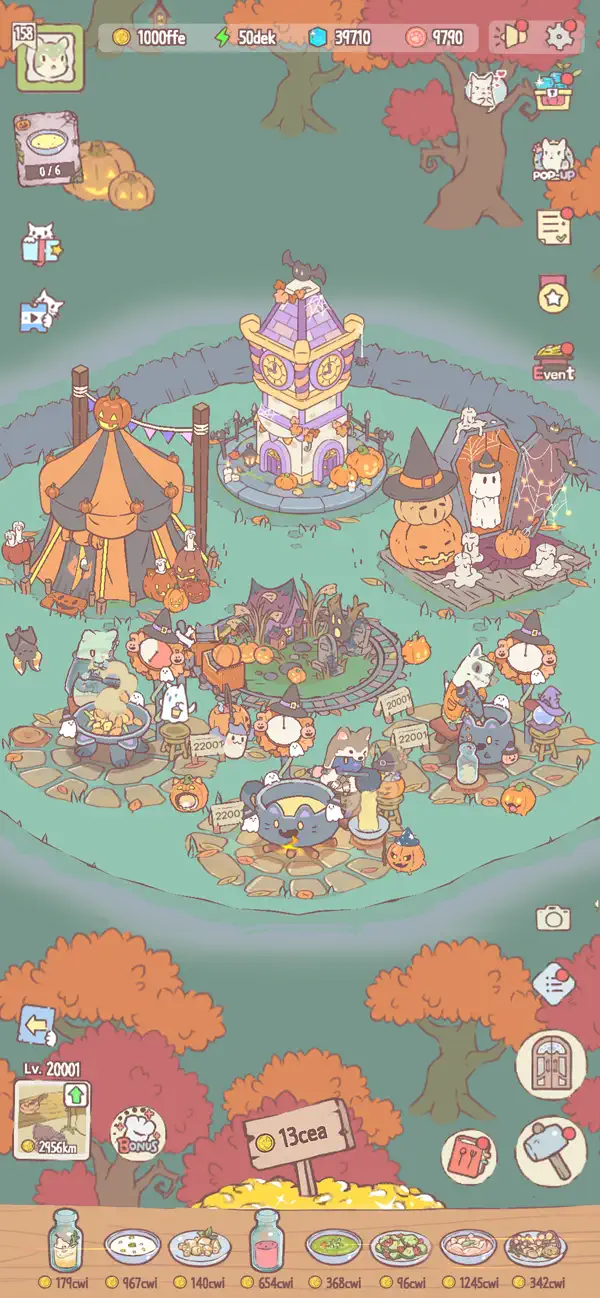
I’m a 40-year-old man, and I spent twenty minutes yesterday putting a tiny hat on a virtual Ragdoll cat. Is it 'gaming'? Hardly. It's a digital aquarium with cats. The art is genuinely lovely—it has this soft, watercolor aesthetic that is rare in the mobile market. The sound of the rain and the soup bubbling is quite relaxing after a long day of real work. But like all idle games, the 'gameplay' is just clicking circles to upgrade things so you can click more circles. Eventually, the prices for upgrades become so astronomical that you’re forced to either wait for days or watch a dozen ads to get a boost. It’s charming for a week, but after that, it's just another icon on your phone asking for attention.
Dinsun here. Let’s not beat around the bush: Words With Friends is Scrabble. The core game design is decades old and practically flawless. Putting letters on a board to score points against a friend is a timeless, intellectual exercise that works beautifully on a smartphone. The asynchronous play is perfect for busy adults. However, rating the app is a different story than rating the board game. Zynga has ruined the user experience. The sheer volume of advertisements, pop-ups, 'power-ups' that border on cheating, and aggressive monetization tactics is obnoxious. Every time I open the app, I have to click through three screens of 'events' just to see my board. It’s a 64 because the core gameplay is indestructible, but the wrapper it sits in is a masterclass in modern mobile bloatware. Play it, but be prepared to be annoyed.
It’s another match-3 game. The 'Property Brothers' are there as static portraits to tell you that you did a good job. As a gamer who values innovation, this is as lazy as it gets. It’s a cash grab using a popular brand to sell power-ups and extra lives for puzzles that aren't even particularly well-designed. The renovation part is just 'click a button to see a pre-designed asset appear.' There’s no actual 'designing' happening here. If you like the show, you might tolerate it, but if you like games, you’ll be bored in ten minutes. It’s corporate, safe, and utterly dull.
I'm including this because they've tried so hard to turn learning into a RPG. As a game, it’s manipulative. The streak system is just a way to instill FOMO (fear of missing out). The actual 'gameplay' is just matching words and repeating phrases. It’s rote memorization disguised as progress. It’s effective for what it is, but don't mistake it for entertainment. The owl is annoying. The constant notifications are a nuisance. However, I’m 40 and I’m finally learning some basic Japanese, so I can't say it doesn't work. Just know that you're the product here, and the 'game' elements are designed to keep you viewing ads or paying for 'Hearts.' It’s a necessary evil for free education.
I expected a cheap Cooking Mama clone, but I found a game with actual character. The customers are weird and cryptic—half the challenge is deciphering what 'a pizza like a sunrise' even means. The art style is sketchy and warm, which fits the vibe perfectly. It gets repetitive, and the late-game orders for 'everything pizzas' are a chore, but the story beats and the rival shop keep you engaged. It’s one of the few simulation games on the store that doesn't feel like it's trying to rob you.
Toca Boca World is the ultimate digital dollhouse. As an interactive toy for kids, it is exceptionally well-crafted. The art style is charming, the character diversity is commendable, and the sheer amount of interactable objects is impressive. However, reviewing this as a consumer product leaves a sour taste. The base game gives you a tiny slice of the map, serving essentially as a demo. Every other building, neighborhood, and pet is locked behind a paywall. It trains kids to constantly want the next digital expansion, pestering their parents for $3 here and $5 there. The 'gameplay' is non-existent—you just drag avatars around a screen. It's safe, ad-free, and colorful, but it's fundamentally a highly polished catalog designed to sell DLC to toddlers. I cannot reward that business model.
Tetris is the perfect game. It was perfect on the Game Boy, and it’s perfect now. This app handles the core mechanics well—the swipe controls are responsive, which is a miracle on a touch screen. However, I could do without the 'Royale' nonsense and the constant push for 'Leagues' and 'Daily Tasks.' It’s Tetris; I don’t need a season pass to enjoy it. The ads are also quite aggressive unless you pay to remove them. It’s a 72 only because the game itself is a masterpiece; the app wrapper is just okay. If you can ignore the flashing icons and focus on the blocks, it’s still great.
I’ll give Peak credit: they know how to polish a puzzle. Toon Blast is visually clean and the 'crunch' of clearing blocks is undeniably satisfying. It’s a match-2 (tap to blast) rather than a match-3, which makes it feel slightly faster than its competitors. However, don't let the cute cat fool you—this game is a masterclass in psychological manipulation. After level 100, you’ll notice a pattern: you'll fail a level by exactly one or two moves, and the game will conveniently offer you more turns for a handful of coins. It's designed to frustrate you just enough to spend. As a gamer who values actual challenge over 'pay-to-continue' mechanics, I find it hard to respect. It’s fine for a distraction, but it’s essentially digital bubble wrap that eventually asks for your wallet.
Dinsun here. I’ve put my time into DotA and League, so seeing the MOBA genre distilled down to this is bittersweet. It’s polished, I’ll give it that, and the matches are short enough that they don't feel like a life commitment. But the strategic depth is paper-thin. Most matches are decided in the final two minutes regardless of what happened before, thanks to some questionable catch-up mechanics. And don't get me started on the held item upgrades—typical modern mobile greed masquerading as 'progression.' It's fine for kids, but a veteran will find the lack of complexity boring after a week.
Dinsun here. I’ve seen plenty of digital board games come and go, and Marmalade’s version of Monopoly is technically competent. The 3D city is a nice touch, and the 'Quick Mode' is a necessary concession for those who don’t have four hours to watch their friendships dissolve. However, at its core, it is still Monopoly. No amount of fancy animations can hide the fact that the winner is often decided by the first few trips around the board. The online matchmaking is hit-or-miss; you’ll frequently deal with quitters the moment they lose a utility. It’s a clean app, but it lacks the soul of sitting around a physical table, and the AI is either brain-dead or suspiciously lucky. If you're a purist, it’s fine, but don't expect a revolution.
I appreciate efficiency, and Mini Metro is efficiency distilled into an app. It starts out so peaceful—just three stations and a single line—but within ten minutes, you're frantically re-routing a tunnel to save a station from overcrowding. It captures the essence of a management sim without the bloating menus and sub-menus that ruin the genre on mobile. The visual language is perfect; it tells you everything you need to know through simple geometric shapes. It’s a 'hard' game in the sense that failure is inevitable. You’re just seeing how long you can last. That might annoy some people who want to 'win,' but for a conservative gamer like me, the clarity of the challenge is refreshing. There’s no fluff, no microtransactions, just a pure test of your ability to plan and adapt. The sound design is procedural and evolves with your map, which is a brilliant touch. It’s one of the few mobile games I’d call essential.
Solitaire is the ultimate low-effort time-waster, and Mobilityware has perfected the delivery system. It’s smooth, it’s readable, and it has enough 'Daily Challenges' to trick your brain into thinking you’re achieving something. However, the sheer amount of ad-clutter in the free version is nauseating. It’s hard to stay focused on a 'relaxing' game when you’re being screamed at to download some kingdom-builder every three minutes. If you pay to remove the ads, it’s a solid 7, but as it stands, it’s a decent game buried under a pile of marketing garbage. It does the job, but it feels like a corporate product rather than a labor of love.
Dinsun here. Sometimes you just want to sit down and watch something pretty. Frost isn't a game in the sense that you're 'winning' or 'losing' in any stressful way. You're just nudging light. The particle physics are beautiful—watching them swarm and flow like a school of fish is genuinely hypnotic. It’s the kind of game you play to decompress after a long day. That said, if you're looking for a challenge, you won't find much here. The puzzles are fairly simple, and the lack of any real 'fail' state might bore some people. It's a conservative design that knows exactly what it wants to be: a calm, beautiful interaction. It’s a bit of a one-trick pony, but it’s a very nice trick.
This is a rare treasure. In an era of procedurally generated nonsense, Hidden Folks is clearly made with love. The hand-drawn art is incredible, and the interactability of the environments is genuinely surprising. What I love most is the sound design—all mouth-made noises that give the game a quirky, human soul. It’s a slow-paced game for people who like to look closely. It’s not trying to be anything other than a beautiful, interactive 'Where's Waldo.' It’s simple, it’s honest, and it’s brilliant. I have almost nothing bad to say about it, which is saying something for me.
Dinsun here. Wingspan is a rare bird—pun intended. It’s a board game port that actually enhances the source material. The digital version automates all the tedious bookkeeping of the physical game, allowing you to focus entirely on the strategy. The bird calls and animations add a layer of tranquility that makes this a perfect 'end of day' game. It’s not aggressive, but don't let the soft aesthetic fool you—there is a cutthroat engine-builder under the hood. You have to be incredibly efficient with your actions. It’s a premium title with a premium price, but it’s worth every cent. My only minor complaint is that the screen can feel a bit crowded with information, but once you know the cards, it’s a joy to play.
Tiny Wings is one of those titles that actually understands the platform it's on. You only need one finger to play, but it requires a sense of rhythm and timing that most 'infinite runners' lack. The goal is simple: press down on the screen to make your bird heavy so it slides down a hill, then release to let it launch off the next incline. It’s all about the arc of the flight. The art style is genuinely impressive—it changes every day, which is a nice touch for a solo developer effort. However, let’s be realistic. At its core, you're doing the same three-second loop over and over again. The objective is to beat your high score before the sun goes down, but once you find the rhythm, the tension drops. It's a solid time-waster, but I’m not going to pretend it has the depth of a proper console title. It’s good for a bus ride, but don’t expect it to change your life.
It’s about time someone realized that the original Angry Birds was actually good before they bloated it with 'mighty eagles' and endless gacha mechanics. Red’s First Flight is a return to form. The physics are exactly what you remember—frustratingly precise and satisfying when you finally hit that structural weak point. It’s a premium app, which means I don't have to watch an ad every time a bird misses a pig. That said, I’m 40. I played this when it first came out, and while the nostalgia is nice, it’s still just flicking birds at blocks. The 'remake' aspect doesn't really add anything new, and the graphics, while cleaner, don't fundamentally change the experience. It’s a good product, but it’s a product I’ve already bought three times on different devices over the years. If you missed the original era, buy it. If you lived through it, it’s just a nice trip down memory lane.
Trivia Crack is a double-edged sword. On one hand, the question database is massive, and it’s genuinely fun to test your knowledge against another human. On the other hand, the 'Premium' label is a bit of a joke because the game is still littered with 'gems,' 'lives,' and 'power-ups' that let people cheat their way through a quiz. If I'm playing a trivia game, I want a fair fight, not a battle of who has more virtual currency. The UI is loud and looks like a slot machine. It’s designed to keep you clicking, not necessarily learning. I miss the days when trivia games were about the questions, not about collecting little cartoon characters. It’s functional, but it feels like a product designed by a marketing committee rather than a quizmaster.
I’m a man of few words when it comes to 'art games,' but Monument Valley 2 is undeniably beautiful. It’s like playing through a painting. The puzzles aren't particularly difficult—if you're looking for a brain-buster, this isn't it—but the way the world shifts and turns is always satisfying. My main gripe is the length. I finished the entire thing in under an hour. For a premium game, that’s a tough pill to swallow. It’s more of an 'experience' than a 'game.' It’s polished, it’s graceful, and it’s poignant, but once it’s done, there’s zero reason to go back. A high-quality snack that leaves you wishing for a full meal.
Dinsun here. I usually have zero rhythm and even less patience for music production software, but Incredibox is something special. It’s less of a game and more of a perfectly tuned instrument. The genius lies in the 'idiot-proof' design: every loop is quantized and keyed to fit perfectly with every other loop in that style. You can’t make a bad song if you try. The art style is phenomenal—each character has a personality that fits the genre they represent. It’s one of those rare apps that appeals to my 10-year-old nephew and my 40-year-old self equally. It’s a paid app, and it’s worth every penny to avoid the ad-infested garbage usually found in the 'free' music category. It’s a masterpiece of interface design.
MobilityWare knows how to make a card game, but they also know how to fill it with ads and notifications. This is a very professional, slick version of Spider Solitaire. The animations are smooth, and the daily challenges give you a reason to come back if you’re into that sort of thing. But at its core, it’s still just Spider Solitaire. It doesn't do anything to innovate or elevate the genre. The constant prompts to rate the app or watch an ad for a new card back are annoying. It’s fine. It’s the version everyone has because it’s the first one that pops up in the search results. It’s reliable, but it lacks any creative spark.
I usually scoff at 'casual' games, but Fruit Ninja is an exception. It’s the purest expression of what a touchscreen can do. There’s a visceral satisfaction to the slicing that hasn't been matched in fifteen years. It’s simple, it’s honest, and it doesn't try to be a console game. It’s the Arcade mode that keeps me coming back—balancing the combos with the bombs is a legitimate test of reflex and restraint. Yes, it’s a bit shallow, and the modern versions have added too much 'fluff' and currency, but the core gameplay loop is undeniable. It’s one of the few mobile games that I actually consider a classic. It’s not deep, but it’s perfect at what it does.
I expected a cheap Cooking Mama clone, but I found a game with actual character. The customers are weird and cryptic—half the challenge is deciphering what 'a pizza like a sunrise' even means. The art style is sketchy and warm, which fits the vibe perfectly. It gets repetitive, and the late-game orders for 'everything pizzas' are a chore, but the story beats and the rival shop keep you engaged. It’s one of the few simulation games on the store that doesn't feel like it's trying to rob you.
I hate to follow the crowd, but Chess.com (as this is better known) is actually good. It’s the rare case where a popular app earns its status through features rather than marketing. The puzzle rush mode is addictive even for a cynic like me, and the lesson content is genuinely high-quality. It’s the complete package. That said, I’m not a fan of the subscription model. They gate the best analysis tools behind a monthly fee, which feels like a tax on being a serious player. And while the community is huge, the 'toxicity' is real—expect a lot of abandoned games when you’re winning. It’s an 82 because it’s the best at what it does, but it still feels like it’s reaching into my wallet a bit too often.
There’s a genuine sense of speed in Traffic Rider that most mobile racers miss. Being in the first-person view, seeing the asphalt fly by while you weave between trucks, is genuinely exhilarating for the first few hours. The bike sounds are impressive—they actually sound like engines, not hair dryers. It’s an honest arcade experience that reminds me of the old 'Hang-On' cabinets, just with much better graphics. But the career mode is a slog. It quickly becomes a grind to unlock the better bikes, and the missions start to feel identical. 'Overtake X cars in Y seconds' over and over again. The monetization isn't the worst I’ve seen, but the timer and energy-style roadblocks are still there. It’s a great game for a quick burst of adrenaline, but don't expect it to keep you engaged for a cross-country flight. It’s good, but it wears out its welcome.
Dinsun here. I’m usually wary of 'charming' games, but Sasquatch is legitimately well-constructed. The sheer variety of things to do is staggering for a mobile title. You can fish, you can drive, you can basically live a second, hairier life. It can be a bit aimless, and some of the tasks feel like busywork, but the constant support from the developers is something we don't see often enough these days. It’s a bit silly, but the mechanics are solid enough to keep an old-timer like me engaged. It’s hard to find a reason to dislike it, even if I'm not the target demographic.
This is the least 'game' on the list, and I mean that descriptively, not as an insult. Bible Books Game is a flashcard drill with scoring: learn the 66 books in order, forwards and backwards, through four short games, a Learn mode and practice on the books you keep missing. I haven't used it. I couldn't even open the App Store page, so I'm working from the publisher's own site and an older Amazon listing. Treat everything below as a read of the pitch. What's right about it: it's a dollar, one purchase, no ads, no subscriptions. That is exactly how a tiny utility-game should be sold, and it's a relief after the free-to-play pile elsewhere on this list. The practice-your-weak-books idea is the correct way to build a drill, because spaced repetition is the whole point of memorization. And the track record is decent: the publisher shows 5.0 from nine App Store ratings and Amazon shows 3.7 from 22, with customers calling it simple and fun for kids and adults. What holds it back: scope. There is one job and four short games to do it with, so by design it has almost no replay value once you've learned the order. Nine ratings is not a sample I'd trust for anything, the Amazon side is a much older version, and I can't say anything about the interface, sound, accessibility or performance because the store page wasn't available to me. The publisher is also a niche organization with a specific audience, so this isn't something I'd recommend to a general gamer. As a learning tool for the right person it's cheap and honest. As a game it's a 4 out of 10, and the overall 54 reflects a fair price on a narrow, unverified product. Use it, finish it, delete it. If you need more depth, the publisher's own reference, memory and trivia games look like the natural next step.
Flow Free is exactly what a mobile game should be. It’s not trying to tell a story or sell you a battle pass. It’s a grid, some colored dots, and your brain. It’s clean, it’s fast, and it works. I’ve probably solved a thousand of these levels over the years during commutes, and it never feels like a waste of time. That said, it’s not exactly a 'thrilling' experience. It’s a digital version of those pen-and-paper logic puzzles. Once you understand the basic logic of how paths have to snake around the edges, the challenge mostly comes from the size of the board rather than the complexity of the mechanic. It’s a 70—good at what it does, but it’s not reinventing the wheel.
Sonic and the endless runner genre should have been a match made in heaven. In many ways, it is—the speed feels right, and the 3D environments are vibrant and nostalgic. But SEGA has buried the blue blur under a mountain of free-to-play garbage. Every time you finish a run, you’re bombarded with ads, daily login bonuses, and 'limited time offers.' It’s exhausting. It’s not about how fast you can go; it’s about how long you can ignore the prompts to spend money. The gameplay itself is fine, though it’s identical to every other runner since Temple Run. Swiping left and right is a far cry from the momentum-based physics that made the original Sonic games masterpieces. At 40, I find the lack of a proper 'end' to be frustrating. You just run until you make a mistake, and then the game asks for a diamond to keep going. It’s a shallow experience that relies on the brand name to do the heavy lifting. It looks great, but it’s hollow.
I'll give it this: it's original. In an industry of clones, Blackbox actually tries to use the 'smart' part of the smartphone. Solving a puzzle by plugging in your charger or changing your brightness is satisfyingly tactile. It’s a clean, minimalist design that appeals to my conservative tastes—no flashy nonsense, just logic. However, it can be incredibly frustrating. Some solutions are so obtuse that you aren't playing a game anymore; you're just guessing what the developer wanted you to do with your phone's volume buttons. It's a neat experiment, and I respect the craft, but as a 'game,' it lacks the cohesive flow I prefer. It’s a collection of 'Aha!' moments held together by a very thin thread.
I understand that I am not the target audience for Pou, but even as a piece of software, it's remarkably primitive. You tap a bottle to clean it. You drag a piece of food to its mouth. You wait. It’s the kind of 'gameplay' that was mind-numbing twenty years ago and hasn't improved since. The art style is essentially a MS Paint doodle with eyes. I've seen more complex character design on a cereal box. The only reason this stays on people's phones is the psychological hook of 'keeping it alive' and the mini-games, which are just clones of other, better games (like Doodle Jump or Flappy Bird) baked into the app. It's a container for distractions. As a gamer who values mechanics and depth, Pou offers nothing but a series of chores to unlock a slightly different colored hat. It’s efficient at what it does, but what it does is barely gaming.
I’ll admit, the tech behind this is clever. Using your phone as a motion sensor for a browser-based game is the kind of 'future' I like to see. It makes the game accessible to anyone without needing a $500 console. However, as a 40-year-old gamer, I have zero patience for the coin system. You get enough 'free' coins to dance to maybe one or two songs a day. After that? Pay up. It turns a fun evening with friends into a series of micro-transactions. Then there's the connectivity. If your Wi-Fi dips for even a second, the tracking de-syncs and you're dancing for nothing. It’s also missing some of the bigger artists I’d expect from a 'best of' music app. It’s a great idea for a party, but for regular play, the subscription cost is too steep for what is essentially a motion-controlled karaoke machine. I'd rather just buy the console version and own it properly.
Dinsun here. I’m not a fan of Talking Tom, but I have to give credit where it's due: this is a very well-made runner. The controls are tighter than most, the variety in the environments is genuinely impressive, and the 'home building' meta-game gives you a reason to actually care about the gold you’re collecting. It’s a proven formula executed with a high budget. Of course, it’s still an endless runner. You’ve played this game a thousand times before. It’s also packed to the gills with ads and opportunities to spend real money. It’s designed to be a time-sink for kids, and it does that job perfectly. If you can get past the annoyance of the brand and the monetization, it’s one of the better examples of the genre.