★★★★★ So relaxing
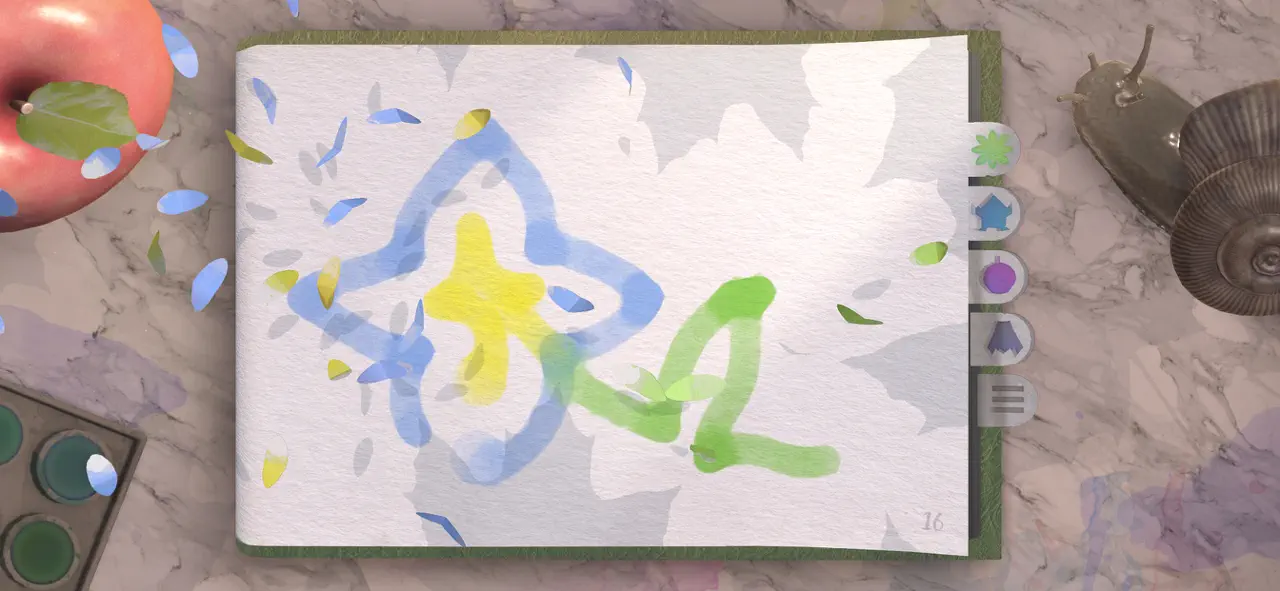
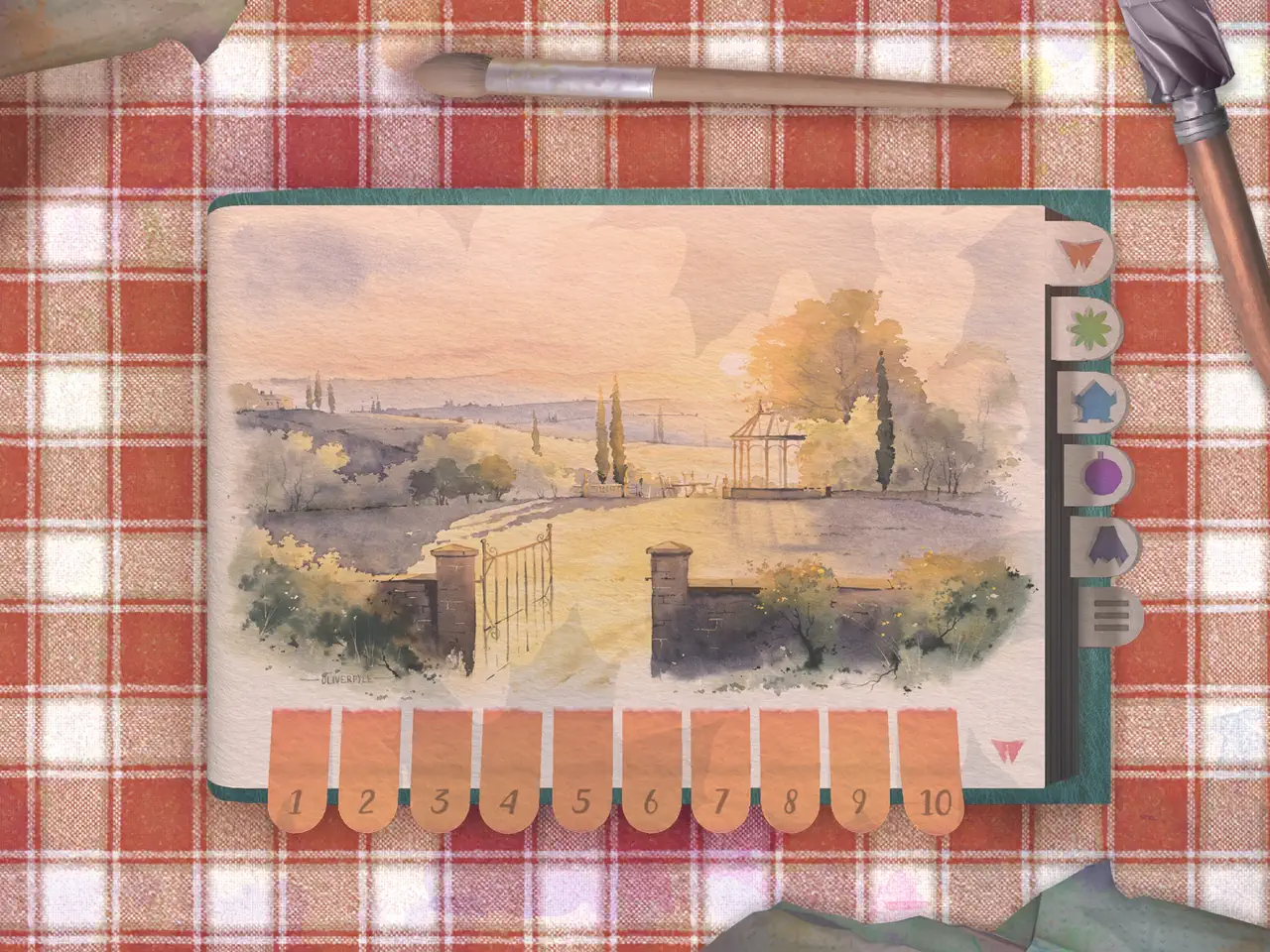
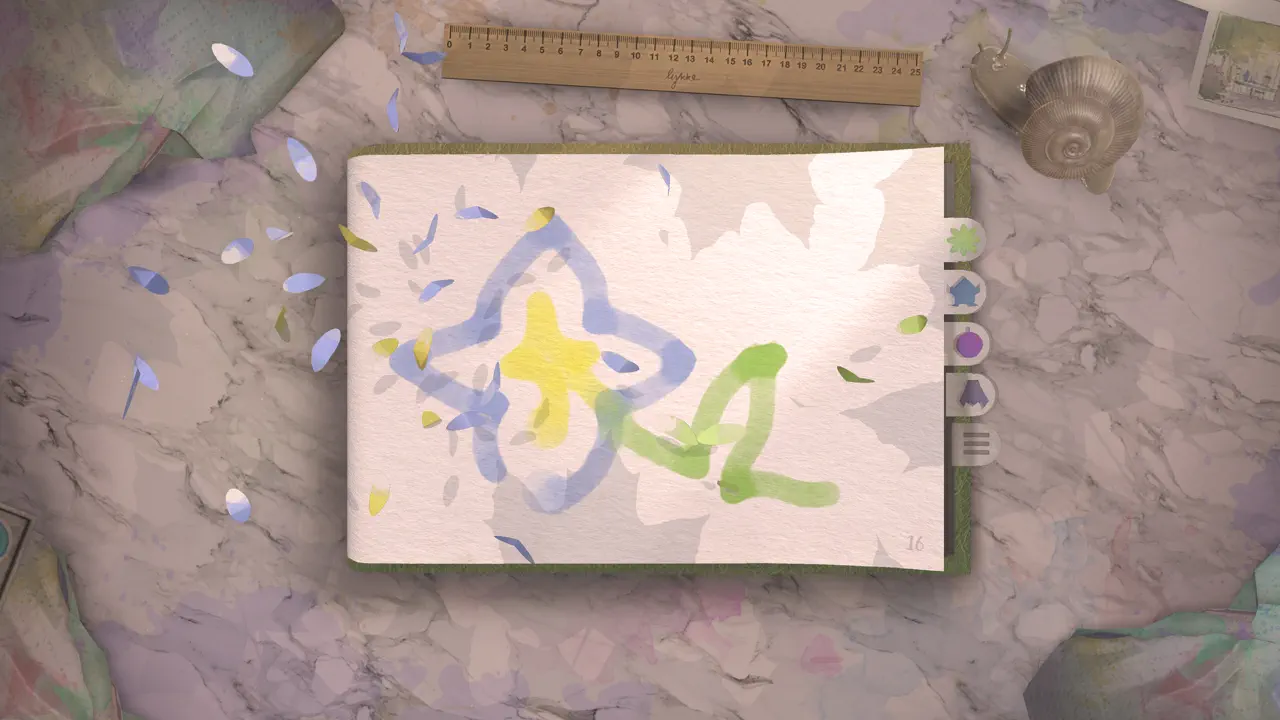
Mon Dec 07 2020 Shachah RayI love this app SO much. I downloaded it very skeptical, as I wasn’t sure what to think, but it ended up being so fun. You will enjoy this if you enjoy solving puzzles, let’s just say I solved the first ‘book’ in this app in a little over an hour, that’s how addicting and fun it is. The goal is to mix color droplets or drag them to the corresponding origami creation in the same color. Sounds easy right? Well, this next part is where it gets more fun. There’s little obstacles that get harder as you progress throughout the book, those are the puzzles you have to solve to match the colors to the origami. It may not make sense with me explaining it, but if you download it you’ll get what I mean. That’s not it though, if you have you’re volume on you’ll get to hear the sounds in the background which make the world of difference in your relaxation experience. It starts with nature sounds such as rustling leaves and bird calls, and progresses into things like raindrops and crickets. I’m going to stop wasting your time with this long review, but I hope this inspired you to get the app. Now if you’ll excuse me, I have to start on the second book in this app. :) Thank you so much for this developers, love it.
★★★★★ Simple and Satisfying
Fri Sep 20 2019 Will McKI gotta say, I’m not an easy person to impress when it comes to mobile gaming. I either like very simple games, or full-featured ones. A lot of mobile games try to take themes from console or PC games and translate them to mobile and it doesn’t work well. But this game does an amazing job at just keeping it simple. Progression is quick, but there are some more difficult puzzles as well. Try not to use the hints and you will be much more satisfied. Chances are you are only one step away from figuring it out anyways. You just need to think outside the box a bit, which is the whole point.
Music is awesome. It really sets the mood for the game, and sound quality is great. It’s very peaceful. I could imagine just sitting out on the porch or at a coffee shop and playing this game four a long time.
Animations and backdrops are very nice too. I like how the game changes it up every once in a while, and it’s always nice and peaceful.
★★★★★ Point one away from perfect
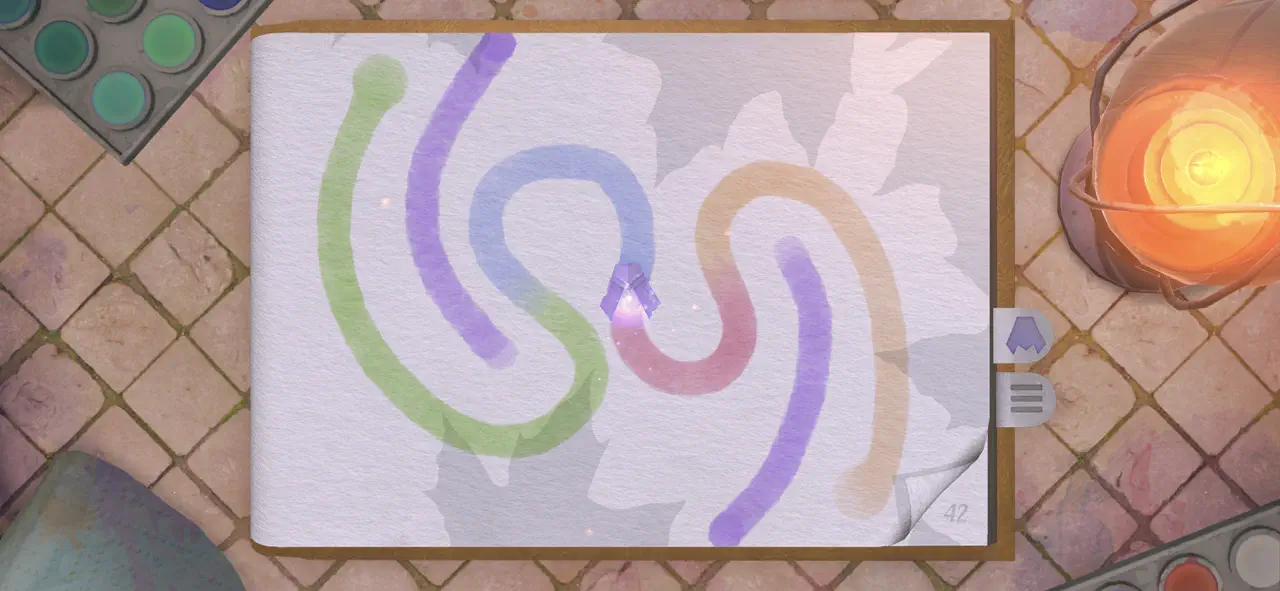
Sun Sep 04 2022 BuckysLeftArmThis game is brilliant. Beautiful, original and just the right amount of challenge. There is one flaw that can cause a player to mess up even if they have the right solution. The width of the stroke you are controlling. It’s too easily to accidentally overlap the wrong way and given that tracing back is part of a few solutions that can be troublesome. Not letting it be the full width of the finger could solve this. Alternatively the work space on the page could be larger with more space between lines already drawn as part of the puzzle. Note: One feature that might would also make things less frustrating during later levels which require more steps would be an undo feature limited to the last brush stroke instead of a full reset of the entire level.
Update: There seems to be something causing a very frustrating event that is reoccurring you should look in to. Some times I’ll take care of one color then go to do the next only to yo find the color drop inactive. This means I have to restart the entire level which is so annoying when I’ve done multiple steps with one color so carefully.
★★★★★ Perfect! It’s a real good and suggested Apple Arcade game.
Fri Apr 10 2020 OTFTYTThe best one. This game tells a story about love, and the peaceful environment adds to the calm environment of the game. And if you can’t figure out a puzzle, use hints! They don’t consequence you! This app is GREAT!!!!
Edit Book V: it’s fairly short, but the story goes on! It’s a beautiful ending? I’m not sure if tint. Is over but based on the pictures and the fact that there are only 20 levels in book V I’m guessing it is. I would love to see a sandbox mode added however. It would be fun to make levels/draw our own masterpiece!
Edit Zen Book: Yes, this is the best update. Its truly a really good idea. Not only is the Zen Book good, the Skip Levels feature is WHAT WE NEEDED. Some levels are just so annoying and buggy, i just gotta skip! Its so good you guys have added it! Keep it up!
★★★★★ An amazing game
Sun Nov 22 2020 CheeseballthehedgehogfrogI just want to say that I love this game so much. I got it yesterday and I couldn’t play anything else. The game is just the right amount of hard that it can take me a while to figure the levels out, but I don’t have to use hints. However, just in case I do, they are an option so you don’t have to look up answers, which is good. I typically don’t like puzzle games, so when this was recommended to me I fully believed I would soon delete it, but I absolutely love it! Not just the levels, but the graphics and music. I don’t have a ton of genuine feedback other than the fact that it is amazing, but keep up the great work! I’m sure all updates and levels soon to come will be very amazing.
★★★★★ I absolutely love it
Sat Jul 03 2021 Warrier of th White WellSo I usually don’t download games like this but this one really caught my eye. I saw how much other people liked it and it DEFINITELY lives up to my expectations. It’s relaxing and simple, while also challenging you. But not enough to make you frustrated or angry in any way. And I’m so glad there’s more books. I was really sad when I got to level 50, thinking the game was over but no! And I absolutely LOVE that y’all didn’t limit the hints to one a level because then I would hate this game 😅. Overall, it’s an addicting and peaceful game. If you are debating downloading this game, you 100% should, it calms you down quite a bit and is just a great game!
★★★★★ Relaxing and challenging in a good sort of way…
Sat Feb 11 2023 abgggggggghghyTint is a game that gives me a chance to relax and make mistakes. Also, I love a good challenge and if you do too, this is a PERFECT game for you! I started this game and couldn’t stop playing it! After you finished the first book, you get a option to play more challenging levels, or a ŻËÑ mode both entertaining, but in zen mode, you can skip the level your on. I really wish you could go back to the level you skipped, but unfortunately you can’t. Even though there is that one think I wish would change, that can’t bring down MY rating for the extremely fun game!
★★★★★ Not so relaxing at higher books.
Tue Feb 11 2025 FairytaleForestTint. certainly is an interesting game, one of the best when it comes to the relaxing realm of things. The elements of color theory harmonize in future books, but it’s the game’s “physics” that are its greatest weakness. Many times when flowing the hints, you’ll have to backtrack over past flows/colors, such as when red meets a yellow line, you may have to widen the orange area to allow yourself to cut back to it later with a color swapper. Except, if you even leave a tiny sliver of color—even by accident or you can’t see—it’s over, you get gray. Plus, the hints really shouldn’t reset after a level restart, as it seems like (and feels like) a time waste having to watch previous hints over again. So outside of some smaller things that are rather infuriating, it’s relaxing, sure.