Dislyte is arguably the most stylish game on the App Store. Period. It takes the familiar bones of a gacha RPG and wraps them in a neon, street-culture aesthetic that feels incredibly fresh. The way it interprets mythological gods—like making Thor a hulking brawler or Anubis a sleek assassin—is creatively brilliant.
What keeps you coming back, however, is the music. Every menu and battle is accompanied by high-quality tracks that make even the grind feel like a club experience. Mechanically, it offers deep tactical play through its AP (Action Point) manipulation system. While the late-game Relic farming can be a bit of a marathon, the journey there is a sensory delight. It's a bold, confident title that isn't afraid to be different.
I didn't expect to like this. Horse racing and solitaire sounds like a mess on paper, but Game Freak nailed the loop. It’s difficult, occasionally punishing if the cards don't fall your way, but the 'just one more race' factor is high. The transition to Apple Arcade is smooth, though I still miss the dual-screen setup of the 3DS original. It’s smart, tight, and doesn't waste your time with fluff.
Performance: Runs flawlessly; zero lag during the racing segments.
Buy if: You love Solitaire and want a game with meaningful progression.
Skip if: You hate games where luck (RNG) plays a significant role in winning.
Available on: Mac, Apple TV, iPhone, iPad, iPod
Version 1.7.1Fri Nov 10 2023
- Fixed an issue where game data sync via iCloud may not work properly depending on your device.
- Fixed an issue where the message displayed when collecting all trophies was not displayed correctly in some languages.
- Fixed other minor bugs.
Dislyte is an urban mythological RPG set in the near future where 'Miracles' have granted humans the powers of ancient gods. Known as Espers, these heroes must fight the 'Miramon' that threaten civilization. The game is famous for its distinct high-fashion aesthetic and a soundtrack that blends hip-hop, EDM, and pop. Engage in tactical turn-based battles and build a squad inspired by legends from Greek, Norse, Chinese, and Egyptian mythology.
Mar 2, 2024 � Game Freak are most known for making the Pok�mon games, but have you ever heard of one of ...Duration: 7:20Posted: Mar 2, 2024


Game Freak's cult 3DS title is now on the Nintendo Switch and it makes the transition just fine.
Shacknews - Mon Jul 15 2024
Pokemon developer Game Freak has commented on the possibility of a Nintendo Switch version for Pocket Card Jockey: Ride On!
Nintendo Everything - Mon May 15 2023
Game Freak has announced that it's rereleasing the 2013 title Pocket Card Jockey as Pocket Card Jockey: Ride On!, seven years after it was...
PocketGamer.biz - Mon May 15 2023
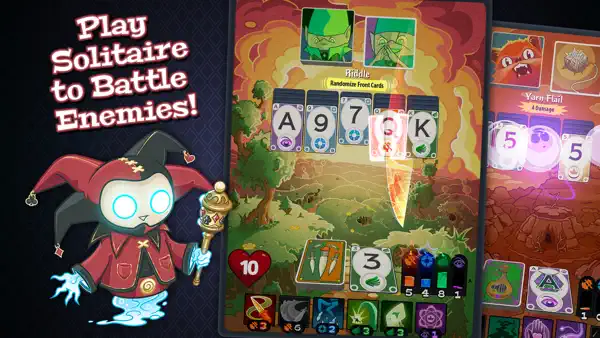
I've spent too many hours of my life playing Windows Solitaire when I should have been working, so I was naturally suspicious of Solitairica. Adding 'RPG elements' to everything is a tired trend, but here? It actually works. The genius is in the energy system. You aren't just clearing cards to win; you’re 'mining' energy to cast a shield or blast a monster before it hits you for 10 damage. It adds a layer of risk-management that Solitaire desperately needed. It’s got that 'Roguelike' sting where a bad shuffle can end a 30-minute run, which can be incredibly frustrating. The art style is 'indie-quirky,' which I could take or leave, but the gameplay loop is iron-clad. It’s one of those rare mobile games that I keep on every device I own. It’s smart, it’s fair, and it respects my time. Just don't blame me when you realize it's 2 AM and you're still trying to beat the final boss with the Monk class.
Kairosoft has been making the same game for fifteen years, just with different 'skins.' Whether it’s a game dev studio, a sushi restaurant, or a horse ranch, the core loop is identical. As a veteran gamer, I should be tired of it—and yet, I’m not. Pocket Stables is remarkably well-balanced. The tension of watching your horse in the final stretch of a race is genuine, and the breeding mechanics offer just enough depth to keep you planning for the next generation. It’s a bit formulaic, and the UI is still stuck in 2010 with tiny buttons and cluttered menus. However, there’s a total lack of aggressive microtransactions, which I respect immensely in today's mobile climate. You pay once and you get a deep, satisfying management loop. It won't convert Kairosoft skeptics, but for those of us who enjoy a good spreadsheet with cute pixel art, it’s a solid entry.
Dinsun here. I don't usually go for word games—they often feel like schoolwork. But Knotwords is different. It’s a logic puzzle first, and a vocabulary test second. It’s brilliant in its simplicity. You have a few letters, a shape, and you have to make it fit. It’s a 86. It’s clean, it respects your intelligence, and it doesn't have any of the fluff that ruins most modern mobile games. The daily puzzles are just the right length for a morning coffee. My only complaint is that occasionally it accepts some very obscure words that feel like a bit of a reach, but that’s minor. If you have a brain, you should play this.
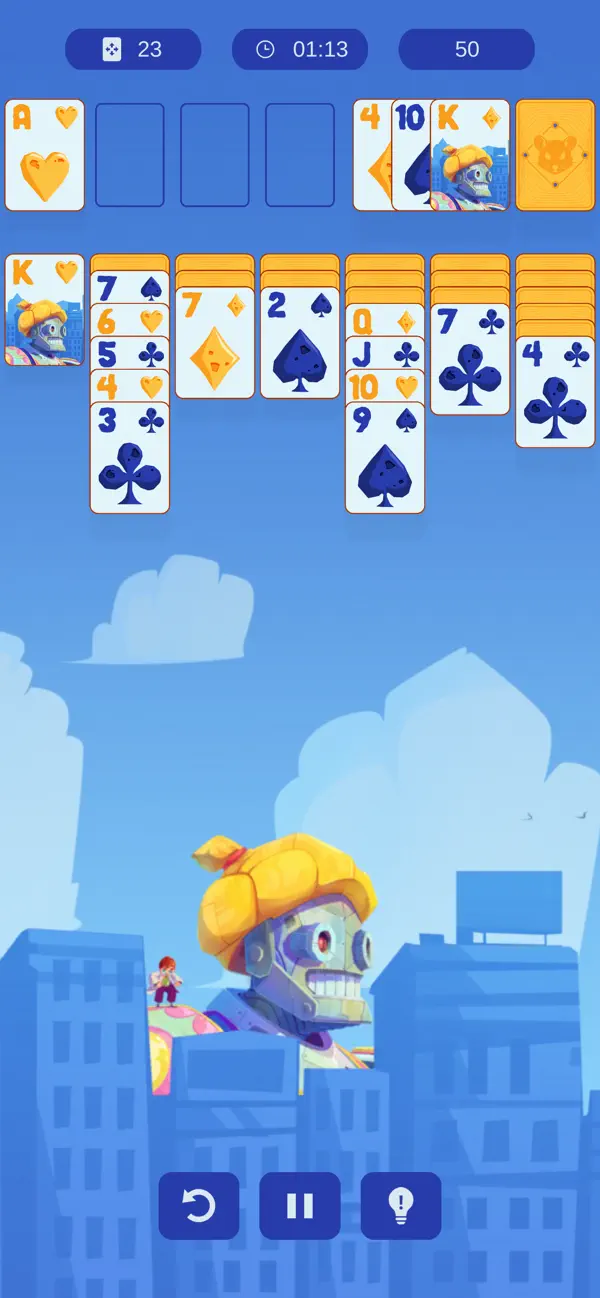
Dinsun here. It’s Solitaire. You know it, I know it, your grandmother knows it. But I have to give credit where it’s due: Solitaire Stories is the most 'premium' version of this game I’ve ever seen. The idea of wrapping a narrative around a deck of cards is a bit silly, but the execution is so charming that it works. The art for each story is distinct and high-quality, and the music is actually worth keeping the sound on for. At the end of the day, though, the story doesn't change the fact that you’re playing the same game you’ve played for forty years. If you hate Solitaire, this won't change your mind. But if you’re someone who finds the rhythmic nature of the game relaxing, this is a vastly better way to experience it than the ad-infested versions found elsewhere. It’s a very safe, very comfortable piece of software. It’s like a nice new cover for an old book.
Dinsun here. I’ve played Solitaire since it was a pack of physical cards and a green felt table. This version does exactly what it says on the tin. The animations are smooth enough, and it doesn't crash, which is more than I can say for some modern 'AAA' titles. However, it feels like it’s trying a bit too hard to gamify a classic with all these 'daily goals' and 'badges.' It’s a card game, not a career. It’s functional, but it lacks the soul of a true tabletop experience. If you need to kill ten minutes at the bus stop, it works. Don't expect to be wowed.
Solitaire is the ultimate time-waster, and I've played every iteration known to man. Flipflop is interesting because it breaks the cardinal rule of stacking. At first, it feels like cheating—stacking a 7 on an 8 then an 8 on a 7? It feels wrong. But then you realize Gage has just widened the bottleneck. It’s less about the 'luck of the draw' and more about how you choose to organize your mess. It’s a quiet game. No loud music, no flashing lights. I appreciate that. It doesn't demand my full attention, but it rewards it. It’s not a revolutionary step for card games, but it’s a smart tweak. It's a bit too easy on the lower suit levels, though. Once you get the hang of the 'flip-flopping,' the early game becomes a bit of a formality. Good for a quick session, but unlikely to be your main game.
Look, it’s Solitaire. You know it, I know it, your grandmother knows it. There are no surprises here, and for a man like me, that’s actually a recommendation. MobilityWare has been the 'king' of this specific hill for a long time because they don't mess with the formula. The cards move where you expect them to, the sound of the deal is satisfying, and the statistics are actually comprehensive. The Arcade version is finally clean of the obnoxious ads that made the standard version unplayable. It feels like the professional tool it’s meant to be. Is it exciting? No. Is it high-art? Of course not. But it is perfectly functional, highly polished, and exactly what you want to play while you're listening to a podcast or waiting for a meeting to start. It does one thing and it does it correctly.
It pains me to give a score this high, but Slay the Spire earns it. This isn't just a game; it's a perfectly calibrated machine. No fluff, no predatory microtransactions, just pure tactical card-play. It took me back to the days when games were finished products upon release. The synergy between relics and cards is so deep that after hundreds of hours, I’m still finding new ways to lose—or win. The mobile port is functional, though the touch controls can be a bit finicky with small card text. However, the core loop is so strong it doesn't matter. It’s one of the few games that actually respects the player's intelligence. If you die, it’s usually your fault, not the RNG. That’s how a game should be designed.
If you want to get the notification of newest video, feel free to subscribe to our channel