Walking through the world of Ni no Kuni: Cross Worlds feels like stepping into a living painting. The collaboration with Studio Ghibli is evident in every frame—the character designs, the whimsical enemies, and the lush landscapes are simply unmatched in the mobile space. Joe Hisaishi’s score provides the perfect emotional backbone, making even simple quests feel epic.
As an MMORPG, it leans heavily into social features. The 'Kingdom' system is well-integrated, encouraging players to cooperate rather than just compete. While the game does feature 'Auto-play' mechanics that might turn off some hardcore players, the manual combat for world bosses and PvP is engaging and necessary. It’s a cozy yet vast world that manages to capture the wonder of the original console titles beautifully.
I’m not the target audience for this, but even objectively, it’s thin. The writing is cliché, and the 'choices' often feel like they lead to the same result. The only saving grace is the lack of microtransactions found in the standard version, but that doesn't fix the core lack of substance. It feels like reading a cheap grocery store novel where you occasionally tap the screen.
Performance: Very lightweight; runs on older hardware without issue.
Buy if: You enjoy light, soap-opera style drama and want it ad-free.
Skip if: You want deep narratives or complex gameplay mechanics.
Available on: Mac, Apple TV, iPhone, iPad, iPod
Ni no Kuni: Cross Worlds invites players into a beautiful world created by Level-5 and animated in the iconic style of Studio Ghibli. As a 'Beta Tester' for a virtual reality game, you soon realize the world you've entered is real. Choose from five classes, collect mystical familiars, and join a 'Kingdom' to build your own community. With music by Joe Hisaishi, this game offers an emotional and visual experience unlike any other on mobile.
Jan 13, 2023 � ... Episode XOXO is an ever-growing collection of interactive stories where you choose your ...Duration: 2:37:34Posted: Jan 13, 2023


Episode XOXO is an interactive storytelling game from Pocket Gems. It features a collection of stories where players choose their own...
iPhone in Canada - Mon May 15 2023
Episode XOXO has a catalog of interactive stories written by different writers. At launch, you can choose between eight stories, including The Royal Bachelor...
CNET - Mon May 15 2023
Episode XOXO is an interactive storytelling game full of love, drama and adventure now on Apple Arcade. It brings a version of the very...
Cult of Mac - Mon May 15 2023
I've seen these interactive fiction apps come and go, and Choices is certainly the most stable of the lot. The production value is high for the genre—the art is consistent and the writing, while often leaning heavily into trope-filled romance, is competent. However, as a gamer who grew up on branching paths that actually meant something, the 'choice' here feels superficial. Most paths eventually lead back to the same destination unless you're willing to cough up premium currency for the 'better' scenes. It’s less of a game and more of a digital Harlequin novel with a toll booth. The sheer volume of content is impressive, but the quality is a roller coaster. For every solid fantasy adventure like 'Blades,' you have five generic office romances. The monetization is the real killer for me; it’s hard to stay immersed when every meaningful character development is locked behind a diamond paywall. If you’re looking for a deep RPG, look elsewhere. If you just want a distraction for your commute and don't mind the nickel-and-diming, it serves its purpose, but I can't call this a must-play.
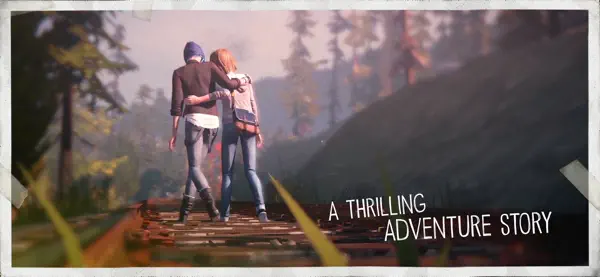
Dinsun here. Life is Strange is one of those 'interactive movies' that the industry loves to gush over. To its credit, the story of Max and Chloe is genuinely moving, and the time-rewind mechanic is a clever way to explore the 'what ifs' of decision-making without the constant need for save-scumming. It tackles heavy themes with more grace than your average triple-A title, and the atmosphere in Arcadia Bay is thick with a specific kind of autumnal melancholy that I actually appreciated. However, let’s be realistic. The dialogue can be painfully 'fellow kids' at times, and the pacing in the middle episodes drags. As a conservative grader, I find the gameplay a bit thin—you’re mostly walking around and clicking on highlighted objects. The mobile port is decent, but it doesn't hold a candle to the PC experience in terms of visual fidelity. It’s a solid narrative experience, but don't go in expecting a deep challenge or revolutionary mechanics. It's about the mood and the choices, nothing more.
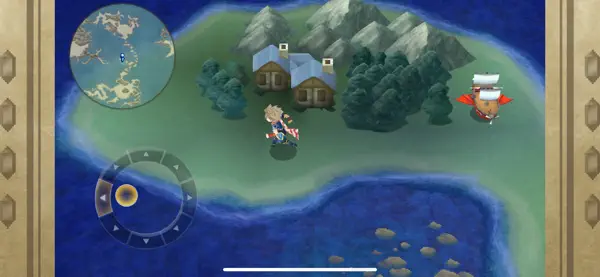
Dinsun here. This game is the definition of 'more of the same.' It’s episodic by nature, which makes the pacing feel disjointed. You’ll revisit the same caves and towns you saw in FFIV. The 'Band' system is interesting but feels grindy. Unless you are a die-hard Cecil fan, this is a skip. It feels like fan fiction with a budget.
It pains me to give a score this high, but Slay the Spire earns it. This isn't just a game; it's a perfectly calibrated machine. No fluff, no predatory microtransactions, just pure tactical card-play. It took me back to the days when games were finished products upon release. The synergy between relics and cards is so deep that after hundreds of hours, I’m still finding new ways to lose—or win. The mobile port is functional, though the touch controls can be a bit finicky with small card text. However, the core loop is so strong it doesn't matter. It’s one of the few games that actually respects the player's intelligence. If you die, it’s usually your fault, not the RNG. That’s how a game should be designed.
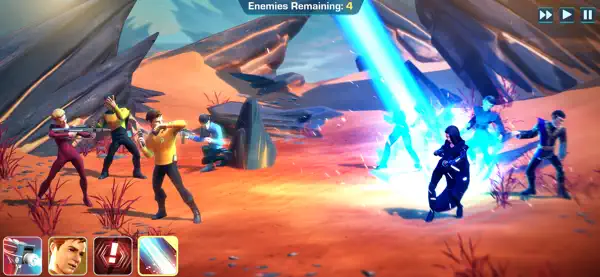
Dinsun here. As a fan who grew up watching TNG on syndication, seeing Picard, Janeway, and Spock in one squad is a nice bit of nostalgia. Star Trek Legends is a polished hero collector, and since it’s on Apple Arcade, it’s mercifully free of the predatory 'energy' systems and loot boxes that usually plague this genre. The character models are surprisingly detailed, and the writing at least attempts to sound like Star Trek. However, the combat is incredibly generic. If you’ve played any mobile turn-based RPG in the last decade, you’ve played this. The strategy mostly boils down to 'bring the right color to the fight' and tapping your skills when they’re off cooldown. There’s no positioning, no real tactical innovation. It feels like a 'skin' over a very standard template. It’s enjoyable for a Trek fan who wants to collect their favorite characters, but as a game, it’s remarkably uninspired. It’s safe, it’s corporate, and it’s ultimately a bit dull.
Dinsun here. It's a miracle we finally got this game in the West. This remake is colorful and the combat is snappy enough. However, the English voice acting is nearly unbearable—I recommend switching to Japanese immediately. The world feels a bit static, and the AI for your companions is dim-witted at best. It's a solid weekend play, but don't expect the depth of a modern blockbuster.
Dinsun here. It feels like 1997 again, and for once, that’s a good thing. Fantasian is exactly what I want when I say I miss the 'old' Final Fantasy. Sakaguchi hasn't lost his touch. The diorama backgrounds are a stroke of genius—they give the game a sense of scale and physical presence that even the most advanced 3D engines can’t replicate. It feels like playing inside a miniature museum. Mechanically, the Dimengeon system is a godsend. It solves the biggest problem with the genre—repetitive random encounters—by letting you bank them for a massive, strategic battle later. The difficulty in the second half of the game is notoriously brutal, which I actually appreciate; it requires real mastery of the systems rather than just grinding. My only complaint is the story—it’s a bit 'amnesiac hero saves the world' by the numbers. But with Uematsu’s music in my ears and these visuals, I’m willing to forgive a lot of tropes. This is the best reason to have Apple Arcade.
Dinsun here. I’ve seen this game ported more times than I care to count, but the Pixel Remaster is probably the most 'playable' version for a modern screen. The rewritten script is fine, and the music arrangements are admittedly impressive. However, the difficulty has been significantly dampened. In my day, managing spell charges meant something; now, with auto-battle and boosted XP, you can sleepwalk through the Chaos Shrine. It's a museum piece that's been polished so much it lost some of its character.
If you want to get the notification of newest video, feel free to subscribe to our channel