Upgraded With New Features
The following are the latest 60 Updated Games in Apple Arcade. Mouse Over will see the detail of the Update.

 Dinsun Review76/100Play on Apple Arcade
Dinsun here. The first Jetpack Joyride was a pioneer of the 'endless runner' plague. This sequel is actually an improvement because it adds structure. There are levels. There are bosses. It feels less like a slot machine and more like a game. The shooting mechanics are basic but functional, and the variety of vehicles keeps things from getting stale too quickly. The removal of microtransactions is the best feature. You actually earn upgrades through play, not through your credit card. The art style is a bit too 'modern mobile' for me—very clean, very safe—but it’s vibrant. It's a decent way to kill ten minutes, even if it feels a bit shallow after a while. It’s an arcade game through and through.

 Dinsun Review68/100Wait for Sale
Dinsun here. I don't usually care for 'cooking' games, but the fantasy theme here is well-implemented. It gets stressful fast, which I suppose is the point. The upgrades take a long time to earn without spending money, which is my usual complaint. It's competent, but it won't change your life.

 Dinsun Review58/100Wait for Sale
The recent industry trend of 'cozy' games often feels like an excuse to deliver absolutely minimal gameplay mechanics under the guise of relaxation and mindfulness. Art of Fauna provides exactly what it promises on the tin: you drag and drop puzzle pieces to form beautiful illustrations of animals. I will concede that the artwork itself is genuinely commendable, featuring soft, hand-drawn aesthetics that are very easy on the eyes, accompanied by a suitably relaxing acoustic soundtrack. However, as a 'game,' it is entirely devoid of any substantial challenge. The mechanics are restricted to basic snapping of pieces on a 2D grid. It functions far more as an interactive art gallery than a robust puzzle game. If you simply want a digital jigsaw puzzle to mindlessly click through while listening to a podcast, it suffices, but it demands absolutely nothing of the player's intellect or reflexes.

 Dinsun Review62/100Wait for Sale / Free to Play
Look, I’ve played enough football sims since the 90s to know when a game is trying to cut corners. Mini Football Legends isn't a disaster, but it’s definitely catering to the 'pick up and play for five minutes' crowd. The controls are responsive enough, and it’s easy to get a handle on the basic loop of upgrading players and winning matches. However, as someone who values tactical nuance, I find the AI predictable and the strategy elements a bit thin. It feels more like a collectible card game with a soccer skin than a proper sports title. The progression system is clearly designed to keep you on the treadmill, pushing for those legendary pulls. While the visuals are clean and the performance is stable, there's a certain soul missing here—that grit and unpredictability of the real sport. It's a fine distraction if you're waiting for a bus, but don't expect it to replace a serious management sim or a high-fidelity console experience. It's safe, it's playable, and it's ultimately quite average.

 Dinsun Review55/100Play on Arcade
Goat Simulator is a tech demo masquerading as a game. At 40, I find the 'it's broken on purpose' aesthetic a bit tired. It was funny ten years ago, now it just feels like a lazy excuse for poor optimization. That said, if you have twenty minutes to kill and want to headbutt a gas station, it does exactly what it says on the tin. It's mindless, stupid fun, but don't expect it to hold your attention for more than an afternoon.

 Dinsun Review58/100Wait for Patch
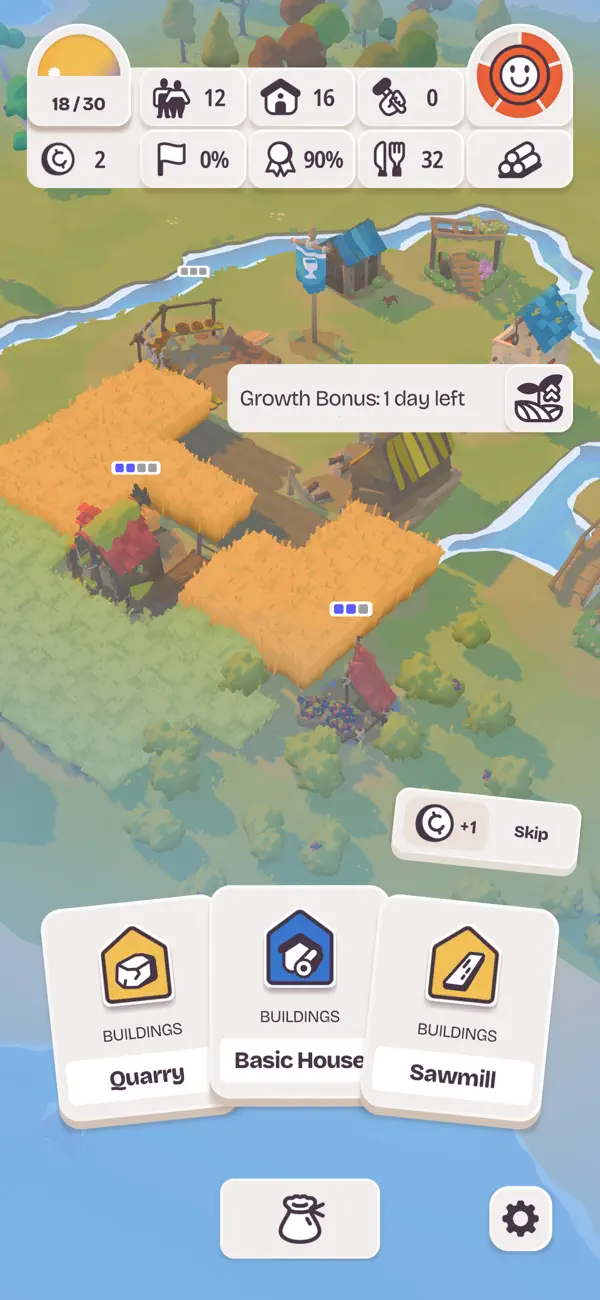
I liked the first Outlanders. It was a calm, well-paced builder. The sequel keeps the charm but breaks the hardware. My phone feels like a hot plate after fifteen minutes. It’s baffling how a game with this art style can drain battery and lag this much on modern chips. The gameplay itself is improved with better building variety, but I can't enjoy it when I'm worried about my phone's lifespan. Wait for a patch.

 Dinsun Review76/100Play on Arcade
I’ll be honest: if you told me I’d spend twenty hours 'embroidering' on an iPad, I would have laughed in your face. But stitch. is surprisingly compelling. It’s a logic puzzle at its core, and once you get past the flowery exterior, the puzzles are quite well-constructed. It’s like a more relaxed version of Picross. The tactile feel of the thread filling the grid is oddly satisfying—the haptic feedback is some of the best I’ve felt in a mobile game. It’s not going to set the world on fire, and the difficulty curve is very gentle, which might bore those looking for a real brain-buster. But as a way to shut off the world and focus on a single task, it’s excellent. It’s the kind of game I play before bed. It doesn't demand much, but it gives back a sense of calm. A solid, conservative 76 for being exactly what it needs to be without any pretension.
 Dinsun Review48/100Skip
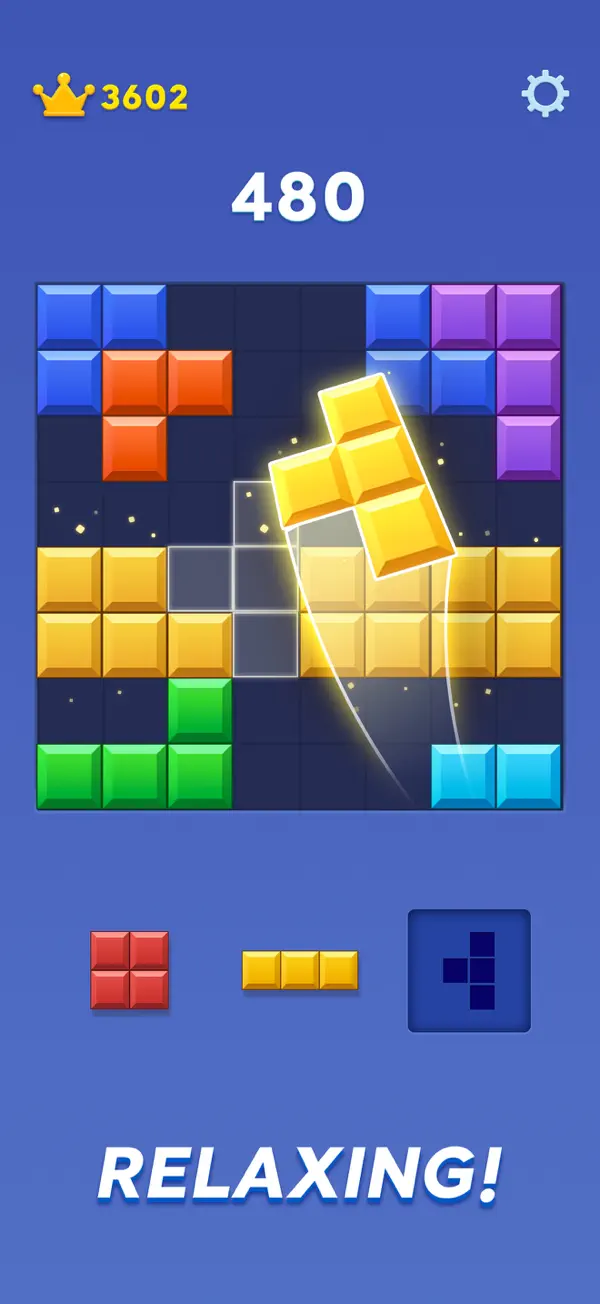
Block Blast is essentially what happens when developers want to monetize the spatial concepts of Tetris without paying any licensing fees, stripping away the gravity and real-time urgency in the process. You slowly drag blocks of varying shapes onto an 8x8 grid to clear horizontal and vertical lines. It is functionally identical to 1010! and countless other clones that have infested the mobile market for years. The game relies entirely on a random algorithm that eventually, inevitably gives you a sequence of pieces that cannot possibly fit, forcing a frustrating 'game over' state that feels entirely out of your control. There is no deep strategy beyond basic space management, and the constant barrage of flashing 'combo' effects feels cheap and unearned. As someone who appreciates the elegant design and escalating tension of classic arcade puzzlers, I find this completely uninspired, blatantly derivative, and utterly devoid of genuine fun.
 Dinsun Review40/100Skip
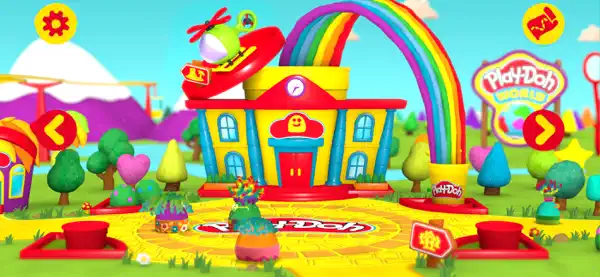
Dinsun here. The whole point of Play-Doh is the tactile experience. Sitting a child in front of a screen to 'drag' dough around is a poor substitute. It’s also filled with subscription prompts. Buy the actual clay instead.

 Dinsun Review58/100Skip (Unless included with Apple Arcade)
At 40, I've seen plenty of licensed virtual pet games come and go, and Pusheen's Place doesn't do much to break the mold. It's essentially a passive collect-and-decorate loop bundled with rudimentary match-3 and bubble shooter minigames. The visual presentation is admittedly faithful to the IP, but there is zero mechanical friction or meaningful decision-making here. You tap, collect, swap a couch, and play basic mobile puzzles that offer no challenge. It passes the time if you just want something mindless, but it's far too shallow to keep anyone engaged beyond a few superficial sessions.
 Dinsun Review62/100Wait for Sale
I've got a lot of respect for the original Crossy Road when it dropped years ago—it understood arcade pacing and simple design. But this rush-style variant tries to inject extra adrenaline into a formula that didn't necessarily need it. As a forty-year-old gamer with reflexes that aren't quite what they were in my twenties, speeding up the chaotic traffic dodging just turns the experience into a frustrating exercise in trial-and-error rather than skill. That said, it isn't completely devoid of charm. The blocky art style is clean, and it's fine for a quick five-minute distraction when you're waiting in line. But the monetization and endless-runner fatigue catch up to you fast. There's no real narrative weight, no deep progression, and once you've dodged your hundredth truck, the thrill completely evaporates. It's an okay diversion, but conservative gamers looking for substance will grow tired of it rapidly.
 Dinsun Review60/100Free to Play
Dinsun here. Playing Temple Run in 2026 is like watching a black-and-white movie. You respect it for what it started, but you can’t help but notice the flaws. The graphics are dated, and the gameplay is as shallow as a puddle. Tilt and swipe. It’s a Skinner box designed to make you want to beat your high score for no reason other than pride. It’s an important part of history, sure, but why would I play this when I have modern titles? It’s basic, repetitive, and ultimately, a bit boring.
 Dinsun Review78/100Play on Subscription (Apple Arcade)
I’ll be the first to admit I am not the target audience for this. I'm a 40-year-old man, not a Sanrio collector. But I know a well-made game when I see one. Island Adventure isn't just a licensed cash-grab; it’s a genuinely robust life sim. The quest structure is actually more engaging than recent Animal Crossing titles, giving you a real sense of progression as you unlock new areas of the island through actual gameplay mechanics like swimming and climbing. It’s visually vibrant and the performance is surprisingly high for such a dense environment. My main gripe—besides the sugary-sweet aesthetic which I tolerate—is that the 'friendship' grind can feel a bit repetitive. You’re essentially a glorified errand runner for cats and frogs. But if you want a game that’s relaxing without being mindless, this is one of the best on the service. It’s a quality product, regardless of the IP.
 Dinsun Review65/100Play via Apple Arcade
I’ll admit, seeing Scrooge McDuck and Mickey Mouse in a high-fidelity world has its charms, even for a cynical man like me. But once the nostalgia wears off, you're left with a very grindy experience. It’s a 'chores' simulator. Go here, pick ten flowers, bring them back, talk to Goofy. It feels like busywork designed to keep you logged in rather than provide a meaningful challenge. The Apple Arcade version is superior because it removes the aggressive monetization found on other platforms, but the core gameplay remains shallow. The writing is surprisingly decent, capturing the character's voices well, but the actual 'game' part is just too repetitive. It's safe, family-friendly corporate entertainment. I’m not the target audience, but even I can see the lack of mechanical depth.
 Dinsun Review75/100Wait for Sale
Cooking games are usually too frantic for me, but this one has a nice pace. The customers are weird—they ask for 'pizzas like the sunrise' and you have to figure out what that means. It’s more of a puzzle game than a pure sim. The art style is quirky and I appreciate that it doesn't look like every other generic mobile game. The progression is steady, but it can get repetitive once you’ve unlocked most of the ingredients. It’s a solid B-tier game that’s perfect for short sessions.
 Dinsun Review74/100Buy Full Price
Now this is more like it. As someone who appreciates classic puzzle design that doesn't rely on flashy explosions or microtransactions to grab your attention, KAMI 2 hits a lot of the right notes. The concept is dead simple: flood the screen with a single color in a limited number of paper-folding moves. But once you get past the gentle introductory stages, it turns into a rigorous test of spatial reasoning that will genuinely make you stop and scratch your head. It's quiet, it's elegant, and it doesn't insult the player's intelligence with intrusive hand-holding. My only real critique is that puzzle difficulty can spike dramatically, occasionally pushing past satisfying logic into trial-and-error frustration. But for a mature gamer looking for a clean, cerebral brain teaser to digest on a mobile screen, it's one of the few titles on the App Store that actually earns its keep.
 Dinsun Review65/100Wait for Sale
Oink Games makes some fantastic, minimalist physical board games, but translating them to a digital screen strips away the tactile joy and nuanced social dynamics that make them work in the first place. Titles like Deep Sea Adventure are intact mechanically, but playing them on an iPad or iPhone feels remarkably sterile. The user interface is strictly utilitarian, and while the game supports multiplayer, the lack of face-to-face interaction heavily damages the deception and bluffing aspects required for games like A Fake Artist Goes to New York. If you play pass-and-play locally, it feels noticeably clunky handing a tablet back and forth. At my age, I would much rather just purchase the physical boxes, set them on a table, and invite friends over for a proper evening. It is a functionally competent digital preservation, but as a video game experience, it feels like it has completely lost its soul.

 Dinsun Review86/100Buy Full Price
I didn't expect to enjoy being a cult leader this much. The gameplay loop is incredibly tight—go out for a run, kill some heretics, come back, and feed your followers. It’s dark, it’s cynical, and it’s mechanically deep. My only gripe is that the management side can get a bit tedious once your cult grows too large, but it's a minor complaint for a game this stylish.
 Dinsun Review76/100Apple Arcade / Essential for Fans
The combat is tighter than I expected for a mobile title. Switching between the four brothers actually feels meaningful, which is a rare feat for these licensed games. It’s a roguelike through and through, meaning you’ll be doing the same runs over and over. While the meta-progression keeps you coming back, the environments get stale pretty quickly. It’s a solid action game that respects the source material, even if it borrows heavily from the Hades playbook without matching its writing quality.
 Dinsun Review74/100Play via Apple Arcade
Dinsun here. I’ve seen plenty of gimmicks in forty years, and WHAT THE CAR? is essentially 'Gimmick: The Game.' It’s clever, I’ll give it that. The way it subverts what a 'car' should be is genuinely amusing for the first few dozen levels. It’s polished and the physics aren't as broken as they look, which shows some actual craft behind the silliness. However, as a conservative gamer who values depth and progression, the charm starts to wear thin. It’s a series of punchlines rather than a cohesive racing experience. Once you’ve seen a car flip burgers or walk on stilts, the mechanical simplicity starts to glare. It’s fine for a quick distraction on the train, but don't expect it to hold your attention like a proper simulator or a deep RPG.

 Dinsun Review70/100Wait for Sale / F2P
Dinsun here. The swing mechanics are actually quite good, using a touch-and-drag system that feels intuitive. The courses are well-rendered. But like every mobile sports game, it's 'pay-to-win' at the higher ranks. If you just want to play a casual 9 holes, it's fine. If you want to compete, open your wallet.
 Dinsun Review52/100Skip
I’ve seen this game a thousand times under a thousand different names. Words of Wonders: Search is the definition of 'low-effort' puzzle design. You look at a grid, you find the word 'APPLE' or 'CAIRO,' and you move on. The pictures of the Eiffel Tower in the background don't make the act of circling letters any more engaging. It’s a passive experience, almost clinical in its simplicity. It’s a safe game for people who don't actually like games. If you want something to do while your brain is entirely switched off, this is it. But if you value your time as a gamer, there are much more engaging ways to challenge your mind. It’s a digital version of the puzzle books you find in an airport gift shop. Functional, but boring.

 Dinsun Review72/100Play via Apple Arcade
As a man who grew up on Tony Hawk’s Pro Skater, this is a very different beast. It’s more about the 'vibe' than the score. The NYC environments are beautifully rendered in that minimalist style, and the soundtrack is genuinely good. However, the controls are a bit too simplified for my liking. It feels like skating on rails sometimes, lacking the tactile precision I crave from a sports title. It’s a great game for a commute—short bursts of play that don't require too much focus. But once you’ve seen the three or four main areas, there isn't much to keep you coming back. It’s style over substance, but at least the style is impeccable. A solid addition to Apple Arcade, but hardly a revolution.
 Dinsun Review84/100Premium Title / Subscription required
Dinsun here. If you know me, you know I respect systems that work. Football Manager is the gold standard. The 'Touch' version is a bit streamlined compared to the PC behemoth, which is actually a relief for a man with a full-time job. It’s dense, it's complicated, and it doesn't hold your hand. The 3D engine still looks like something from 2010, but that's not why we play. We play to find that 16-year-old wonderkid in the Bulgarian second division. It’s an obsessive, demanding game that rewards patience. Not for the casual 'FIFA' crowd.
 Dinsun Review45/100Skip
Look, I get it—it's for toddlers. But as someone who's been gaming since the 8-bit era, I expect even simple software to have some depth. Nick Jr. Playtime is essentially a digital babysitter. It’s flashy and uses every licensed character in the book to keep a kid's attention, but the actual 'game' elements are paper-thin. It's a series of 'tap and watch' moments that barely qualify as interaction. For a 40-year-old gamer looking at the mechanical integrity of a product, there's just not much here. It serves its purpose for its target demographic, but from a critical standpoint, it’s a repetitive marketing tool disguised as education.
 Dinsun Review64/100Play via Subscription
It's a physics puzzler in the vein of Cut the Rope. The 'Puffies' are cute, I suppose, but I've played this exact game fifty times before. The puzzles are well-designed, and the difficulty curve is fair, but it doesn't do anything to stand out from the crowd. It’s fine for a commute, but you won't remember it next week.
 Dinsun Review52/100Wait for Sale (In-app unlocks)
Dinsun here. I've seen a thousand coloring apps, and this one is fine, I guess. It mimics the 'wash and repeat' cycle of the actual Scribble Scrubbie toys quite well. However, the loop is incredibly short. You color, you wash, you repeat. For an adult gamer, this is mind-numbing; for a kid, it's a few minutes of fun before they want to do something else. The UI is clean, and the colors are vibrant, but it's a very 'safe' experience. It doesn't take any risks, and it doesn't offer anything you haven't seen in a dozen other art apps. It's essentially a free ad for the physical toys.
 Dinsun Review58/100Play via Subscription
Another one for the parents. It's well-made, I'll give it that. The physics of the bricks feel right, and the activities are tailored perfectly for their intended age group. It’s better than the Disney one because there’s at least some 'building' involved, but it's still just a digital toy. Not for 'gamers' in any traditional sense.
 Dinsun Review65/100Wait for Update
I remember when Cooking Mama was the peak of casual gaming on the DS. This Arcade version, Cuisine!, tries to modernize things with an ingredient-combination system, but it feels like it’s lost its way. The mini-games are as simple as ever—maybe too simple. I found myself going through the motions, flicking my screen and tapping icons without any real sense of accomplishment. It’s 'fun' in a mindless sort of way, but for a 40-year-old gamer, it’s a bit too juvenile. The daily limit on recipes is a baffling design choice for an Arcade game. Why restrict my play when I’m already paying for the service? It feels like a holdover from a free-to-play model that they forgot to remove. The graphics are clean and Mama is as cheerful (and slightly terrifying) as ever, but the gameplay loop doesn't have the legs to keep me coming back for more than a few days. It’s fine for kids, but seasoned gamers will find it half-baked.
 Dinsun Review30/100Skip
It absolutely baffles me that developers continue to release standard coloring applications masquerading under the title of 'games.' Let me be perfectly clear: there is no fail state here, there is no challenge, and there is certainly no actual gameplay. It is simply a tap-to-fill digital canvas targeted at toddlers to keep them quiet in restaurants. While the lines are crisp and the application runs stably enough, the aggressive monetization strategies for 'premium' coloring templates feel completely predatory for an app supposedly tailored 'for families.' Back in my day, we bought a 99-cent physical coloring book and a box of crayons, which actually developed fine motor skills in children. This digital substitute offers absolutely nothing that a hundred other similar, free applications haven't already done better. It is entirely devoid of artistic merit, educational value, or interactive depth.
 Dinsun Review55/100Play via Subscription
I'm not the target audience here, and I suspect most people reading this aren't either. It's a digital coloring book. It works exactly as advertised. If you have kids who love Disney, they'll be occupied for a while. As a game, it doesn't exist. As a tool, it's fine. Scoring it like a game feels wrong, but here we are.
 Dinsun Review71/100Wait for Sale / Worth a Try on Arcade
As someone who grew up with River City Ransom on the NES, seeing Kunio-kun adapted into a survivor-like is a decent fit. The combat carries that classic arcade crunch, and grinding for gear upgrades scratches an ARPG itch. However, when hundreds of zombies crowd the screen alongside flashy special moves, readability collapses entirely. It's good chaotic fun for a run or two, but it lacks the tight mechanical precision of classic beat-'em-ups or top-tier survivor titles.
 Dinsun Review82/100Included with Apple Arcade
Dinsun here. I usually don't have the patience for digital jigsaw puzzles, but Patterned is different. It’s elegant. The way the pattern bleeds out into the edges of the screen upon completion is genuinely satisfying. It’s a very quiet game, meant for winding down after a long day of staring at spreadsheets. The artist selection is diverse and the difficulty scales naturally. Because it's on Apple Arcade, there’s no nonsense—no ads, no 'buy more hint' buttons. It's just you and the art. It’s not a 'thrilling' game by any means, and I wouldn't play it for hours on end, but as a tool for relaxation, it’s nearly perfect. It’s one of the few games on the service I keep installed.
 Dinsun Review70/100Play on Subscription (Apple Arcade)
Look, it’s Solitaire. You know it, I know it, your grandmother knows it. There are no surprises here, and for a man like me, that’s actually a recommendation. MobilityWare has been the 'king' of this specific hill for a long time because they don't mess with the formula. The cards move where you expect them to, the sound of the deal is satisfying, and the statistics are actually comprehensive. The Arcade version is finally clean of the obnoxious ads that made the standard version unplayable. It feels like the professional tool it’s meant to be. Is it exciting? No. Is it high-art? Of course not. But it is perfectly functional, highly polished, and exactly what you want to play while you're listening to a podcast or waiting for a meeting to start. It does one thing and it does it correctly.

 Dinsun Review75/100Wait for Sale / Apple Arcade
Dinsun here. This game is surprisingly tough. It looks like a simple kids' game, but the combat requires genuine focus. The rock-paper-scissors system works well, and when you get into a rhythm, it feels great. I appreciate the variety of enemies, though the bears always seem to show up at the worst possible time. It’s a bit light on content if you aren't the type to chase high scores or unlock every character variant, but for a few bucks or through Apple Arcade, it’s a solid distraction. The animations are smooth and the 'thwack' sounds are satisfying. It’s not a deep RPG, but it’s a well-made arcade fighter that respects your skill.
 Dinsun Review72/100Wait for Sale
Dinsun here. I’ve always had a soft spot for games that rely on logic. Bridge Constructor is a veteran of the genre. It's not pretty—the graphics are functional and the menus are dated—but the physics are honest. If you build a bad bridge, it falls down. There is a purity in that which I respect. It can be frustratingly pedantic at times. A single misplaced strut can cause total structural failure, and the game doesn't always do a great job of explaining *why* something broke. But when you finally see that heavy truck roll across your sketchy wooden frame without it collapsing, it’s a genuine moment of triumph. It’s a thinking man’s game, provided that man has a lot of patience.
 Dinsun Review40/100Skip
Dinsun here. I’ve seen this game a thousand times under a thousand different names. Helix Jump is the pinnacle of the 'Hypercasual' plague. It’s designed to be played for 30 seconds while you wait for something better to happen. There is no depth, no real skill ceiling, and certainly no art. The game is a vehicle for advertisements. You play for 15 seconds, you watch a 30-second ad. It’s an insult to the medium of gaming. The physics are floaty, and the 'difficulty' is just a matter of the level generator putting a red zone in an annoying spot. It’s a mindless distraction that I wouldn't even call a game. It’s more like a digital fidget spinner, but one that tries to sell you insurance every two minutes.
 Dinsun Review55/100Skip
Dinsun here. It's too soft for my tastes. There’s no challenge, no failure state, just clicking and waiting. The art is 'kawaii,' which I find a bit much. It’s more of a virtual toy than a game. If you want to relax, maybe it works, but I’m bored.
 Dinsun Review82/100Apple Arcade - A hidden masterpiece
Dinsun here. Now this is more like it. PPKP is a gem. It uses just two buttons—Punch and Kick—but builds a combat system around timing and elemental weaknesses that rivals much bigger titles. The loop of fighting, scavenging for parts, and then eating a bowl of ramen to level up is incredibly satisfying. It’s got that old-school discipline. It doesn't hold your hand, and it rewards players who pay attention to enemy patterns. The art is fantastic if you appreciate pixels. It’s a bit of a grind, but a meaningful one. 82—best thing I’ve played on this list so far.
 Dinsun Review82/100Buy Full Price
Dinsun here. This game is frustrating, difficult, and brilliant. It doesn't hold your hand. You can't just mash buttons to do a 360 flip; you have to actually learn the physics of the board. I respect that. In an era of 'auto-play' mobile games, True Skate demands skill. The visuals are aging a bit, and the monetization (paying for new parks) is a bit annoying, but the core 'feel' of the skating is unmatched. It’s more of a toy than a game, but it’s a high-quality toy.
 Dinsun Review68/100Wait for Sale (Included in Apple Arcade)
Look, I get it. It’s bright, it’s poppy, and the kids love it. Crossy Road Castle is a perfectly functional arcade platformer. The controls are tight—which is a rarity for touch-based platformers—and the variety in character unlocks is impressive. In a group setting, the chaos is genuinely amusing for about twenty minutes. It’s the kind of game you pull out during a lunch break or when you’re waiting for a train. But as a 'serious' gamer? There’s not much meat on the bones here. The procedural generation means level design is often repetitive and lacks the intentionality of a true platforming classic. It’s 'fun,' in that sugary, high-fructose way that leaves you feeling a bit empty after an hour. I respect the polish, but don't expect a profound experience. It’s an endless runner in platformer clothing. Good for what it is, but let's not pretend it's a masterpiece.
 Dinsun Review76/100Wait for Sale (unless on Arcade)
I can appreciate what the developers were trying to do here. Using card houses as a metaphor for the fragility of memories is clever. The puzzles themselves are quite good; they start simple but quickly require some serious spatial reasoning. However, the narrative is almost too wordless. I found myself admiring the art more than actually caring about the character's life stages because it’s all so vague. It feels more like an art installation than a game at times. If you like quiet, thoughtful puzzles, it’s worth a look, but don't expect a clear plot.
 Dinsun Review74/100Wait for Sale (unless on Arcade)
I’ve never been one for the 'cozy' trend—most of it is just busywork for people who don't want to be challenged. Wylde Flowers almost falls into that trap, but the writing saved it for me. The characters actually feel like people with problems, and the voice acting is top-notch, which is rare for this genre. The farming mechanics are standard fare; if you've played Stardew, you know what to do. The witchcraft stuff is a bit light on mechanics, acting more as a narrative gating tool than a deep system. It’s slow, often too slow for my taste, but it’s a respectable production.
 Dinsun Review58/100Skip (unless you really love cats)
I don't understand the fascination with this. You put out a bowl of food, close the app, and come back later to see a picture of a cat. That’s it. There is no skill, no strategy, and no agency. Neko Atsume: Kitty Collector+ is less a game and more a digital screensaver that occasionally pings you to look at a cartoon animal. It’s the ultimate 'non-game' for a generation that doesn't want to actually play anything. Now, if you want something that requires zero effort and provides a tiny hit of dopamine when a new cat shows up, I suppose this is perfect. The art is cute, and it’s certainly peaceful. But as someone who grew up needing reflexes and brains to beat a level, I find this incredibly tedious. It’s well-made for what it is, and I appreciate that the Arcade version removes the 'nibbling' microtransactions, but it’s still just watching paint dry with whiskers.
 Dinsun Review84/100Apple Arcade Subscription
Dinsun here. I’m usually wary of 'charming' games, but Sasquatch is legitimately well-constructed. The sheer variety of things to do is staggering for a mobile title. You can fish, you can drive, you can basically live a second, hairier life. It can be a bit aimless, and some of the tasks feel like busywork, but the constant support from the developers is something we don't see often enough these days. It’s a bit silly, but the mechanics are solid enough to keep an old-timer like me engaged. It’s hard to find a reason to dislike it, even if I'm not the target demographic.
 Dinsun Review74/100Buy Full Price
Now this is more like it. I remember when this originally came out on PS3—it was a visual powerhouse then, and it still looks great now. CyberConnect2 knows how to do spectacle. The combat is simple but flashy, which actually suits mobile play quite well. My issue? The touch controls. Arena fighters require spatial awareness that a flat glass screen just can't provide. If you have a controller, it's an 80/100 game. On touch? It’s a 70. It’s a bit expensive for a mobile port, but at least you’re getting a 'real' game with no gacha nonsense.
 Dinsun Review58/100Skip
Dinsun here. If you like Rilakkuma, you’ll like this. If you want a deep puzzle game, look elsewhere. It’s the same matching mechanic we’ve seen since Bejeweled. It’s well-made for what it is, but it’s completely unoriginal.
 Dinsun Review45/100Skip
Dinsun here. It's Thomas the Tank Engine. It's meant for kids who still think trains have faces. As a 'game,' it’s barely functional—you press a button and the train moves. There’s no strategy, no risk, and very little reward. The graphics are 'fine' for a mobile app, but they lack the tactile charm of the original wooden toys or even the CGI show. It’s clearly a licensed cash-grab aimed at parents who need ten minutes of peace. It's not offensive, just incredibly boring.
 Dinsun Review58/100Skip
Dinsun here. I’ve been playing Arkanoid since I had hair. Piffle is Arkanoid for the 'cute cat' generation. It’s well-made, the physics are bouncy, and it looks nice in a sugary, modern way. But there's nothing here I haven't seen a hundred times before. You aim, you shoot, you watch the numbers go down. It’s fine for a few minutes, but it doesn't have the staying power of a truly original puzzle game. It’s filler, plain and simple.
 Dinsun Review79/100Play on Arcade
I’ve played many endless runners in my time, and most of them are garbage—just flashy distractions designed to make you click ads. Alto’s Adventure: Remastered is different. It’s tasteful. The visual style is minimalist and elegant, and the way the time of day shifts as you ski down the mountain is genuinely impressive. It’s one of the few games I’ve played where I didn't mind losing because the 'zen mode' is just as enjoyable as the main game. However, it’s still an endless runner. You’re doing the same jumps and backflips over and over. The progression can feel like a grind, and some of the goals are more about luck than skill. It’s a great 'coffee break' game, but it doesn't have the depth for a long session. It’s a refined, conservative 79—excellent for what it is, but limited by its genre.
 Dinsun Review64/100Free to Play (Ad-Heavy)
Dinsun here. I remember playing Snake on a Nokia when it was just green pixels on a gray screen. Snake.io adds colors, skins, and 'multiplayer'—though half the time I’m convinced I’m playing against bots. It’s functional and it captures that old competitive itch, but the ad frequency is frankly insulting. Every time you die, there's another video. It ruins the flow of what should be a quick arcade experience. It’s okay for a minute or two, but the monetization makes me want to put the phone down.
 Dinsun Review65/100Skip (Subscription only helps slightly)
If you want to play serious poker, you might find Pokerist a bit distracting. There’s a lot of noise—emojis, gifts, people chatting. As a conservative gamer, I just want to see the cards and the pot. The UI is a bit too 'modern' and flashy for my taste, bordering on cluttered. However, the mechanics are solid, and the player pool is large enough that you can always find a game. I appreciate the RNG certification; it feels less 'rigged' than other social poker apps. But the focus on avatar customization and social gimmicks pulls away from the tension of the game. It’s a good way to pass the time, but it lacks the grit and focus of a real poker room. It’s for people who want to hang out, not just play cards.
 Dinsun Review60/100Play on Arcade (for your kids)
As a gamer, I look for systems, challenge, and mastery. Crayola Create & Play+ has none of that, but to be fair, it isn't trying to. It’s an educational toy. For what it is, it’s quite good—the 'physics' of the crayons and the way colors mix is impressive, and the fact that it’s completely safe from ads is a major plus for parents. It’s a clean, wholesome digital space. However, from a gaming perspective, the activities are shallow. The 'games' in the arcade are rudimentary at best, and the pet care is very basic. It’s essentially a high-end digital coloring book with some educational fluff. If you have a child who needs to be occupied for an hour, this is a godsend. If you’re an adult looking for a creative outlet, you’re better off with Procreate or a proper game. It does its job, but don't expect it to engage a mature mind.
 Dinsun Review72/100Apple Arcade Subscription
Dinsun here. I’ve seen my share of physics puzzlers, and Perchang World is a competent follow-up. It doesn't reinvent the wheel—or the marble, for that matter—but the addition of 'The Narrator' gives it a bit more character than the sterile original. The gizmos like gravity inverters and magnets are implemented well enough, requiring the kind of precise timing that younger players might find frustrating, but I find manageable. However, it still feels like a 'mobile game' at its core, despite the Apple Arcade polish. The levels are bite-sized, which is fine for a commute, but it lacks the depth of a true system-seller. It’s clean, it’s professional, and it functions exactly as advertised. It won't blow your mind, but it won't waste your time either, provided you have the patience for some trial-and-error physics.
 Dinsun Review71/100Wait for Sale (Included in Apple Arcade)
Dinsun here. It’s Solitaire. You know it, I know it, your grandmother knows it. But I have to give credit where it’s due: Solitaire Stories is the most 'premium' version of this game I’ve ever seen. The idea of wrapping a narrative around a deck of cards is a bit silly, but the execution is so charming that it works. The art for each story is distinct and high-quality, and the music is actually worth keeping the sound on for. At the end of the day, though, the story doesn't change the fact that you’re playing the same game you’ve played for forty years. If you hate Solitaire, this won't change your mind. But if you’re someone who finds the rhythmic nature of the game relaxing, this is a vastly better way to experience it than the ad-infested versions found elsewhere. It’s a very safe, very comfortable piece of software. It’s like a nice new cover for an old book.
 Dinsun Review55/100Skip (Unless for a child with a subscription)
Dinsun here. I’m clearly not the target audience, but looking at this objectively as a piece of software: it’s greedy. It’s a coloring book for children that locks almost everything behind a $30+ subscription. The tools are decent enough and the UI is simple for kids to navigate, but the monetization is predatory. The 'gameplay' is just tapping to fill colors and dragging stickers. It’s fine for a 5-year-old for twenty minutes, but as a gamer, I can't respect a product that offers so little free content while targeting a young demographic. It’s well-made technically, but it lacks any soul or value.
 Dinsun Review86/100Play via Apple Arcade
Dinsun here. I don't usually go for word games—they often feel like schoolwork. But Knotwords is different. It’s a logic puzzle first, and a vocabulary test second. It’s brilliant in its simplicity. You have a few letters, a shape, and you have to make it fit. It’s a 86. It’s clean, it respects your intelligence, and it doesn't have any of the fluff that ruins most modern mobile games. The daily puzzles are just the right length for a morning coffee. My only complaint is that occasionally it accepts some very obscure words that feel like a bit of a reach, but that’s minor. If you have a brain, you should play this.
 Dinsun Review71/100Play via Apple Arcade
Dinsun here. It’s hard to be critical of a game that defined an era, but I’ll manage. Reloaded is essentially a 'Greatest Hits' album. It looks better than the original, sure, but at its heart, it’s still just flicking birds at wood and glass. It’s nostalgic, which is a powerful drug, but it also highlights how little the core formula has aged in fifteen years. The removal of the predatory microtransactions is the best thing about this version. You can actually play through it without a pop-up asking for five bucks for a 'Mighty Eagle.' However, it feels a bit late. We've all played this. We've all seen it. It’s a 71—it's good, solid fun, but it’s a museum piece in a fresh coat of paint.
 Dinsun Review80/100Apple Arcade Subscription
Dinsun here. I don’t usually care for 'zany' humor, but this one actually made me chuckle. It’s basically a series of quick-fire jokes in game form. The physics are predictable enough to be a game, but weird enough to be funny. It’s great for playing in short bursts. My only complaint is that the 'surprise' factor wears off after a while, and it becomes a bit repetitive in its absurdity. But for the first few hours, it's genuinely refreshing to play something that doesn't take itself seriously at all. It’s a well-made bit of nonsense.
 Dinsun Review45/100Skip
Pocket Love is essentially 'The Sims' if you took away the free will and the complexity. It’s a game about buying things to look at them. The art style is undeniably 'cute,' if you’re into that pastel aesthetic, but as a gamer, I find the lack of systems to be frustrating. You’re not managing a life; you’re managing a shopping list. The mini-games are rudimentary, and the progression is tied heavily to waiting for timers or watching ads to 'unpack' items. For someone who values mechanics and challenge, this is barely a game. It’s a digital hobby kit. It’s fine for people who just want to decorate a screen, but don't go in expecting a simulation with any depth.