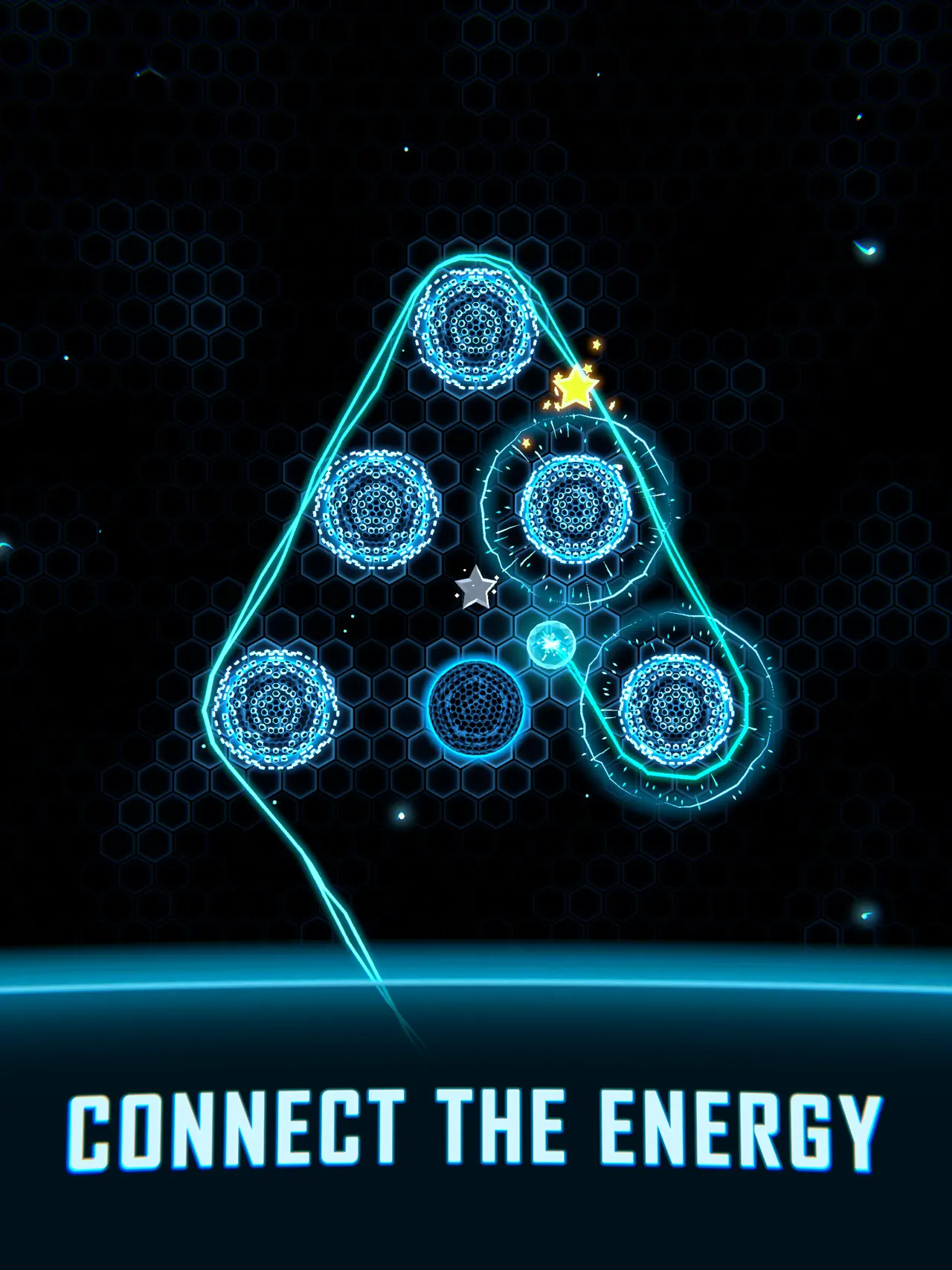
Wrap The Zap is one of those puzzle games that makes you feel like a genius when you finally solve a level. The mechanic of wrapping energy lines around conduits is tactile and intuitive, and the hexagonal grid allows for some really clever pathing challenges. It avoids the common mistake of being too easy, but it never feels punishing because there are no timers.
The 'Sector Delta' update added some much-needed complexity with the color prisms. It forces you to plan your route backward from the goal, which adds a great layer of strategy. The aesthetic is beautiful—clean neon lines against dark backgrounds—and the ambient music is the perfect accompaniment to the logic puzzles. It’s a polished, thoughtful indie game that respects the player's intelligence.
Dinsun here. Wrap the Zap is a 'bread and butter' mobile game. It’s got a decent hook—wrapping these energy lines around points—and it gets actually tricky in the later stages. It’s not trying to sell you a battle pass or trick you with 3D graphics; it’s just a set of puzzles.
I respect the honesty, even if the gameplay is something I feel like I've played in a dozen Flash games twenty years ago. The difficulty curve is a bit jagged, and the UI could be snappier, but it’s a respectable effort for a puzzle fan. It won't change your life, but it won't insult your intelligence either.
Performance: Functional; some UI lag on older devices.
Buy if: You enjoy 'Flow Free' style connection puzzles and want a new twist.
Skip if: You want high-end production values or a unique premise.
Available on: iPhone, iPad, iPod
Version 1.35Sun Apr 19 2026
- The device that allows the beams to cross was fixed.
- Other bug fixes and performance improvements.
Requires iOS 15.0 or later. Compatible with iPhone, iPad, and iPod touch.Immerse yourself in a vibrant, sci-fi puzzle world of light, logic, and a forgotten narrative. Welcome to Wrap The Zap!
◆ THE STORY OF THE ARCHIVE ◆
You are the "Weaver," an automated restoration protocol. Your mission is to awaken "The Archive," a dormant machine holding the digitized fragments of human consciousness. By connecting these nodes, you feed human memories and emotions into The Archive, slowly bringing it to full sentience and "Clarity". You are building a living monument to the extinct human race.
◆ INTUITIVE GAMEPLAY & EVOLVING MECHANICS ◆
Skillfully wrap glowing electrical lines around spherical conduits to restore the hexagonal grid. Master new mechanics tied to the human experience:
• Scars (Static Pins): Bend lines around stubborn, painful memories anchored in time.
• Shifting Truths (Movable Pins): Adapt paths using movable pins, representing how human memories adapt and shift.
• Fate (Crossing Ropes): Cross paths to explore how human lives and destinies intersect.
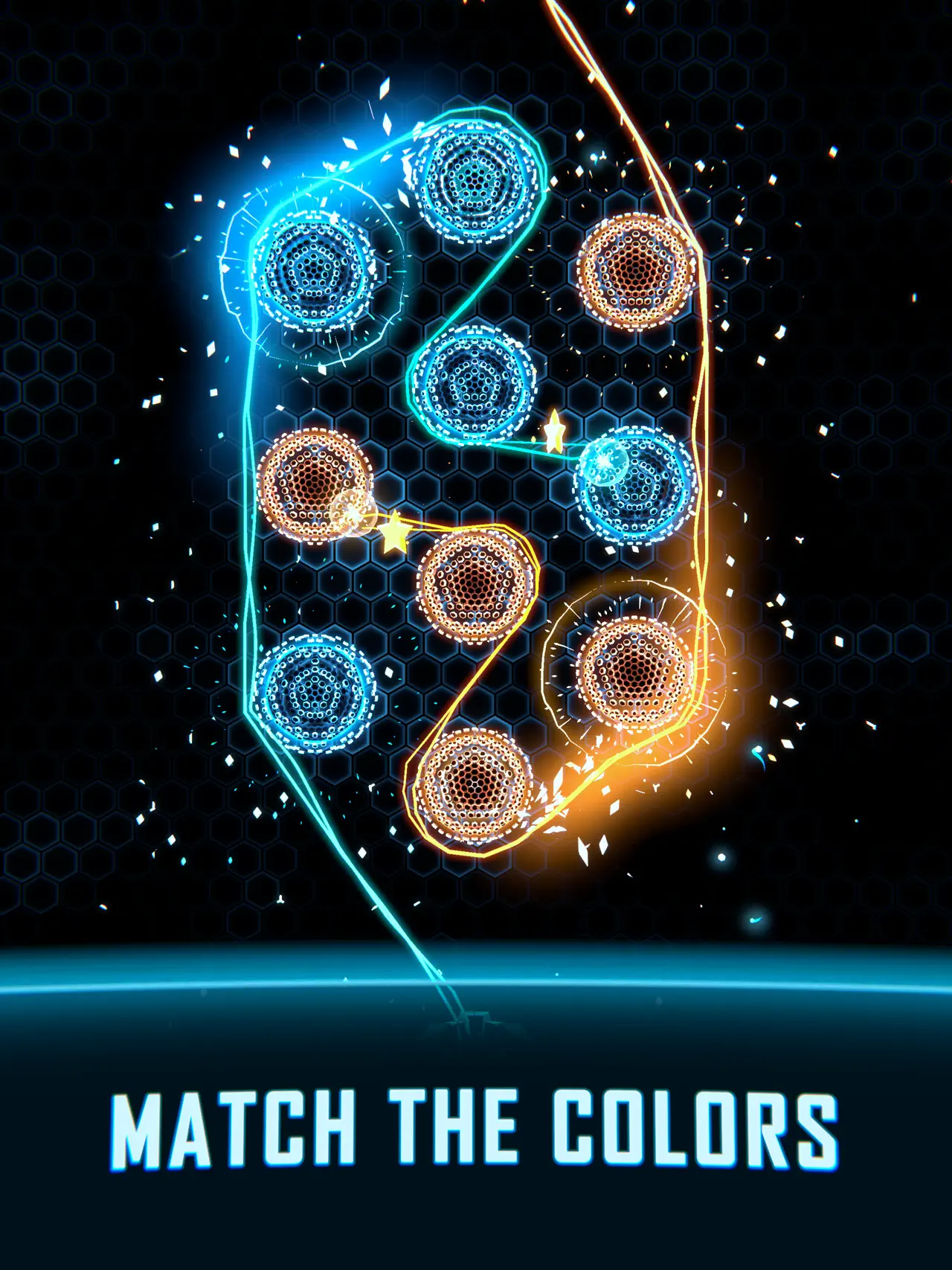
• Empathy (Colors): Use the color-changing device to alter your rope's color and match conduits, reflecting the ability to put yourself in another's shoes.
• Decay (Viruses): Avoid viruses representing the environmental fallout and greed that ended humanity.
◆ RELAX & SOLVE ◆
• No Timers: Take your time. There's no pressure.
• Atmosphere: Enjoy cool neon visuals and a chill ambient soundtrack.
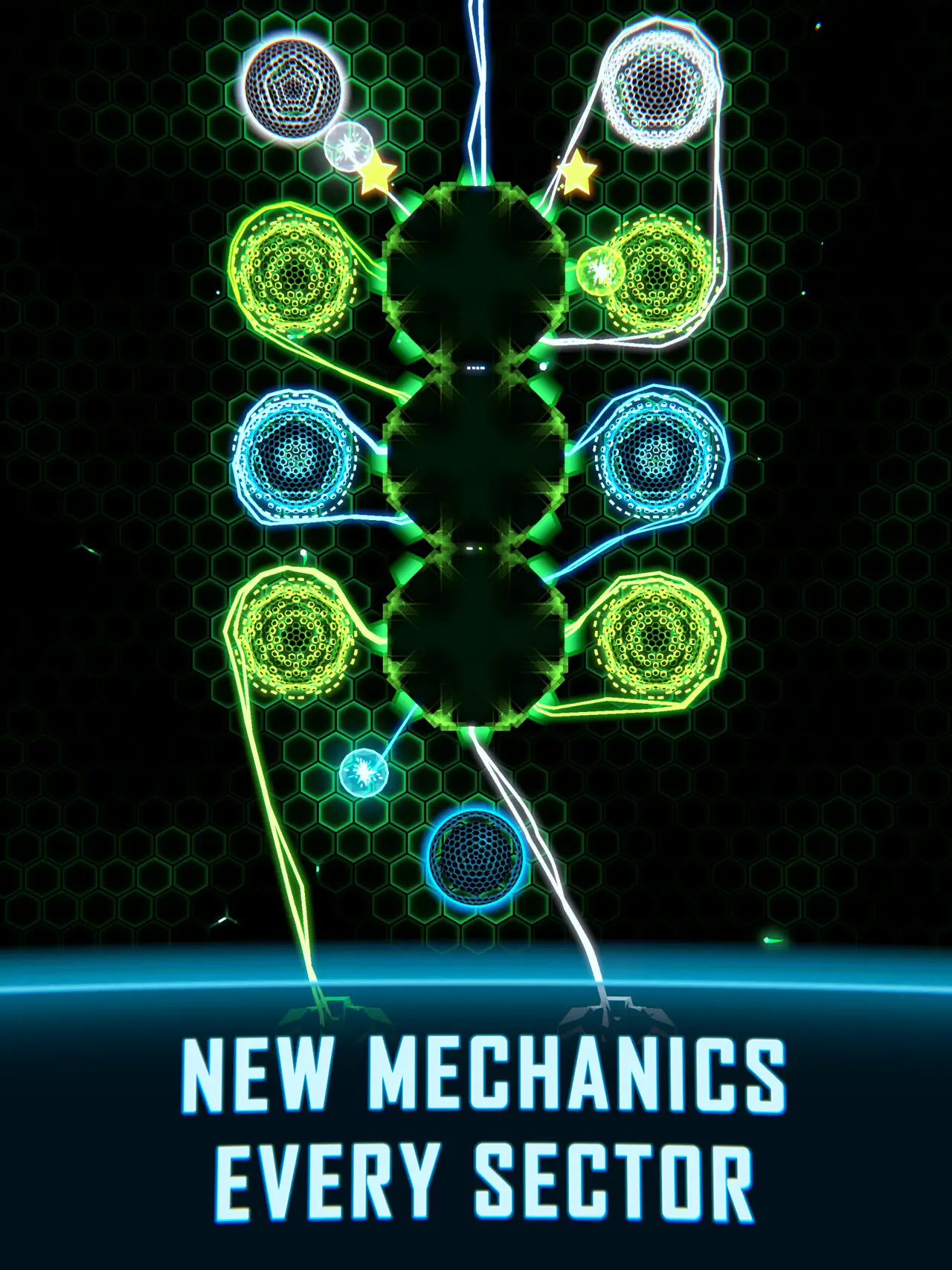
• Explore 5 Sectors: Journey from Sector Alpha to Epsilon, each with distinct themes like "Awakening" and "The Fall".
• Accessibility: Colorblind modes ensure everyone can play.
Download Wrap The Zap now and bring The Archive to life!


Wrap The Zap is a relaxing yet challenging logic puzzle game that immerses you in a vibrant world of electricity. As a 'Grid Technician,' you guide glowing energy ropes around conduits to power a complex hexagonal grid. Match colors, avoid crossing streams, and utilize pins to navigate obstacles. With an ambient synth soundtrack and no fail states, you can solve over 100 levels at your own pace, including the advanced 'Sector Delta' expansion.
Satisfying, touch-optimized line-wrapping mechanics
Four unique Sectors with 100+ handcrafted puzzles
Relaxing atmosphere with no timers or pressure
Colorblind accessibility mode using unique shapes
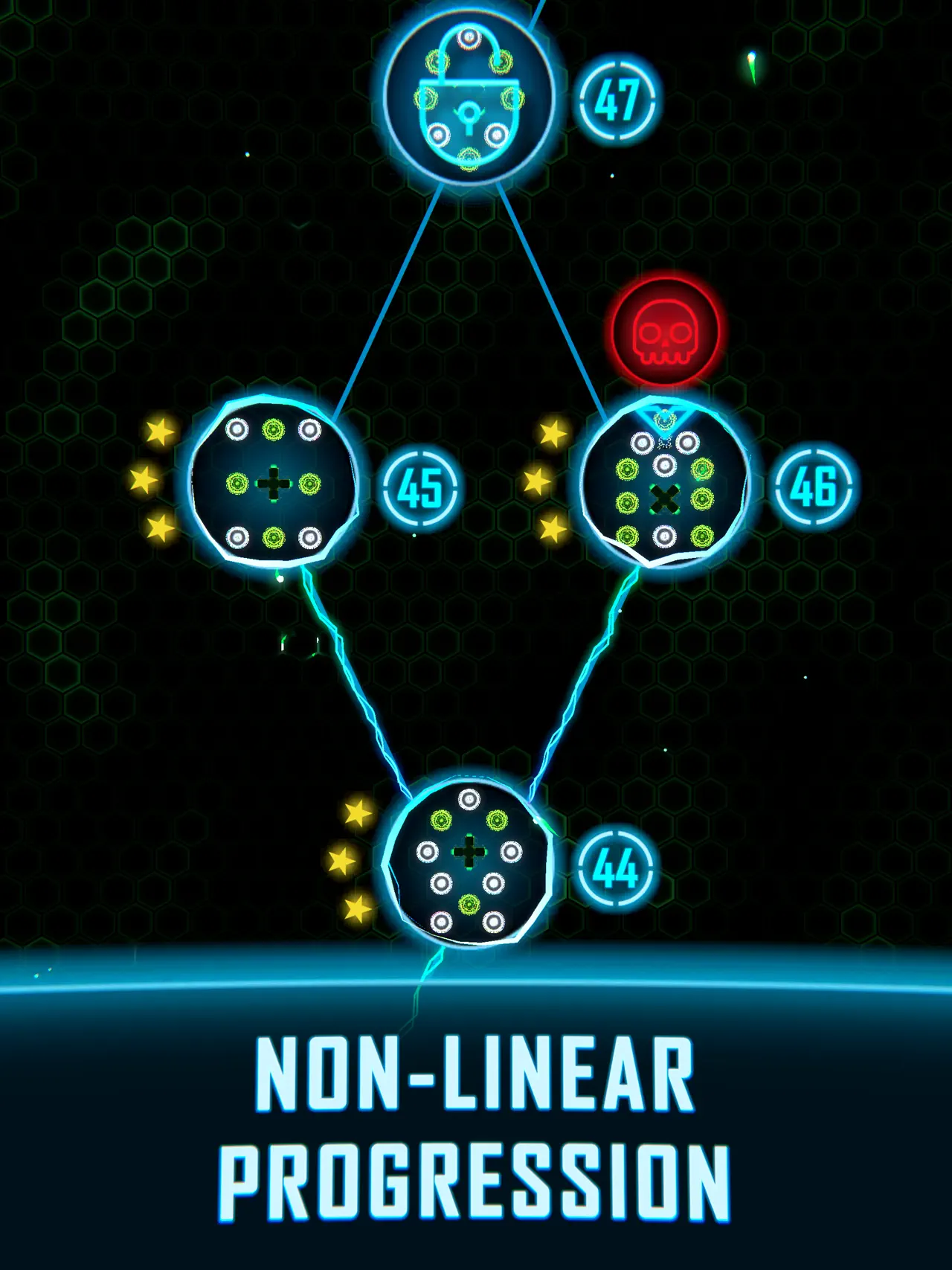
Daily Quests and non-linear level progression
In Sector Charlie, use 'Crossing Gates' to intersect lines safely. Sector Delta introduces 'Color Prisms' which change your line's color mid-route. Always plan for the prism's output color before you start wrapping your line around obstacles.
Stars are awarded for passing your energy lines through the star icons on the board before reaching the final conduit.
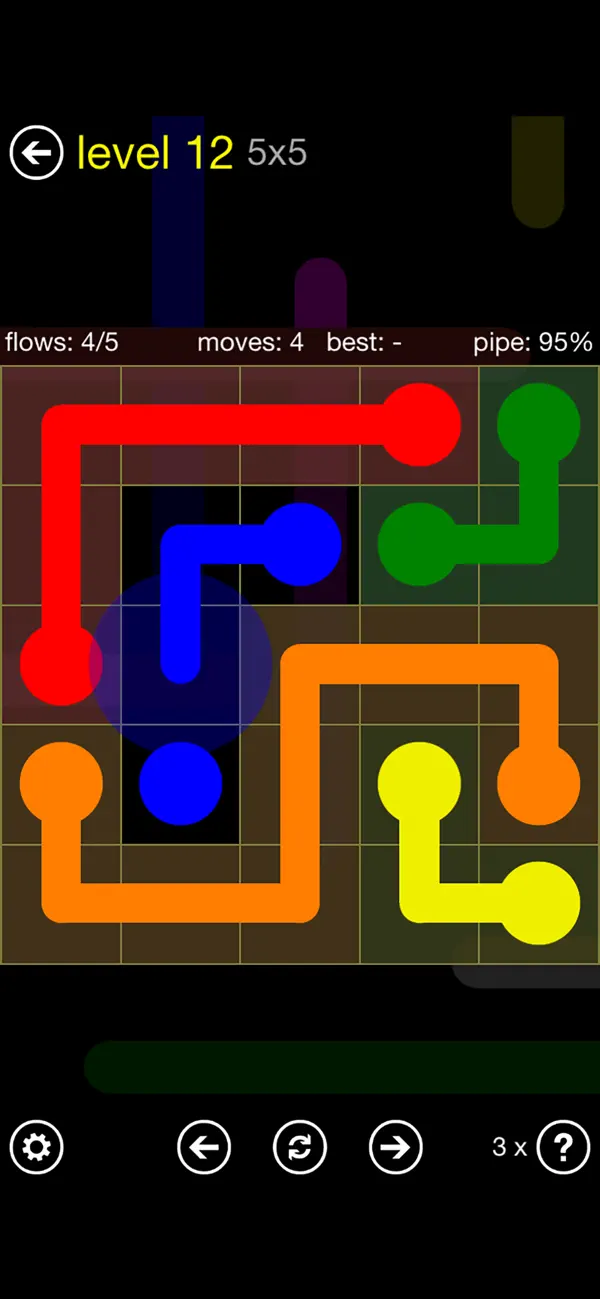
Flow Free is exactly what a mobile game should be. It’s not trying to tell a story or sell you a battle pass. It’s a grid, some colored dots, and your brain. It’s clean, it’s fast, and it works. I’ve probably solved a thousand of these levels over the years during commutes, and it never feels like a waste of time. That said, it’s not exactly a 'thrilling' experience. It’s a digital version of those pen-and-paper logic puzzles. Once you understand the basic logic of how paths have to snake around the edges, the challenge mostly comes from the size of the board rather than the complexity of the mechanic. It’s a 70—good at what it does, but it’s not reinventing the wheel.
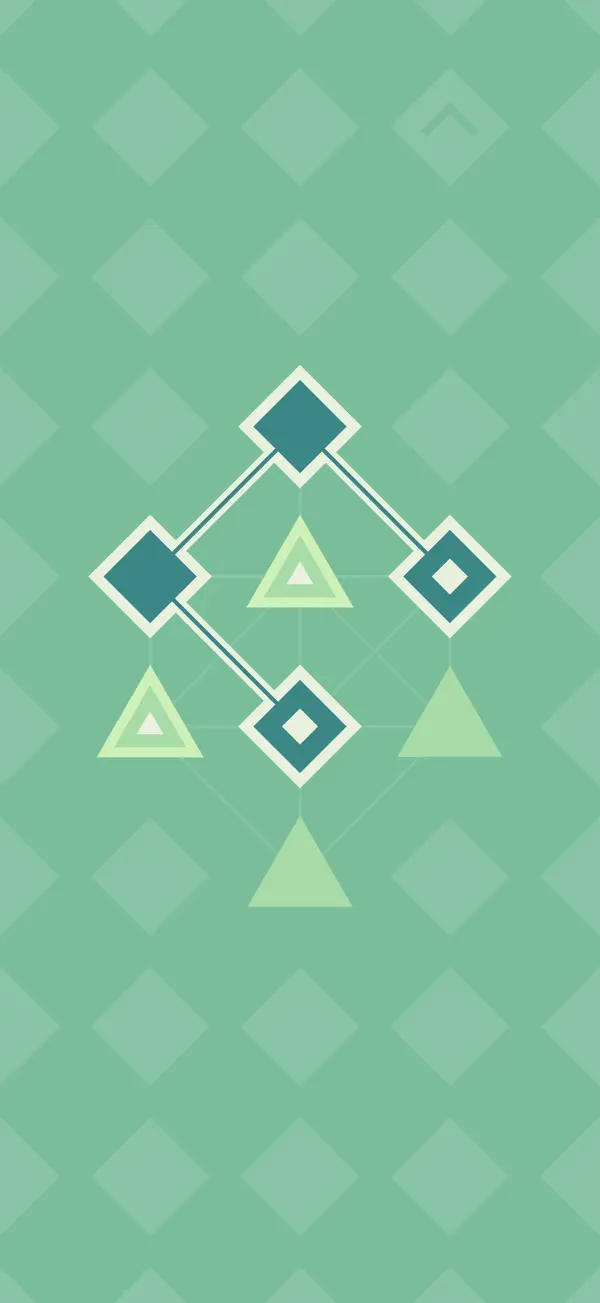
Lyne is the digital equivalent of a Sudoku book. It’s functional, it’s quiet, and it doesn't try to be anything it isn't. In an era where every mobile game is screaming for your attention with bright colors and loot boxes, there is something to be said for Lyne's restraint. The mechanics are simple: connect identical shapes without crossing paths. It’s a variation on the 'Seven Bridges of Königsberg' problem that I’ve seen a thousand times, but refined here to a mirror sheen. However, it’s a bit too 'zen' for its own good. There’s no friction, no stakes, and eventually, no surprise. It’s the kind of game I play while waiting for a flight—it occupies the mind but never truly engages the spirit. It’s a solid piece of software engineering, but as a 'game,' it’s a bit dry. It’s for those who want to solve problems, not for those who want an adventure.
Enigmo takes me back to the early days of the iPhone. It was revolutionary then, and it’s still 'fine' now. The core loop of placing a bumper and watching a droplet bounce is satisfying in a basic way. However, the 3D graphics haven't aged gracefully—they look like early PS1 tech. The difficulty curve is also all over the place; you'll breeze through five levels and then hit a brick wall that makes you want to throw your phone. It’s a classic, but the world has moved on to more elegant physics puzzles like Portal or The Witness.
Look, it's Mahjong. We’ve been playing this on PCs since the 80s, and this version doesn't do much to justify its existence beyond portability. It’s competent enough—the tiles are legible and the touch controls don't fight you—but it lacks any sort of soul or modern flair. The variety of layouts is the only thing keeping it from being a total snooze-fest, though even those start to feel repetitive after an hour. It’s the kind of game you play while waiting for a flight because you have nothing better to do. It’s fine, but 'fine' doesn't get a high score in my book. If you're looking for innovation, keep walking; if you want a digital paperweight that occasionally lets you click tiles, here it is.
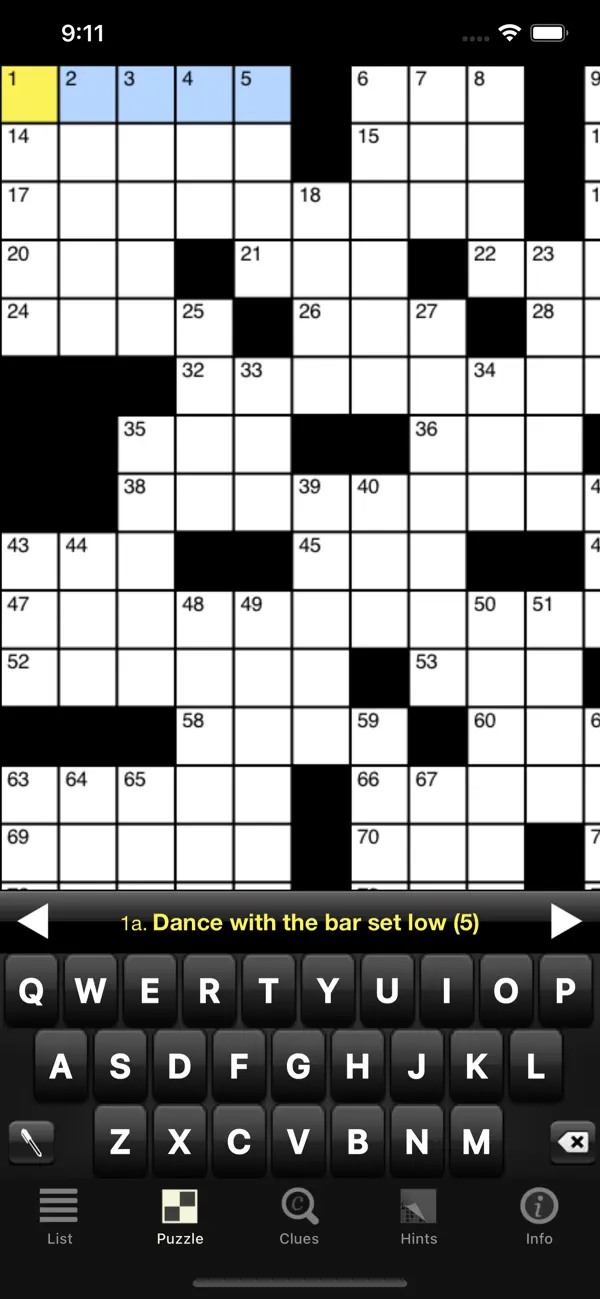
I've spent years with a pen and a newspaper, so I have a high bar for crosswords. This app manages to fit the content in, but it loses the tactile satisfaction of the real thing. The interface is utilitarian, which is better than being cluttered, but it feels sterile. The puzzle quality varies wildly depending on the source, and some of the clues are frankly nonsensical or dated. It does what it says on the tin, but I struggle to find the 'pro' in this 'classic' experience. It’s a decent way to kill time, but it won't replace a Sunday morning ritual for anyone who actually cares about the craft of puzzling. It's serviceable, but largely forgettable software.
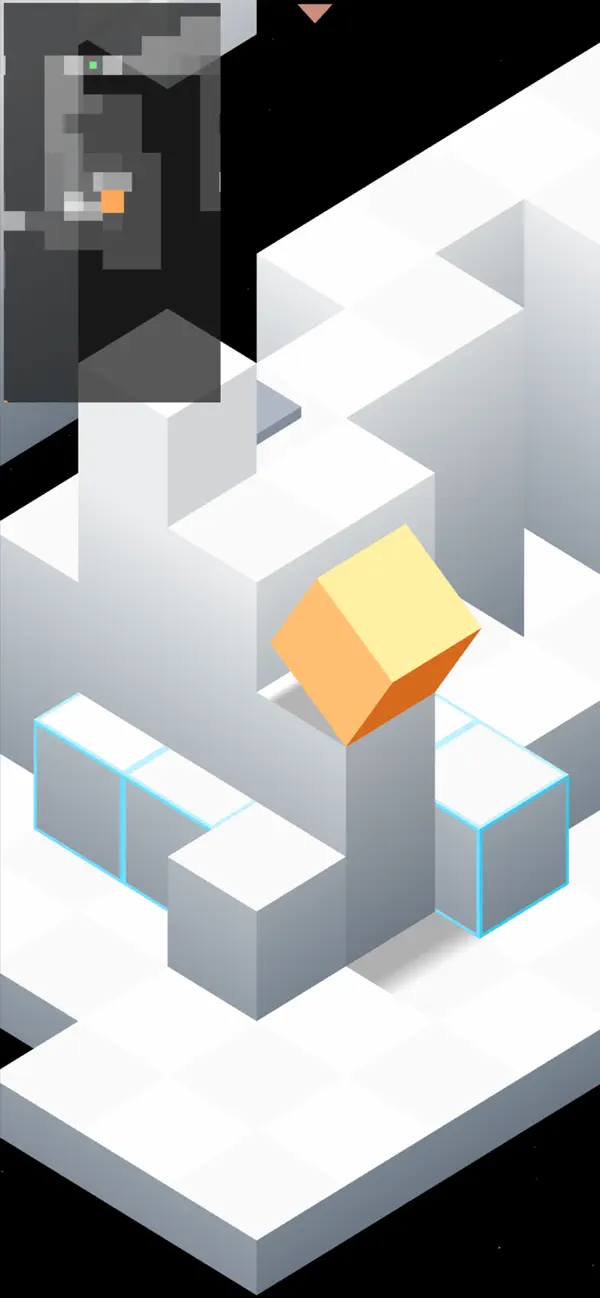
EDGE is a relic from a time when mobile games actually tried to be games rather than slot machines. Its brilliance lies in its simplicity. You're a cube. You roll. That's it. But the level design is so tight and the physics are so predictable that every failure feels like your own fault rather than a glitch in the system. The soundtrack is the real star here—a pulse-pounding electronic score that fits the 'cyber-industrial' aesthetic perfectly. My only real complaint is that the difficulty spikes can be frustrating, especially with touch controls that occasionally misinterpret a swipe. It hasn't changed much over the years, which is both its strength and its weakness. It’s a pure, unadulterated puzzle-platformer that doesn't feel the need to hold your hand.
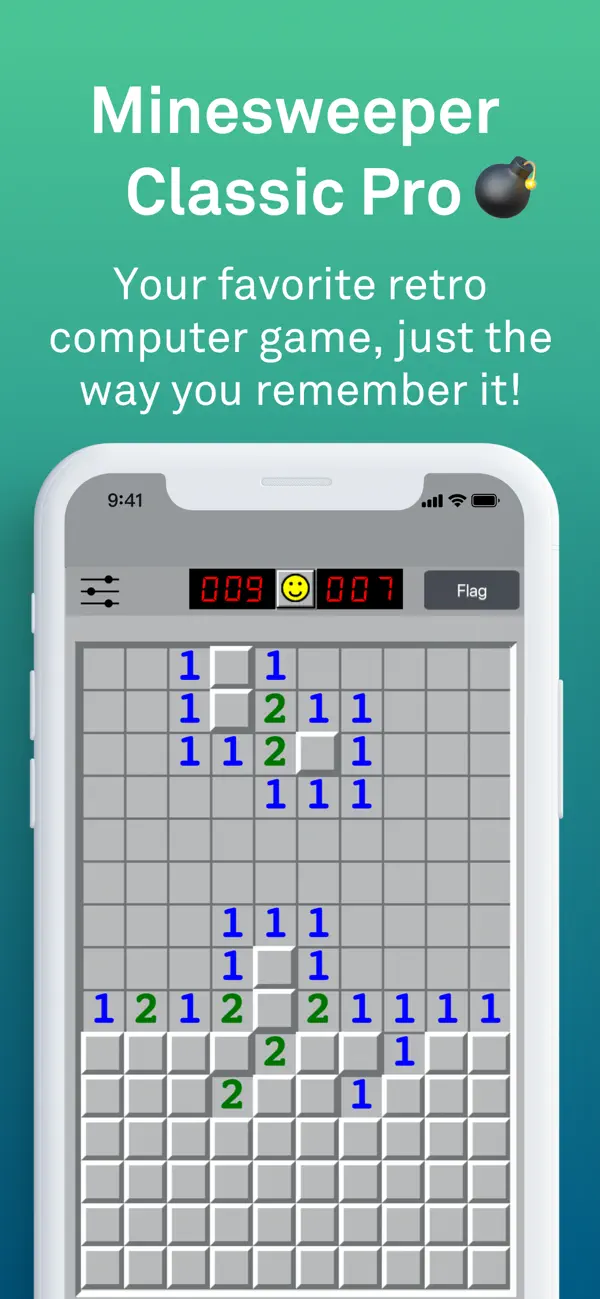
I’ve cleared thousands of Minesweeper boards in my life, and this app doesn't change anything about that experience. It’s Minesweeper. The controls are a bit fiddly on a small screen—I’ve detonated more than a few mines just by fat-fingering a square—but the logic is sound. It’s a perfect 'waiting for a bus' game. There’s no bloat, no forced ads (in this version), and no nonsense. But there’s also no reason to be excited about it. It’s a solved game that we’ve all played for thirty years. If you don't have a version of Minesweeper on your phone yet, this one is perfectly adequate. Just don't expect it to change your life.
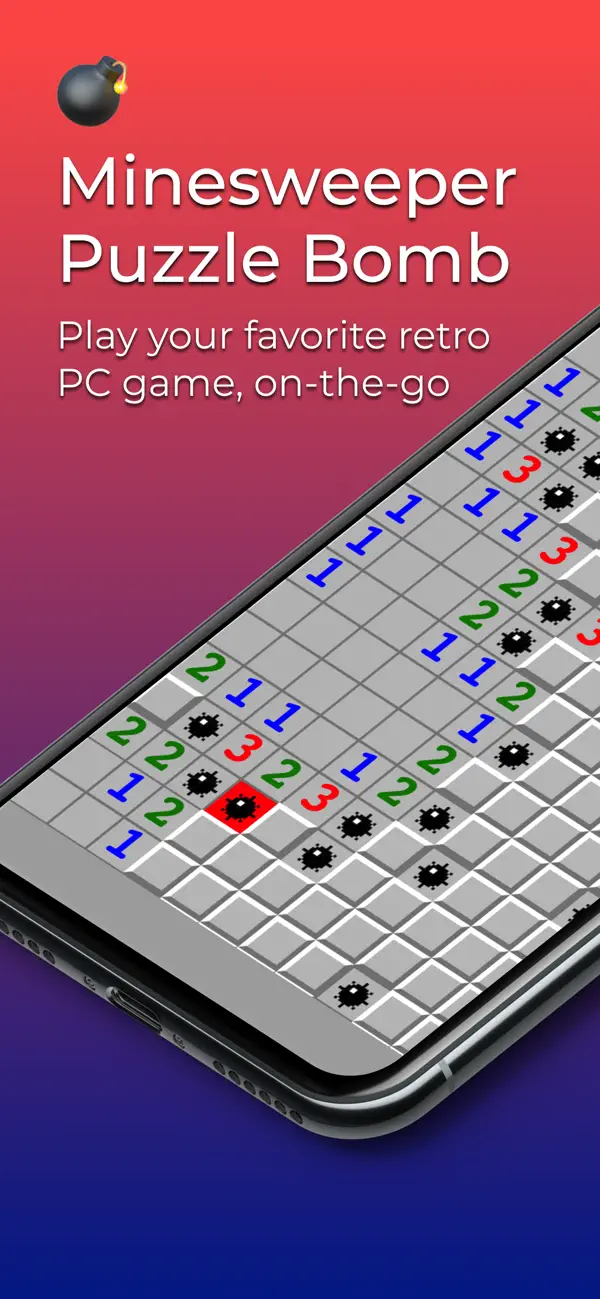
This is just Minesweeper with a fresh coat of paint, and not a particularly good one. The 'Bomb' aesthetic feels forced, and the UI is actually a bit more confusing than the standard classic version. I don't see why I would choose this over a more traditional layout. It’s fine, it works, and the logic is the same. But it feels like it’s trying too hard to be 'modern' and 'exciting' for a game that is fundamentally about staring at numbers. Stick to the classic versions; this one just feels like clutter.