Rush Hour 3D takes a tried-and-true puzzle dynamic and modernizes it beautifully for modern devices. There is a deeply satisfying tactical weight to the 3D car models as you slide them along their grid tracks. The sounds of engines humming and tires rolling add a nice sensory touch to what could have been a very basic casual layout.
The level progression is excellent. It kicks off with trivial scenarios that teach you the core principles of spatial blocking, then ramps up into complex, claustrophobic traffic jams that will have you staring at your phone for ten minutes trying to visualize five steps ahead.
While it is a pure puzzle game without a deep underlying narrative or heavy meta-progression systems, it excels at what it sets out to do. It is the absolute perfect game to pull out during brief daily commutes or waiting rooms when you want to give your brain a quick, rewarding workout.
Dinsun here. The tabletop puzzle version of this has sat on family shelves for decades. This 3D app translation handles the transition fine without screwing up the basic math underneath. The spatial perspective doesn't add much utility, but the touch response is immediate. It's a fine tool to pass ten minutes, even if it doesn't break any creative ground.
Performance: Light asset processing footprint means it runs cool on old phones. Zero physics engine glitches detected during sliding execution.
Buy if: You love geometric spatial puzzles and pure brain teasers without narrative filler.
Skip if: You easily tire of repetitive mechanical concepts or want interactive action.
Available on: iPhone, iPad, iPod
Version 1.0Sat Nov 21 2026
Requires iOS 11.0 or later. Compatible with iPhone, iPad, and iPod touch.The classic sliding block brain teaser game! Your mission is to get the red car out of the traffic jam by moving the other vehicles out of its way. With over 1000 puzzle levels, you’ll never run out of challenges. Exercise your brain and test your problem-solving skills as you try to solve each puzzle. Don’t worry if you get stuck – there are hints available to help you along. Download Rush Hour Puzzle now and start solving!


Based on the beloved classic slide-block traffic puzzle, Rush Hour 3D brings the addictive brain teaser to life with rich 3D visuals. Your objective is simple but challenging: clear a path for the red car to exit the crowded grid by sliding buses, trucks, and sedans back and forth. With hundreds of increasingly complex levels, it’s a pure test of spatial logic and planning.
Modern 3D graphics that bring a sleek, tangible feel to a classic tabletop puzzle formula
Hundreds of mind-bending levels ranging from introductory tutorial puzzles to master difficulty
Smooth, highly responsive touch swipe controls optimized for quick mobile play
An integrated hint system to help guide you out of the tightest gridlocks
Primary listing details and verification data.
The gameplay features simple, intuitive touch-and-swipe gestures. Players interact with distinct vehicles that are constrained to move only forward or backward along their designated lanes. The puzzle is solved the moment your target vehicle reaches the exit arrow.
Yes, you can use the built-in undo button to reverse any step without resetting your entire puzzle progress.
Unblock Me is the definition of a 'grandfathered' mobile game. Everyone has played it, and everyone knows exactly what it is. It’s a clean mechanical exercise. The wood-grain aesthetic is inoffensive and classic, which I prefer over the neon-soaked nonsense of modern mobile games. The logic is sound, and the progression from 'easy' to 'expert' is well-paced. That said, the game is now buried under more ads than I care to count in the free version. It feels less like a game and more like a delivery system for 30-second commercials. The gameplay itself hasn't evolved an inch since 2009. While there's something to be said for 'if it ain't broke, don't fix it,' I find it hard to get excited about sliding the same wooden blocks after fifteen years. It’s reliable, but it’s utterly uninspired.
Dinsun here. The core logic of unblocking cars is actually quite satisfying—it reminds me of those old sliding wood block puzzles. It’s a good way to kill three minutes in a waiting room. But the 'game' part is secondary to the 'advertising platform' part. You spend more time watching 30-second clips for other garbage apps than you do actually solving puzzles. The levels are too short, and the 'boss' levels aren't actually harder, just bigger. It’s a shame because the physics are tactile and the 'thunk' of a car exiting the lot is nice. It’s a classic example of a good idea ruined by modern mobile greed.
As someone who has been gaming for decades, I appreciate a pure puzzle challenge that doesn't rely on flashy microtransactions or constant hand-holding. Logicals Pro strips away all the modern bells and whistles to focus entirely on matrix-style deductive puzzles. You read the clues, cross-reference the grid, and eliminate possibilities. It is functional, straightforward, and unapologetically austere. Yet, at 40 years old, I find myself yearning for better interface responsiveness, a bit more production value, and fewer repetitive grids that start to feel like homework rather than entertainment after a long day. The progression curve is decent, but the lack of dynamic audio or engaging visual themes makes it feel more like an interactive spreadsheet than a proper video game. If you enjoy classic logic grid puzzles printed in newspaper logic puzzle books, you'll feel right at home here. But for anyone expecting modern mobile game polish or immersive design, this will feel archaic and tedious. It's passable for a quick brain workout on a commute, but it fails to leave a lasting impression.
Dinsun here. I’ve played these games before—twenty years ago, for free, in a web browser. This is a collection of 'classics' like air hockey and pong that adds nothing new to the formula. The controls are cramped on anything smaller than an iPad, and the AI (if you're playing alone) is either brain-dead or cheating. It’s a 'break glass in case of emergency' app for when you’re stuck in a waiting room with a child. As a standalone piece of software for an adult gamer? It’s redundant. There’s no progression, no flair, and no reason to keep it on your phone for more than ten minutes.
Enigmo takes me back to the early days of the iPhone. It was revolutionary then, and it’s still 'fine' now. The core loop of placing a bumper and watching a droplet bounce is satisfying in a basic way. However, the 3D graphics haven't aged gracefully—they look like early PS1 tech. The difficulty curve is also all over the place; you'll breeze through five levels and then hit a brick wall that makes you want to throw your phone. It’s a classic, but the world has moved on to more elegant physics puzzles like Portal or The Witness.
Look, it's Mahjong. We’ve been playing this on PCs since the 80s, and this version doesn't do much to justify its existence beyond portability. It’s competent enough—the tiles are legible and the touch controls don't fight you—but it lacks any sort of soul or modern flair. The variety of layouts is the only thing keeping it from being a total snooze-fest, though even those start to feel repetitive after an hour. It’s the kind of game you play while waiting for a flight because you have nothing better to do. It’s fine, but 'fine' doesn't get a high score in my book. If you're looking for innovation, keep walking; if you want a digital paperweight that occasionally lets you click tiles, here it is.
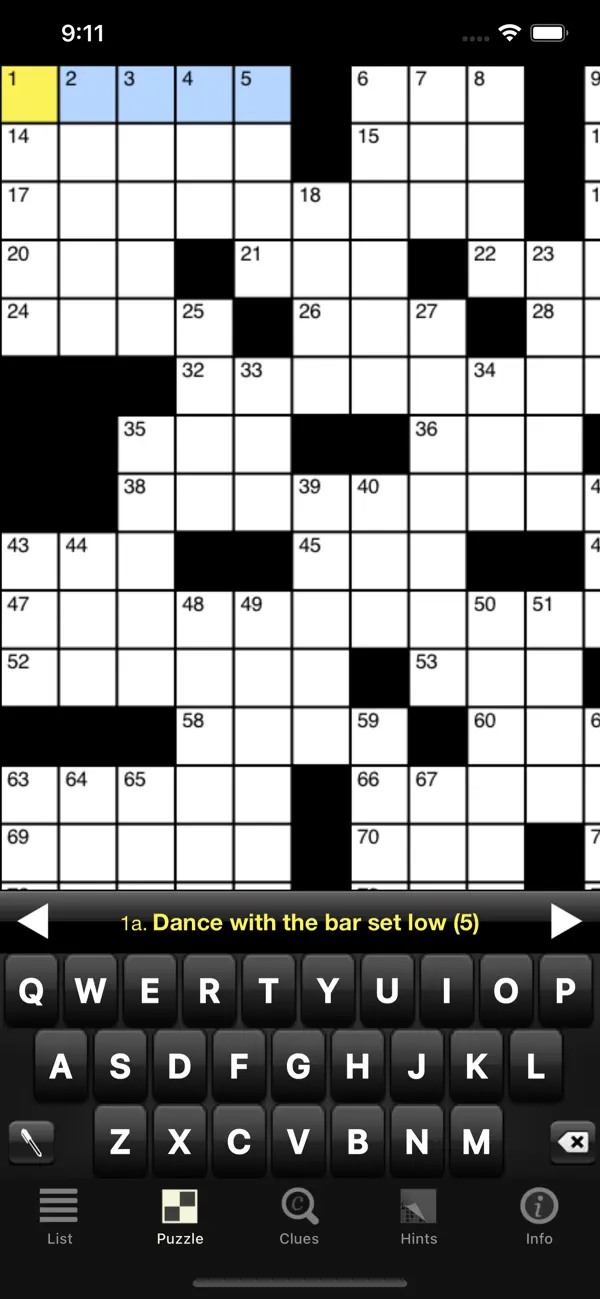
I've spent years with a pen and a newspaper, so I have a high bar for crosswords. This app manages to fit the content in, but it loses the tactile satisfaction of the real thing. The interface is utilitarian, which is better than being cluttered, but it feels sterile. The puzzle quality varies wildly depending on the source, and some of the clues are frankly nonsensical or dated. It does what it says on the tin, but I struggle to find the 'pro' in this 'classic' experience. It’s a decent way to kill time, but it won't replace a Sunday morning ritual for anyone who actually cares about the craft of puzzling. It's serviceable, but largely forgettable software.
EDGE is a relic from a time when mobile games actually tried to be games rather than slot machines. Its brilliance lies in its simplicity. You're a cube. You roll. That's it. But the level design is so tight and the physics are so predictable that every failure feels like your own fault rather than a glitch in the system. The soundtrack is the real star here—a pulse-pounding electronic score that fits the 'cyber-industrial' aesthetic perfectly. My only real complaint is that the difficulty spikes can be frustrating, especially with touch controls that occasionally misinterpret a swipe. It hasn't changed much over the years, which is both its strength and its weakness. It’s a pure, unadulterated puzzle-platformer that doesn't feel the need to hold your hand.