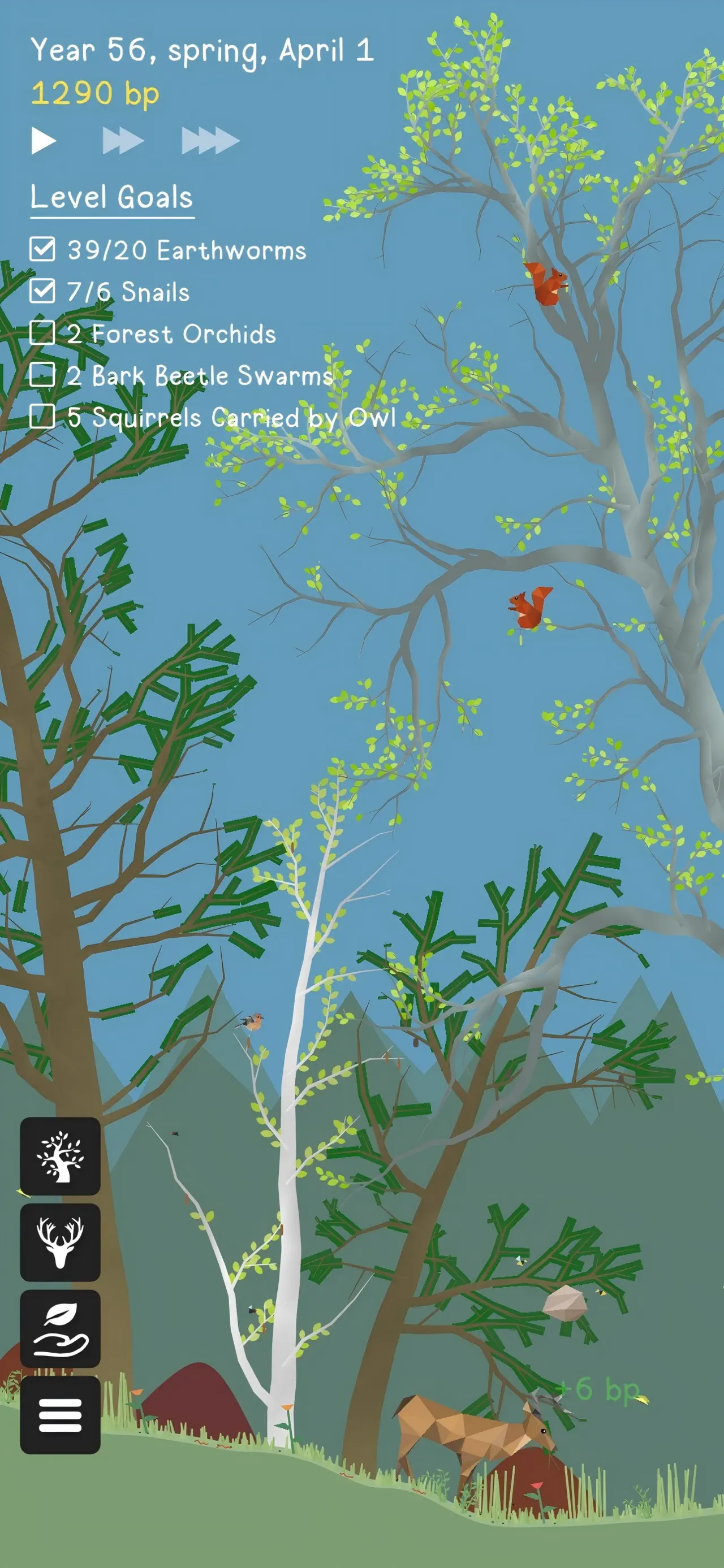
Polypine is a breath of fresh air for fans of 'cozy' games and nature simulators. It successfully distills the complexity of ecosystem management into a low-poly, relaxing experience. The joy of the game comes from watching the natural progression—planting a few shrubs and eventually seeing a full-blown forest with bears and deer roaming around. It’s highly meditative, supported by a minimalist art style that makes even a dry island look beautiful.
The mechanics are deeper than they initially appear. You have to think about the food chain and the specific needs of each species. If you over-plant one type of tree, you might accidentally starve out a certain animal population. It’s a delicate balancing act that never feels stressful because of the lack of fail states. It’s a game about observation and gentle nudging, making it a perfect title for winding down after a busy day.
I don't usually go for these 'zen' games—I prefer a bit of challenge—but Polypine is a decent enough palette cleanser. It’s less of a 'game' and more of a digital garden. You plant a tree, wait for a squirrel, and repeat. The minimalist aesthetic is clean and easy on the eyes, which is more than I can say for most mobile apps these days.
My main gripe is the lack of depth. Once you’ve built a forest, there isn't much to do but look at it. It needs a bit more ecosystem management or perhaps some environmental hazards to keep it interesting. As it stands, it’s a bit too passive for my taste, but if you’re looking for something to lower your blood pressure, this will do it. It’s simple, honest, and utterly harmless.
Performance: Very lightweight; no issues on any tested device.
Buy if: You need a stress-free experience to unwind with and enjoy minimalist art.
Skip if: You want a city-builder with complex systems or a competitive edge.
Available on: iPhone, iPad, iPod
Version 1.2.4Thu Jan 29 2026
Bug fixes and stability improvements.
Requires iOS 13.0 or later. Compatible with iPhone, iPad, and iPod touch.Valentine Deal
Save $2! A one-time gift for you or a loved one.
$4.99 (was $6.99). Pay once, play forever. No ads. A little forest, waiting for you.
Create your own cozy forest!
Plant Seeds and Watch Them Grow
Experience the full lifecycle of trees: seed, sapling, adult tree, dead tree and fallen trunk. Each step creates a different habitat for other plants and animals.
Fill Your Forest with Animals
Each animal has specific habitat needs you have to fullfill before adding them. Squirrels need trees, butterflies need flowers etc.
Click Animals to Make Them Poop and More
Clicking on animals trigger different behaviors that influence the forest ecosystem: Moose poop, fertilizing the soil. Voles eat tree roots, damaging the tree. Foxes hunt other animals.
Adapt to the Terrain or Terraform It to Your Needs
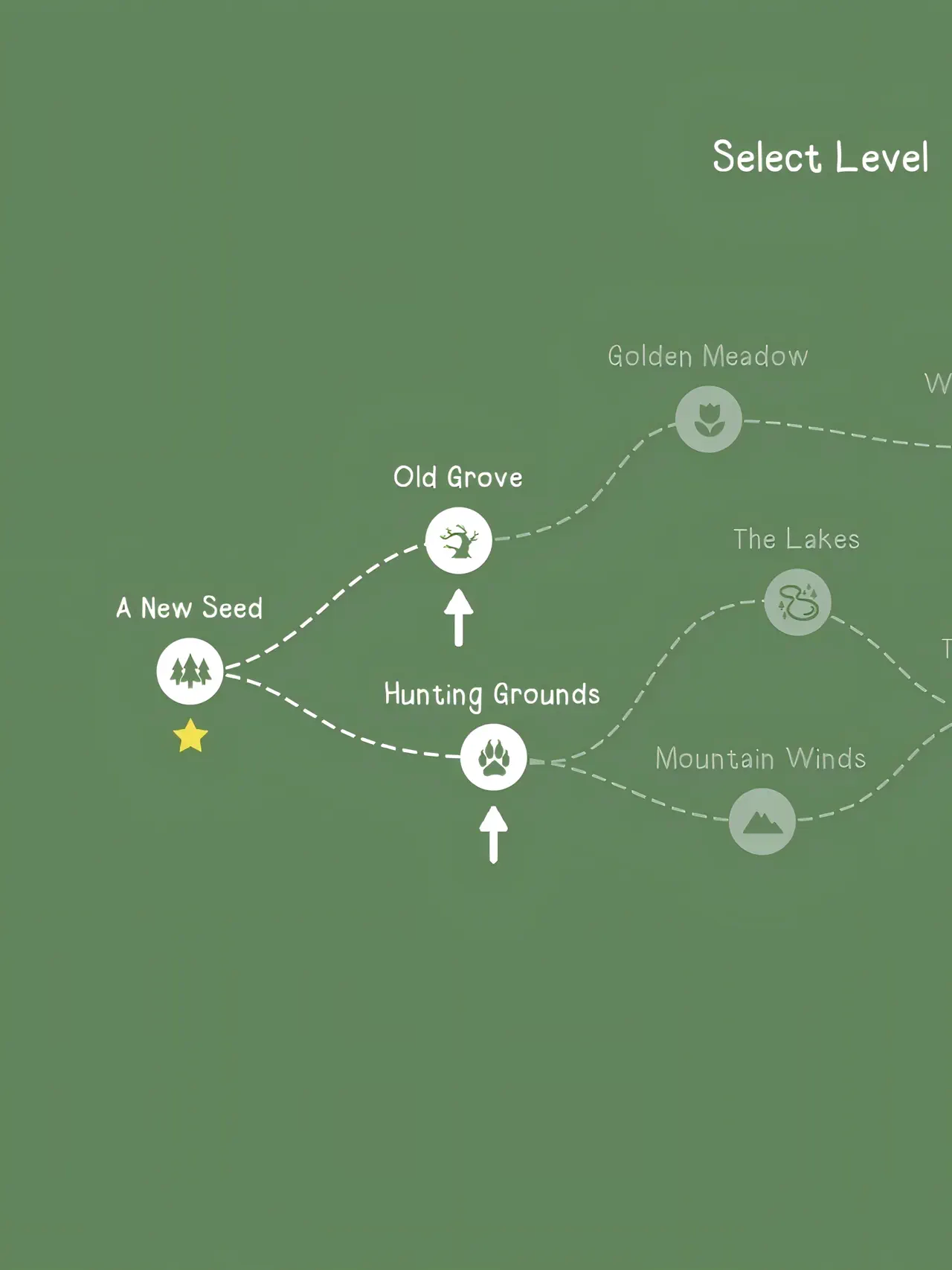
Create forests in diverse terrains including hills, lakes, mountains, fjords and wetlands. Terraform the terrain if you want even more control.
Survive Natural Disasters
Forest fires, storms and bark beetle swarms affect the forest in various ways. Can you use them to your advantage and create a thriving ecosystem?


Polypine is a peaceful and meditative experience about the beauty of nature. Your goal is to create a thriving forest ecosystem on a floating island. Every plant you place affects the environment: trees provide shade, flowers attract pollinators, and berry bushes feed small animals. As your forest grows, more complex wildlife like deer and bears will move in, but you must balance their needs to ensure the entire system stays healthy and green.
Beautiful minimalist low-poly graphics
Deep, realistic ecosystem simulation
Calming ambient soundscapes
Multiple island biomes to master
The gameplay focuses on observation. If you have too many herbivores, they will eat all your plants. You must introduce predators or change the flora to maintain a sustainable cycle of life.
The forest is resilient, but if you stop providing water and sunlight, the plants will wither and the animals will leave. It requires gentle management.
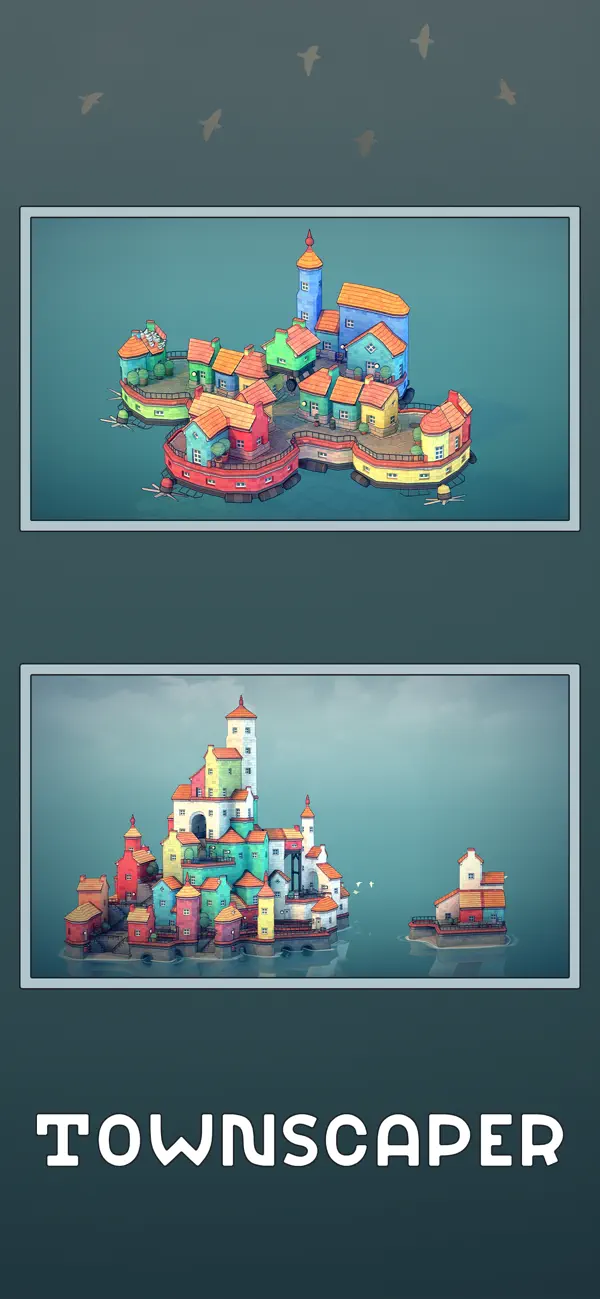
Townscaper is honest about what it is: a toy. There are no levels to beat, no scores to reach, and no 'game over' screens. Normally, I’d be critical of the lack of structure, but the execution here is so elegant that I can’t help but appreciate it. The way the buildings procedurally generate based on where you click is like magic. The sound design—the little 'plips' and 'plops' as you build—is incredibly soothing. It’s the perfect 'anti-game' for when you’re stressed and just want to make something pretty. However, because there is no goal, it has zero replay value once you’ve spent an hour building a couple of towns. It’s a wonderful aesthetic experience, but if you’re looking for a challenge, look elsewhere. It’s a zen garden in digital form.
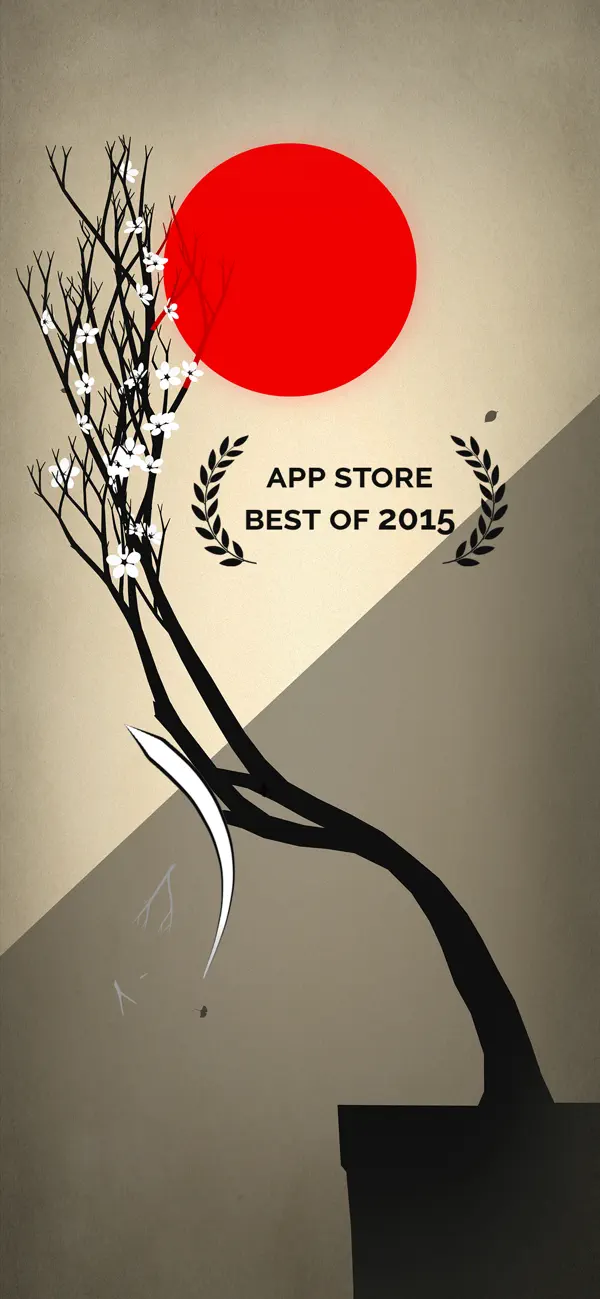
I usually have no patience for 'art games,' but Prune is different. It’s simple. You cut the branches to make the tree grow toward the light. It’s tactile and satisfying in a way that most screen-tapping games aren't. There are no scores, no leaderboards, and no flashing lights. It’s quiet. Sometimes, at 40, that's exactly what you need. The difficulty curve is gentle, though some later levels can be frustrating when the wind mechanics don't seem to cooperate with your cuts. It’s more of an experience than a 'game' in the traditional sense. It’s short, and you won’t play it twice, but the visuals will stick with you. It’s an example of how to use a touchscreen for something other than shooting or swiping on a dating app.
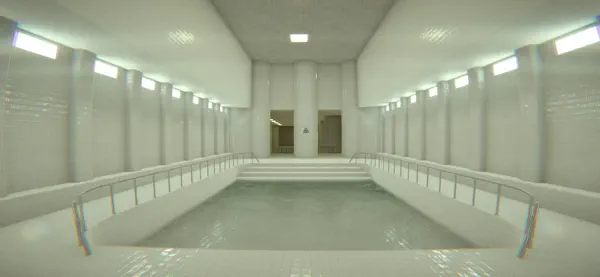
I hesitate to even call POOLS a 'game' in the traditional sense, but I can't deny its effectiveness. There are no objectives, no scores, and no enemies. You simply walk. And yet, I haven't felt this much genuine tension in a title in years. It taps into something primal—the fear of the infinite, the 'offness' of a space that should be crowded but is utterly empty. The tiling, the lighting, and the echoing splash of your own footsteps create an environment that is both beautiful and deeply unwelcoming. It’s a 'walking simulator' in the purest form, but it understands its niche perfectly. The lack of a HUD or any gamified elements makes the immersion absolute. My only real criticism is the price-to-content ratio for some; at six chapters, you can finish it in an afternoon. But for those of us who value a specific, high-quality experience over endless 'content,' POOLS is a standout. It’s an art piece you can walk through, and it’s one of the few mobile ports that actually feels like it belongs on a high-end display. It’s unsettling, slow, and wonderful.
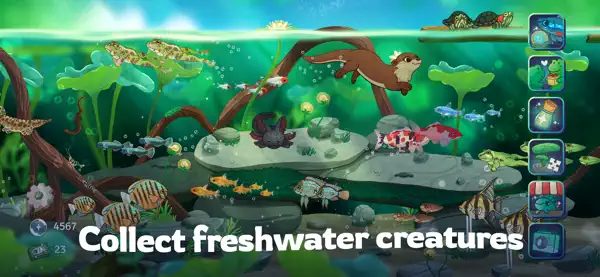
I don't mind a slow-paced game, but Pondlife pushes the definition of 'interactive' to its limit. You essentially watch fish swim. Occasionally you tap to feed them or buy a lily pad. It's meant to be relaxing, and I suppose it is, but it’s also incredibly boring after the first ten minutes. It’s more of a digital pet than a game. The art is soft and the audio is soothing, which I’ll give it credit for. It achieves its goal of being 'stress-free,' but as someone who looks for engagement and challenge, there's nothing here for me. It’s a niche product for people who want to look at their phone and feel nothing. I'd rather just go to a real pond.
Dinsun here. It's rare to see a game tackle the mundane horrors of credit scores, and I respect the effort. Bad Credit No Problem isn't really a game in the traditional sense; it’s an interactive textbook. It’s conservative in its approach—no flash, just facts and scenarios. While the information is genuinely useful, the interface is clunky and the 'gameplay' is mostly just data entry and multiple-choice decisions. I’m critical of the pacing. It’s dry. If you actually need to learn about credit, this might hold your attention for an hour, but as an entertainment product, it fails. It’s an educational utility that would benefit from better UI design and perhaps a bit more 'fun' to sugarcoat the pill of financial literacy. It’s a pass for gamers, but maybe a look for those in financial trouble.
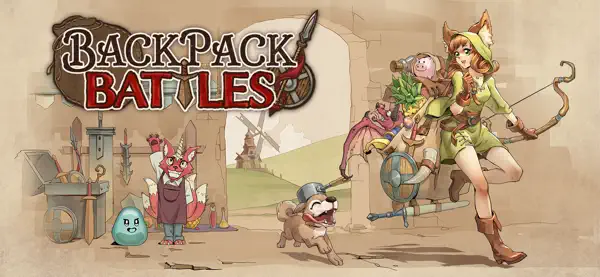
I was skeptical of the whole 'backpack' trend, but Backpack Battles is the real deal. It takes the best part of an RPG—optimizing your gear—and turns it into the entire game. The 'asynchronous PvP' is a stroke of genius; I can spend twenty minutes agonising over where to put a single health potion without holding anyone up. The depth here is staggering. Every item has a purpose, and the way they interact is logical and rewarding to discover. It’s got that 'just one more run' quality that I haven't felt in a while. The UI is clean, the graphics are charming in their simplicity, and it respects the player's time. This isn't just a mobile distraction; it’s a proper strategy game. I’m genuinely impressed.
This game is a mess visually, but if you can get past the PS1-era graphics, there’s actually a decent golf engine under the hood. The physics are more realistic than most of the arcade-style golf games on the store, and the course variety is impressive. However, the UI is a disaster. Navigating menus is like trying to solve a puzzle in the dark. It’s clearly a passion project from a developer who cares more about the sport than the user experience. I can respect the effort, but I can't enjoy the execution. It’s too janky for me to recommend to anyone who isn't a die-hard golf nerd who has played every other game on the market.
I’ve gone fishing once or twice, and I remember it being more exciting than this. i-Fishing is an earnest attempt at a sim, but it’s crippled by its own technical limitations. The water looks like blue gelatin, and the 'excitement' of catching a fish is mostly just fighting with the unresponsive touch controls. Driving the boat is a chore, and the fish finder is more of a decorative element than a useful tool. It has a lot of content—plenty of lakes and lures—but the core gameplay loop is just too clunky to be enjoyable. It’s a relic from the early App Store days that hasn't aged well at all.