Pokermancer is an absolute triumph of tactical deckbuilding design, capturing that elusive, hyper-addictive 'just one more run' essence perfectly. Following the brilliant design footsteps of games like Balatro, it takes a system everyone is familiar with—poker hands—and warps it into an incredibly deep, deeply satisfying fantasy combat engine. Turning a simple Full House into an absolute nuclear blast of magical destruction feels incredibly empowering.
The depth of synergy available here is staggering. Finding the right combinations of magical runes and relics that turn weak, low-scoring pairs into scaling engines of doom makes you feel like an absolute genius. The atmospheric visual aesthetic is moody and beautiful, perfectly complementing the arcane themes with crisp card animations and cosmic particle explosions. It is infinitely replayable, mathematically satisfying, and easily ranks as one of the finest card strategy games available on the platform.
I’ve spent my fair share of nights around physical poker tables, so seeing the traditional layout translated into a solo strategy matrix is highly intriguing. Pokermancer takes the foundational rules of card evaluation and layers on enough modifier combinations to genuinely test your probability calculations. It requires actual risk assessment, forcing you to pivot your build when your initial draws fall apart. My only real gripe is that the layout design can feel a bit crowded on a phone screen, leading to occasional misclicks during card selections. Outside of that layout friction, it’s a tight, satisfying tactical experience.
Performance: Very reliable frame execution, though font sizes in the breakdown tooltips could stand to be scaled up for visibility.
Buy if: You love card design matrices, statistics-driven deckbuilders, and high-replayability loop structures.
Skip if: You dislike random draw mechanics or want real-time reflex challenges instead of turn-based calculations.
Available on: iPhone, iPad
Version 1.1.13Wed Nov 04 2026
- Buffed Silver Spoon: up to $6 per table, +$3 per upgrade.
- Fixed the 7-Ball leaving a hazard on a card it makes Glossy (Laminated), and cards it reveals turning face-down again after reopening the game.
- Fixed Lucky Cat paying an old amount when Sapling or Orange Tape upgraded it at the end of a table.
- Fixed a visual issue with Wrench upgrades during scoring.
- Fixed a rare crash that could occur after returning to the game, which could also left the game without sound.
Requires iOS 17.0 or later. Compatible with iPhone XS, iPhone XS Max, iPhone XR, iPhone 11, iPhone 11 Pro, iPhone 11 Pro Max, iPhone SE (2nd generation), iPhone 12 mini, iPhone 12, iPhone 12 Pro, iPhone 12 Pro Max, iPhone 13 Pro, iPhone 13 Pro Max, iPhone 13 mini, iPhone 13, iPhone SE (3rd generation), iPhone 14, iPhone 14 Plus, iPhone 14 Pro, iPhone 14 Pro Max, iPhone 15, iPhone 15 Plus, iPhone 15 Pro, iPhone 15 Pro Max, iPhone 16, iPhone 16 Plus, iPhone 16 Pro, iPhone 16 Pro Max, iPhone 16e, iPhone 17 Pro, iPhone 17 Pro Max, iPhone 17, iPhone Air, iPhone 17e, iPhone 18 Pro, iPhone 18 Pro Max, iPhone Duo, iPad Pro (11‑inch), iPad Pro (11‑inch) Wi‑Fi + Cellular, iPad Pro (12.9‑inch) (3rd generation), iPad Pro (12.9‑inch) (3rd generation) Wi‑Fi + Cellular, iPad mini (5th generation), iPad mini (5th generation) Wi‑Fi + Cellular, iPad Air (3rd generation), iPad Air (3rd generation) Wi‑Fi + Cellular, iPad Pro (11‑inch) (2nd generation), iPad Pro (11‑inch) (2nd generation) Wi‑Fi + Cellular, iPad Pro (12.9‑inch) (4th generation), iPad Pro (12.9‑inch) (4th generation) Wi‑Fi + Cellular, iPad Air (4th generation), iPad Air (4th generation) Wi‑Fi + Cellular, iPad (8th generation), iPad (8th generation) Wi‑Fi + Cellular, iPad Pro (11-inch) (3rd generation), iPad Pro (11-inch) (3rd generation) Wi‑Fi + Cellular, iPad Pro (12.9-inch) (5th generation), iPad Pro (12.9-inch) (5th generation) Wi-Fi + Cellular, iPad mini (6th generation), iPad mini (6th generation) Wi-Fi + Cellular, iPad (9th generation), iPad (9th generation) Wi-Fi + Cellular, iPad Air (5th generation), iPad Air (5th generation) Wi‑Fi + Cellular, iPad (10th generation), iPad (10th generation) Wi‑Fi + Cellular, iPad Pro (11‑inch) (4th generation), iPad Pro (11‑inch) (4th generation) Wi‑Fi + Cellular, iPad Pro (12.9‑inch) (6th generation), iPad Pro (12.9‑inch) (6th generation) Wi‑Fi + Cellular, iPad Air 11-inch (M2), iPad Air 11-inch (M2) Wi-Fi + Cellular, iPad Air 13-inch (M2), iPad Air 13-inch (M2) Wi-Fi + Cellular, iPad Pro 11-inch (M4), iPad Pro 11-inch (M4) Wi-Fi + Cellular, iPad Pro 13-inch (M4), iPad Pro 13-inch (M4) Wi-Fi + Cellular, iPad mini (A17 Pro), iPad mini (A17 Pro) Wi-Fi + Cellular, iPad (A16), iPad (A16) Wi-Fi + Cellular, iPad Air 11-inch (M3), iPad Air 11-inch (M3) Wi-Fi + Cellular, iPad Air 13-inch (M3), iPad Air 13-inch (M3) Wi-Fi + Cellular, iPad Pro 11-inch (M5), iPad Pro 11-inch (M5) Wi-Fi + Cellular, iPad Pro 13-inch (M5), iPad Pro 13-inch (M5) Wi-Fi + Cellular, iPad Air 11-inch (M4), iPad Air 11-inch (M4) Wi-Fi + Cellular, iPad Air 13-inch (M4), iPad Air 13-inch (M4) Wi-Fi + Cellular, iPad mini (A20 Pro), and iPad mini (A20 Pro) Wi-Fi + Cellular.Pokermancer is a roguelite poker-puzzle game built for quick, strategic runs.
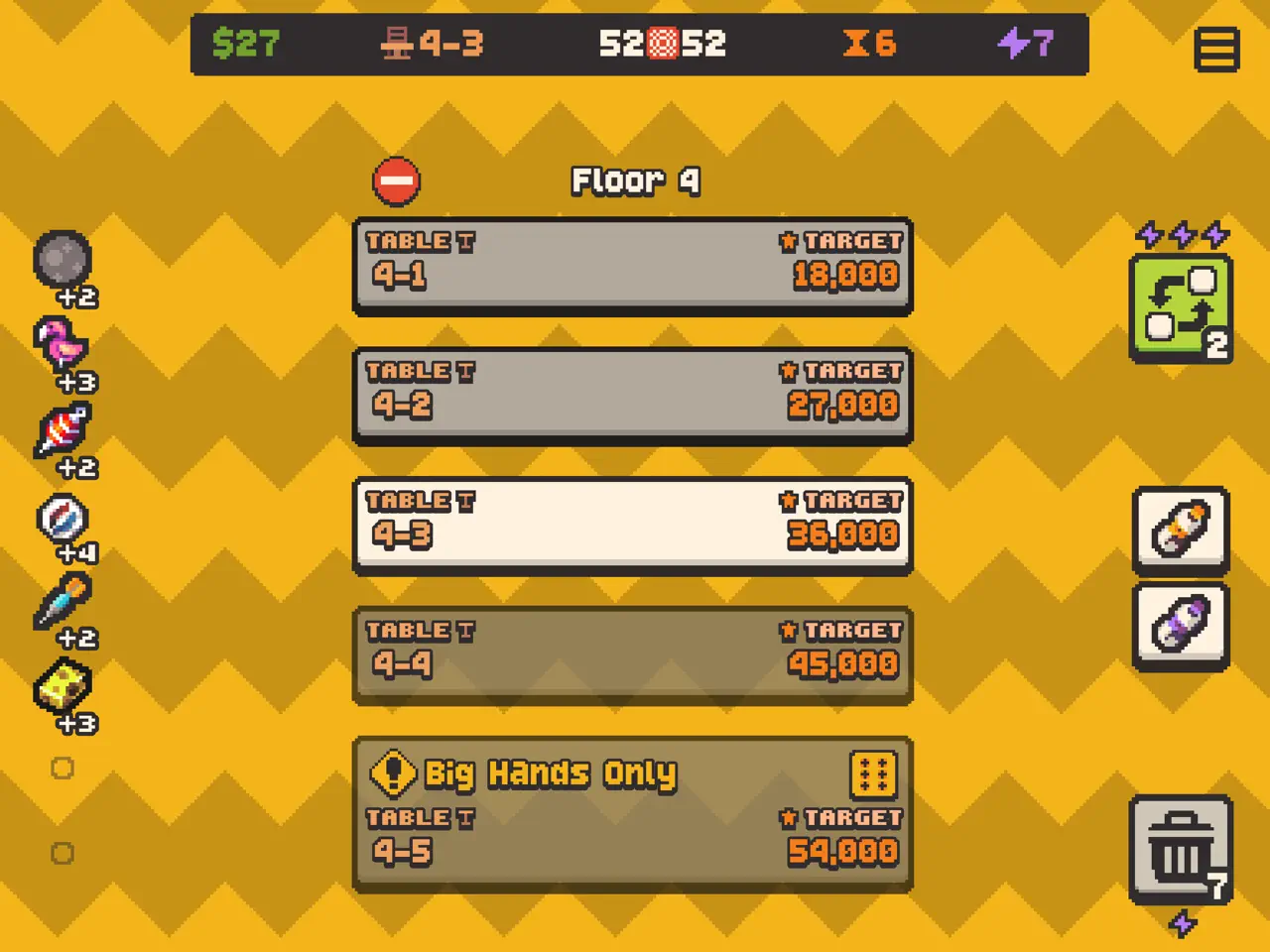
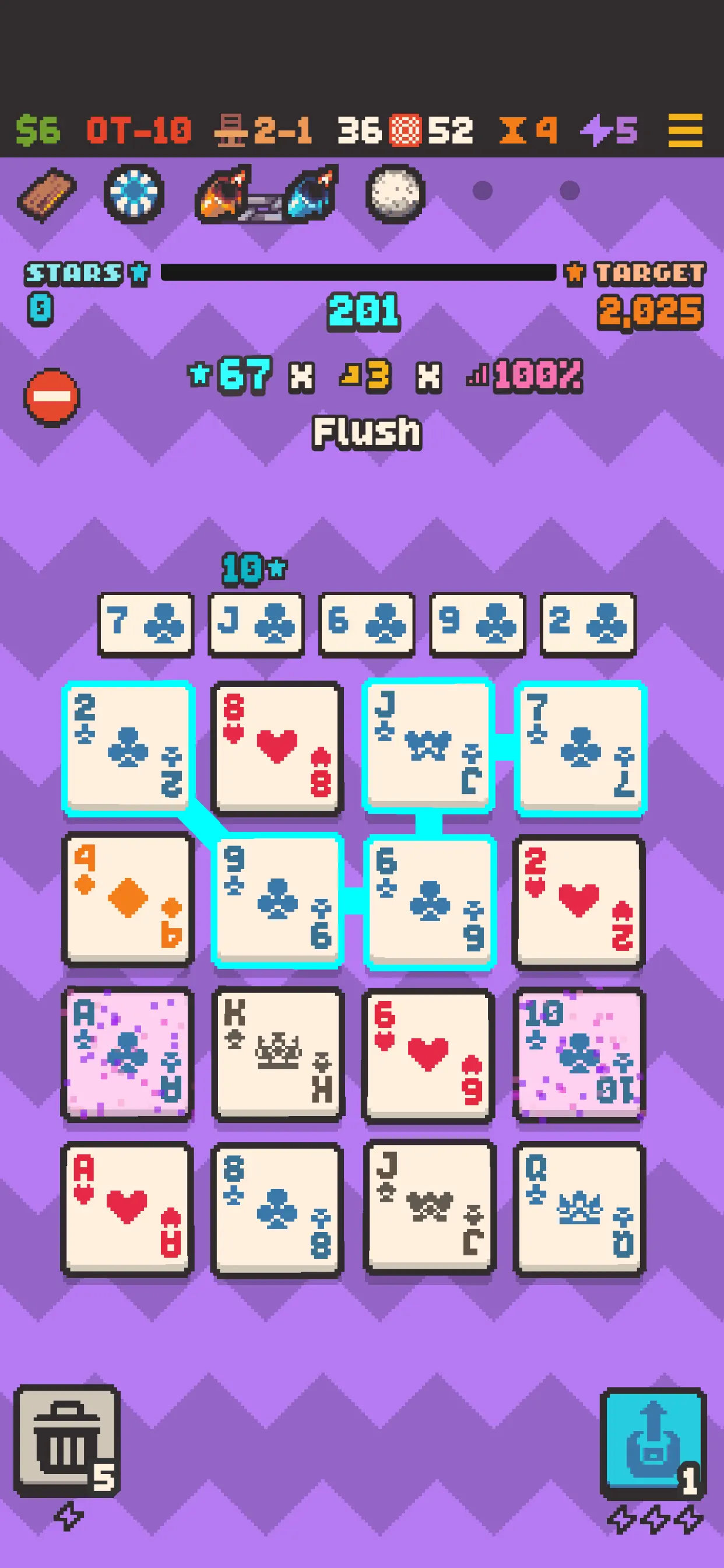
Trace paths through a 4x4 grid of cards to create poker hands and reach the target score. Cleared cards disappear, new cards fall in from your deck, and every path you draw can matter as much as the hand you form.
Between rounds, spend your gold in the Break Room on trinkets and items that change how you score. Discover powerful synergies, shape your build, and turn modest hands into massive results.
Each floor adds new hazards that change the board, including frozen, burning, and statically charged cards. Every fifth round, a boss changes up the rules. Adapt your strategy or lose the run!
Beat all five tables to unlock Overtime, an escalating difficulty mode with ten ranks that remove resources, add challenges, and push your builds even further.
Play for free through the first three floors. One purchase unlocks the full game!
Features:
* 100+ trinkets and 30+ items to collect
* 11 unique starting packs each with their own perks and spells
* 25+ boss conditions
* 7 hazard types to contend with
* 10 Overtime difficulty ranks per pack
* Keep playing in an endless mode beyond floor 5
* Portrait orientation and one-handed play
* No ads, no loot boxes, no pay-to-win; one purchase unlocks the entire game and all future content





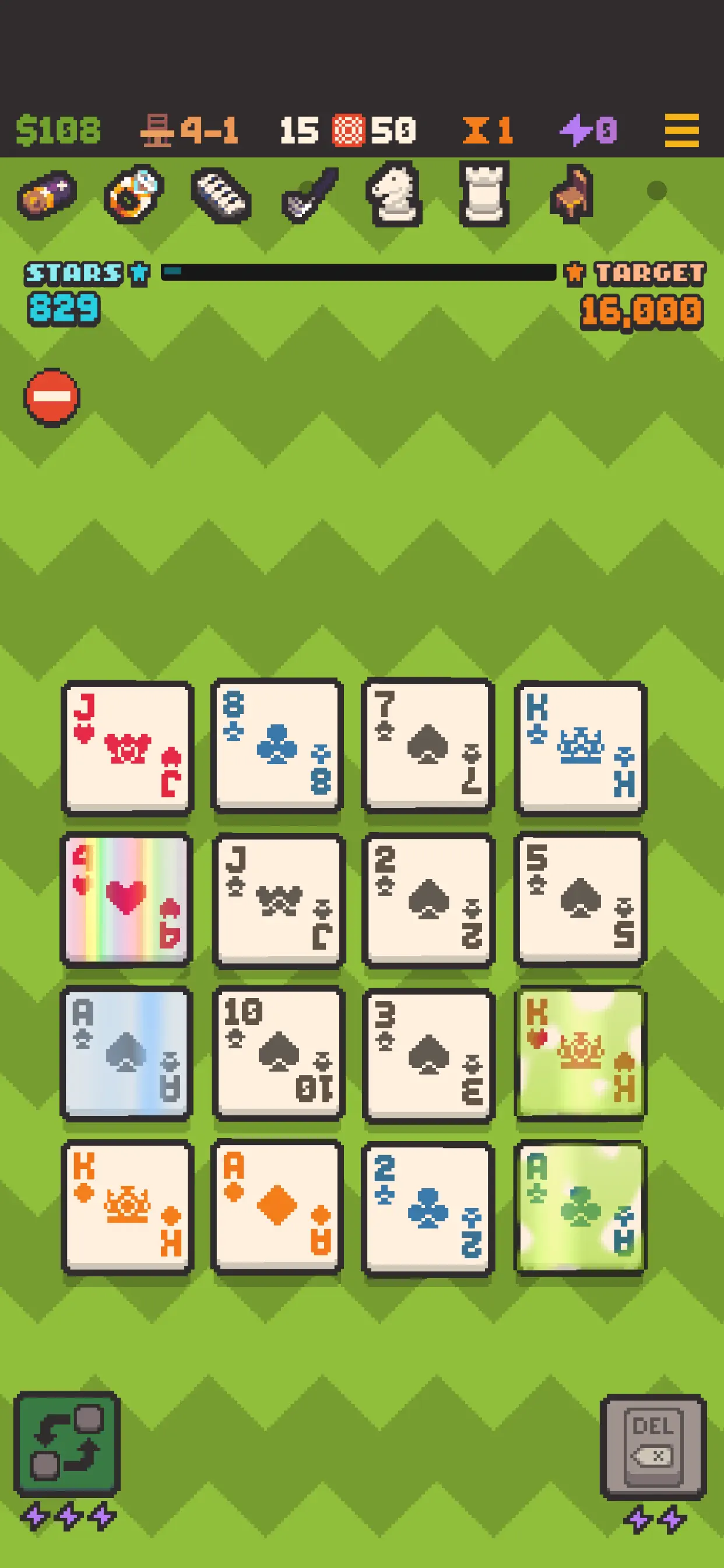
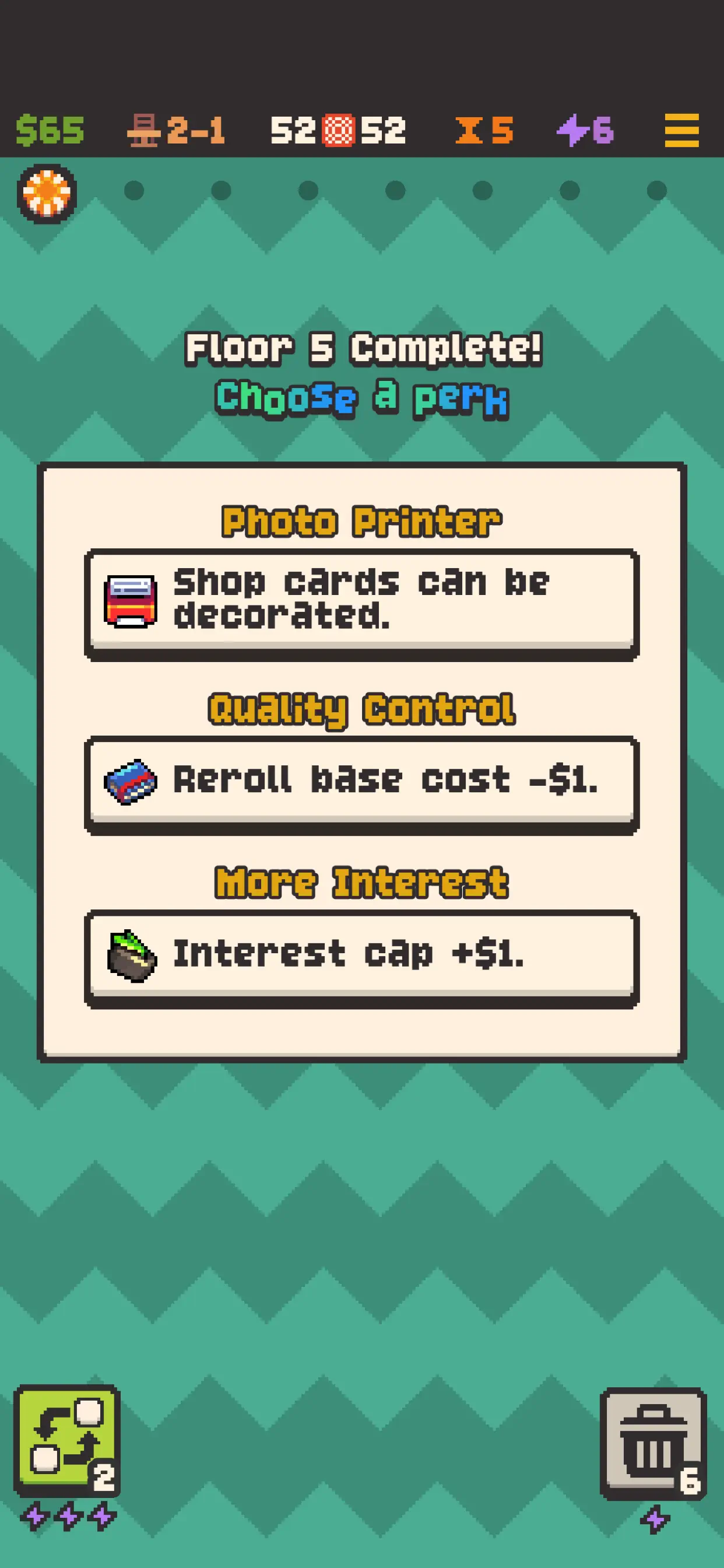
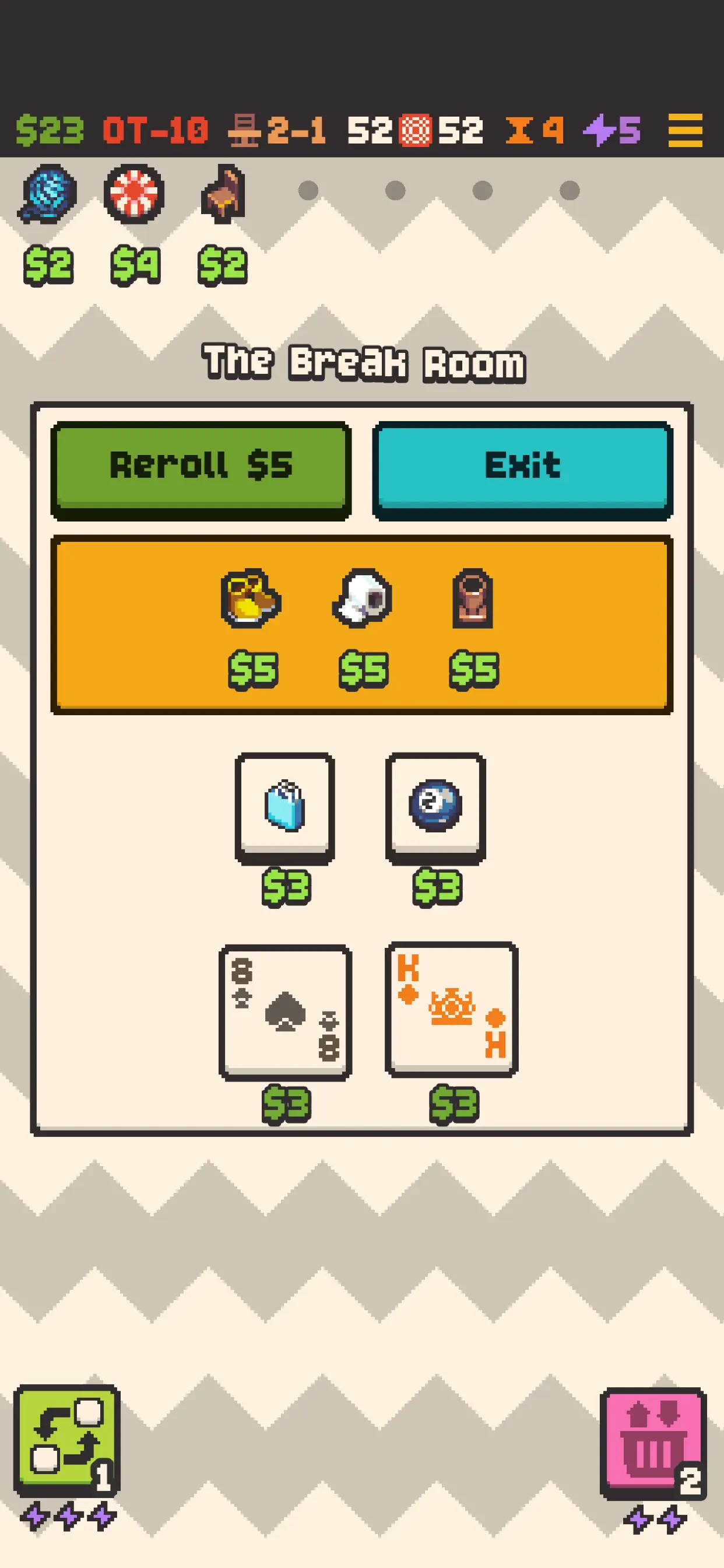


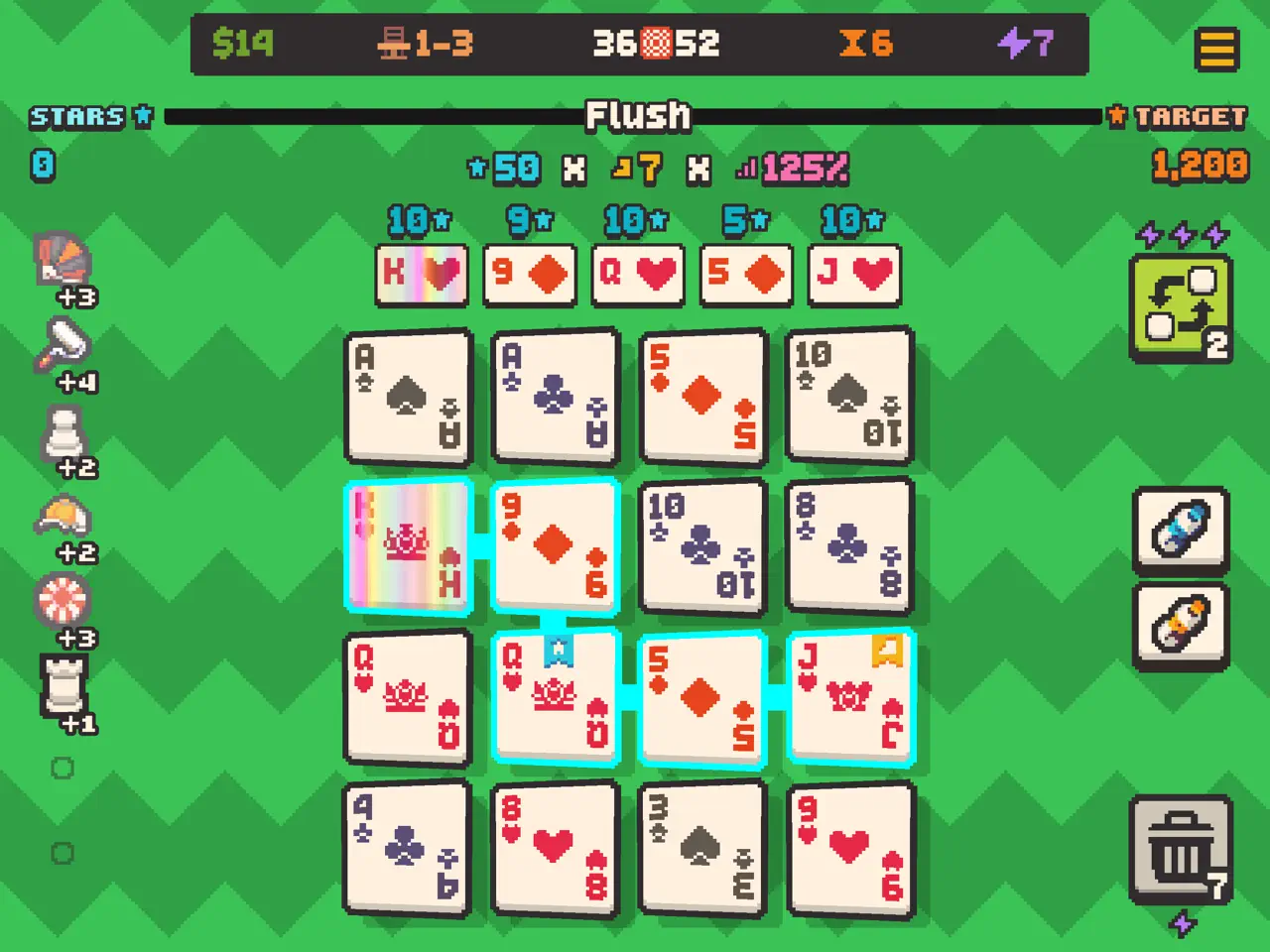
Pokermancer is an inventive and stylish single-player roguelike deckbuilder that reimagines classic card play through a fantasy lens. Players step into the dark robes of a mystical wizard who channels magic through standard playing cards. Instead of casting typical spells, you draw a hand of cards and must formulate classic poker combinations—such as Pairs, Flushes, or Full Houses—to cast corresponding offensive or defensive spells. Navigating through branching dungeon paths filled with formidable monsters, cursed relics, and magical modifiers, you must carefully curate your deck to create ultimate synergy and survive the depths.
Unique gameplay loop marrying traditional poker hands with deep fantasy RPG combat
Dozens of unlockable spell books, character classes, and magical card decks
Over 100 game-changing relics, runes, and temporary potion items
Procedurally generated dungeon grids ensuring no two runs are identical
Gothic, high-contrast atmospheric art style with stunning particle effects
Gameplay mixes tactical card drafting with math-driven combat scoring. Each poker hand deals base magic damage multiplied by your wizard's current arcane level. As you progress, you buy mystical artifacts that permanently alter game rules—like making all hearts apply lifesteal or allowing you to discard extra cards—creating highly overpowered, custom card syndicates.
While knowing basic poker hand rankings gives you an advantage, the game features an accessible cheat sheet that tracks hands and scoring values at all times.
I don't say this often: this is a game actually designed by people who like games. Balatro takes the familiar rules of poker—something I’ve played at real tables for twenty years—and twists them into a math-driven roguelike that is dangerously addictive. It doesn't use 'energy' to stop you from playing; it doesn't have a battle pass. It just has depth. The genius is in the Jokers. Every run feels like a fresh puzzle to solve. One minute you're building a deck around flushes, the next you're banking everything on a single high card. It’s tight, it’s polished, and the CRT-style aesthetic actually feels purposeful rather than just lazy 'retro' bait. It's the most innovative card game since 'Slay the Spire', and it actually treats the player like an adult. This is what mobile gaming should be.
Now, this is a real game. No fluff, no microtransaction nonsense, just pure mechanical brilliance. Slay the Spire is built on a foundation of iron-clad logic. Every card you add to your deck matters, and every relic you pass up could be your undoing. It's a game about consequence, something many modern mobile titles are afraid to touch. The balance between risk and reward—whether to elite-hunt for relics or play it safe at a campfire—is perfectly pitched. My only real gripe here is the port itself. While the gameplay is untarnished, the UI on a standard phone screen feels like it was designed for someone with much smaller fingers than mine. Selecting the right card in a full hand can be finicky, and the text can be a strain. However, once you’re in the flow, these issues fade. It’s a conservative design in the best way: it trusts the player's intelligence. It’s hard, it’s fair, and it’s arguably the best strategic use of your time on the platform.
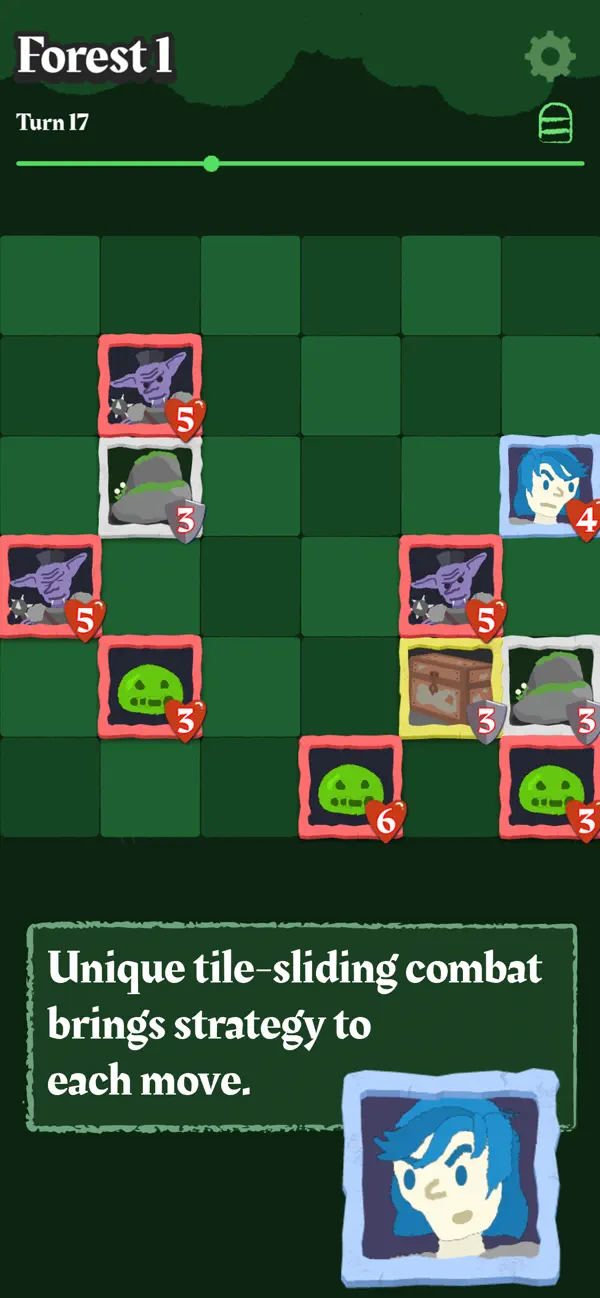
Dinsun here. Rogueslide is a reminder that clever constraints yield great software. Utilizing a 4x4 matrix and applying standard 2048 sliding physical laws sounds simple, but when every single direction choice slides a monster closer to your flank while pushing a healing potion out of reach, it becomes a high-stakes tactical math problem. It strips away the fat of modern mobile games and leaves pure, uncompromising choice mechanics. Excellent design work.
The first Card Crawl was a masterclass in mobile-first design, and the sequel mostly keeps the flame alive. It’s a smart, calculating game that respects your time—no small feat in 2024. The mechanics are tight, the art style remains unique, and the tactical decisions actually matter. However, it feels more like an expansion than a true '2'. The new card types and abilities are nice, but they don't fundamentally shift the experience. For a conservative gamer like me, I appreciate the consistency, but I was hoping for a bigger leap in complexity. Still, it’s one of the few games on this list that actually understands what makes a game rewarding: meaningful choices within a well-defined set of rules.
Look, I’ve played dozens of these deckbuilding roguelites over the years, and Merge Maestro actually brings a fresh twist to the formula. Combining emoji tokens to build automated engine synergies keeps your brain engaged during the early to mid-game phase. Finding the right overlap between passive powers and active tokens feels genuinely rewarding when a run comes together. However, it suffers from the classic pacing trap. By round seven or eight, once your combo loop is established, the back half of a run plays itself and becomes a chore of routine inputs. It’s a respectable indie effort with decent depth, but it lacks the endgame bite required to keep a veteran player hooked for the long haul.
I didn't expect to lose three hours to a game called 'Nubby,' but here we are. This is basically 'Plinko: The Roguelike,' and it’s surprisingly brilliant. It has that same 'just one more run' hook that games like Balatro have. You start with tiny numbers, but once you start stacking items that multiply your hits or add extra balls, the screen just fills with chaos and big numbers. It’s incredibly satisfying. The 'save the universe' story is just a funny backdrop for the real meat of the game: the synergies. My only complaint is that some runs can feel a bit doomed if you don't get a good item early on, but that’s the nature of the genre. The art is simple but the physics are solid. It’s a great example of an indie dev taking a simple concept and making it deep.
Give me a clean logic puzzle any day over modern microtransaction-riddled garbage. Bullpen Logic Puzzle Game understands the assignment: it presents you with clean grid-based deduction challenges and gets completely out of your way. I spent several hours working through its increasingly thorny problem sets, and I appreciate that it relies strictly on brainpower rather than timed artificial pressure or pay-to-win hints. While the presentation is minimalist to a fault, the puzzle design itself is genuinely clever, making it a respectable little time-killer for puzzle purists who like their gray matter tested.
At forty, I don't always have forty hours to sink into a sprawling 4X strategy monolith like Civilization. That's why minimalist games like Dawnfolk catch my eye. It strips away endless bureaucratic menus and bloated tutorials, letting you jump right into managing a medieval settlement pushed back by darkness. Guided by a fiery companion, you build up tents, gather resources, and tackle clever minigames that break up the macro management. It respects your time, wrapping up distinct sessions in under an hour. Of course, being minimalist has its downsides. Once you figure out the optimal building loops, the challenge curve flattens out faster than I'd like, and the lack of deep systemic complexity leaves veteran strategy players wanting more after a few runs. Still, for a relaxing, focused session on a phone or tablet, it hits the right notes without demanding a second job's worth of attention. Dinsun’s score: a respectable effort for strategy fans who appreciate brevity.