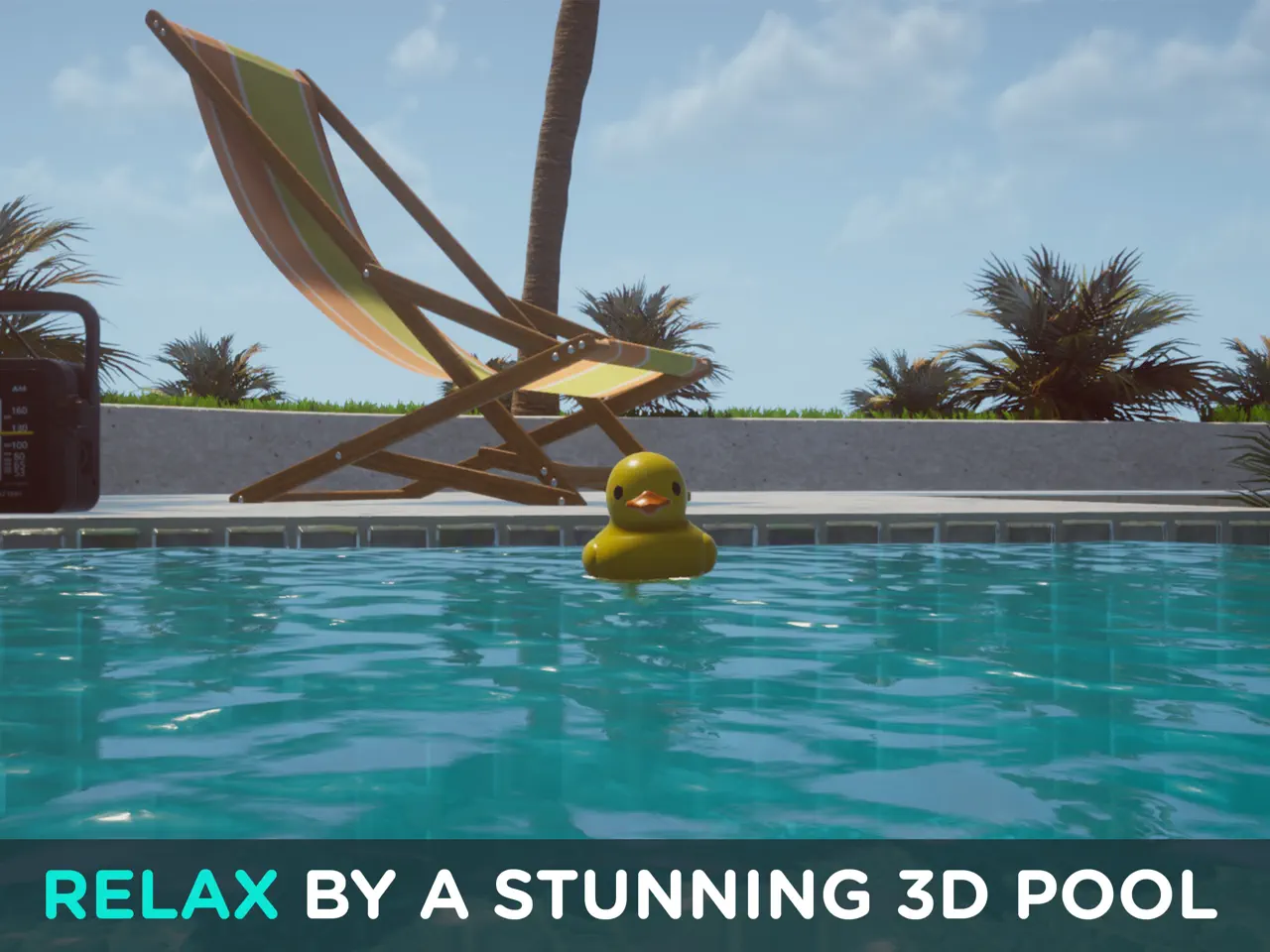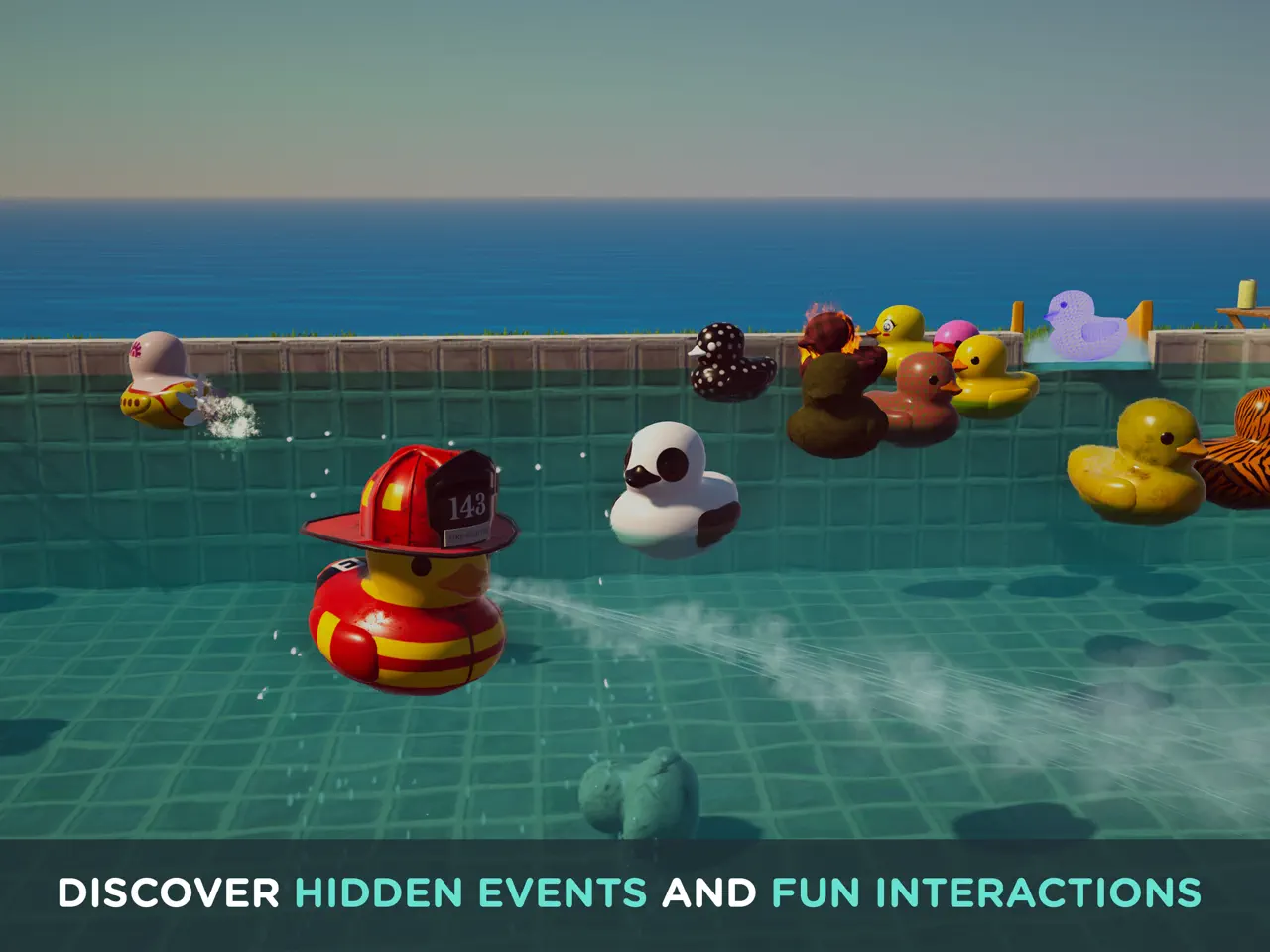
Placid Plastic Duck Simulator is a rare gem that understands the true meaning of 'zen.' In a market saturated with high-stress microtransactions, this game offers a profound counter-narrative: doing absolutely nothing. As an expert in simulation games, I find the physics engine surprisingly delightful; the way the ducks bob and interact with each other in the water is hypnotic. It’s not just a game; it’s a living screensaver that rewards patience with tiny, whimsical moments of emergent storytelling.
The real magic lies in the discovery. Every time a new duck drops into the pool—whether it's the sleek metallic one, the glowing neon variant, or the one that's literally on fire—it feels like a legitimate event. The sound design of the lapping water and distant birds creates a perfect atmosphere for meditation or a low-fi study companion. It is the ultimate 'digital toy' for adults who need a mental reset.
I’m told this is 'art' or 'experimental,' but back in my day, we called this a tech demo. You open the app, and you watch a plastic duck. That’s the 'gameplay.' Occasionally another duck falls in. Wow. The developers call it 'reinvigorating,' but I call it a waste of processing power. It’s an idle game without the actual 'game' parts—no numbers to go up, no upgrades to manage, just the slow drift of digital plastic.
The visuals are clean enough, and the radio tunes have a certain charm, but the novelty wears off in exactly four minutes. Charging money for this feels like a social experiment to see how much people will pay for literal nothingness. If you need this to 'relax,' you’re better off staring at a real fish tank or a brick wall. It lacks any of the mechanical engagement that defines the medium of gaming.
Performance: Runs flawlessly on M-series iPads. Water physics and reflections are impressively rendered for a mobile title.
Buy if: You are looking for a digital fidget toy or a high-end relaxing screensaver.
Skip if: You expect any form of challenge, interaction, or traditional game loop.
Available on: iPhone, iPad
Version 1.4Tue Jul 29 2025
Fixed some bugs:
- iCloud sync was not working correctly for some users
- Ducks from the Ducks Galore DLC were not spawning correctly for some users
Requires iOS 16.0 or later. Compatible with iPhone, iPad, and iPod touch.Special sale! Relax with your ducks at a discounted price (this week only)!
A relaxing 3D environment where you experience life as a rubber duck, Placid Plastic Duck Simulator is an experiment to induce calm and bliss. You're up for a reinvigorating stay at your favorite seaside pool.
You are not alone. Different ducks will slowly and happily fall into the pool with you, each with their own style and demeanor (you can name them and have names appear over their heads).
Float on the water, sunbathe, dip your beak, go down the slide. The radio is playing a nostalgic tune.
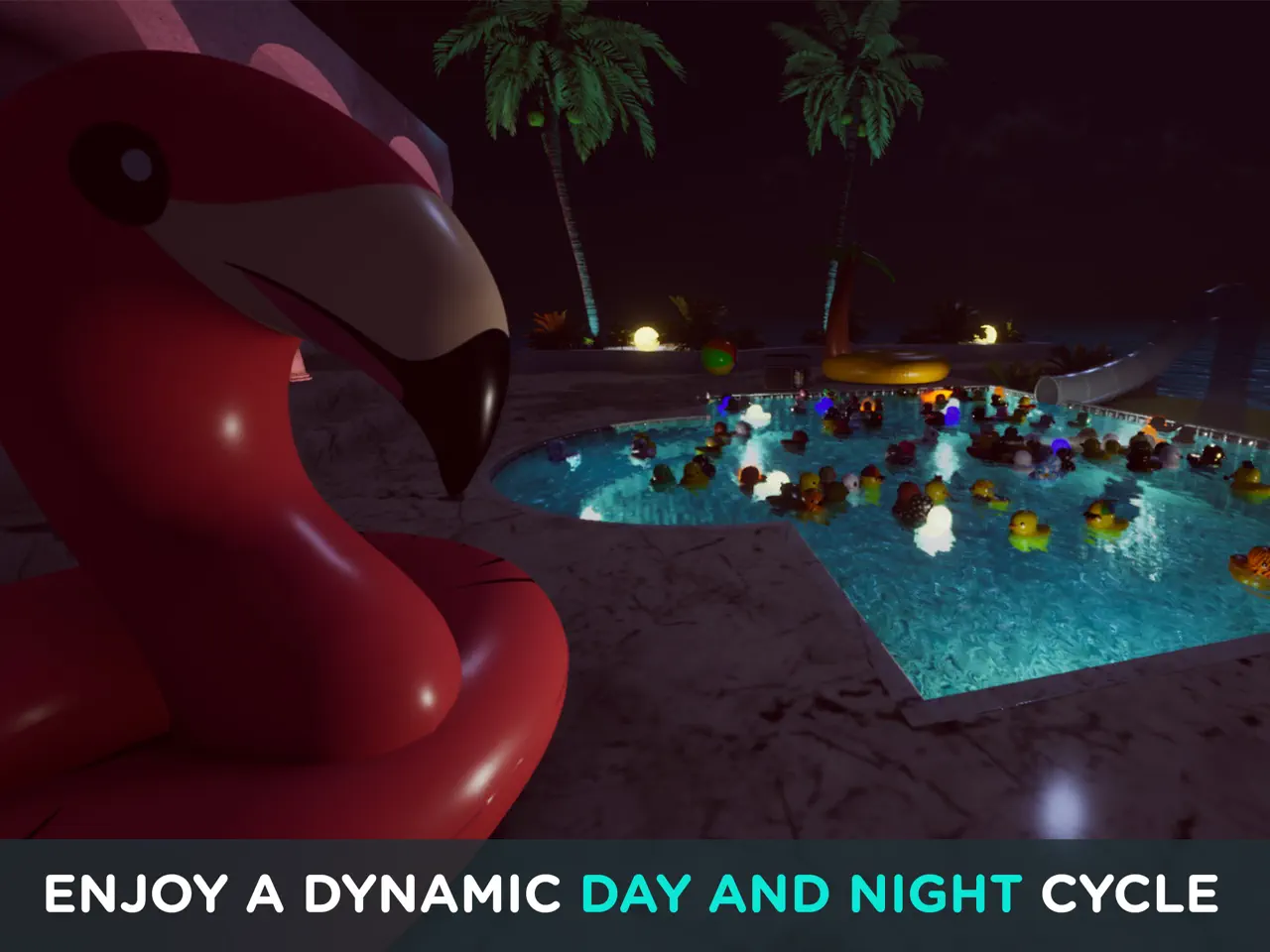
Here comes the night. Look at the stars. Turn off the radio, listen to the waves in the dark. Dream.
The sun is rising. The sky is blue. Slide down into the second pool.
An airplane is rushing somewhere, there's stuff to do.
Not for you.
Live in the present moment, enjoy life.
Everything is going to be alright.


Placid Plastic Duck Simulator is a unique experiment in relaxation. Watch a peaceful pool as various rubber ducks drop in. Each duck has its own personality, material, and special actions. There are no goals, no stress—just the soothing sound of water and the company of your plastic friends.
Ultra-Relaxing Atmosphere
Beautiful 3D Graphics
Dozens of Unique Ducks
Day/Night Cycle
As time passes, more unique ducks will fall into the pool. Try to collect all of them, from the flaming duck to the radio duck.
The game is an 'idle' experience intended for relaxation and observation rather than active play.
Let’s be honest: calling Mountain a 'game' is the biggest stretch since I tried to fit into my high school jeans. It’s a screensaver. A very pretty, very pretentious screensaver. You don't 'play' Mountain; you witness it. As someone who grew up in the era of high-challenge arcade titles, the lack of agency here is baffling. You draw a picture of 'loss' or 'happiness,' and then you look at a rock. That’s it. Occasionally a piano falls from the sky and gets stuck in it. Riveting. I get the 'zen' appeal, I really do. In a world of loud, aggressive mobile ads, Mountain is a quiet breath of air. But it’s air that costs money. It’s an interesting experiment in procedural generation and ambient storytelling, but don't come here looking for 'fun' in any traditional sense. It’s art. And like most art, it’s mostly there to be looked at while you think about something else. If you want a simulation, go buy SimCity. If you want a digital pet that doesn't die, buy this.
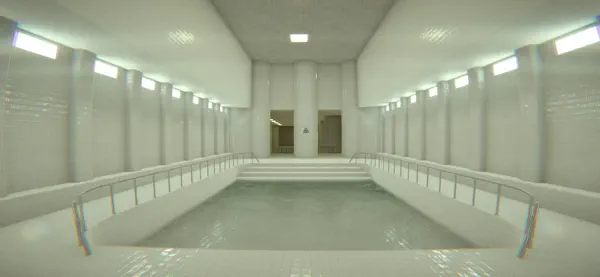
I hesitate to even call POOLS a 'game' in the traditional sense, but I can't deny its effectiveness. There are no objectives, no scores, and no enemies. You simply walk. And yet, I haven't felt this much genuine tension in a title in years. It taps into something primal—the fear of the infinite, the 'offness' of a space that should be crowded but is utterly empty. The tiling, the lighting, and the echoing splash of your own footsteps create an environment that is both beautiful and deeply unwelcoming. It’s a 'walking simulator' in the purest form, but it understands its niche perfectly. The lack of a HUD or any gamified elements makes the immersion absolute. My only real criticism is the price-to-content ratio for some; at six chapters, you can finish it in an afternoon. But for those of us who value a specific, high-quality experience over endless 'content,' POOLS is a standout. It’s an art piece you can walk through, and it’s one of the few mobile ports that actually feels like it belongs on a high-end display. It’s unsettling, slow, and wonderful.
This game is a mess visually, but if you can get past the PS1-era graphics, there’s actually a decent golf engine under the hood. The physics are more realistic than most of the arcade-style golf games on the store, and the course variety is impressive. However, the UI is a disaster. Navigating menus is like trying to solve a puzzle in the dark. It’s clearly a passion project from a developer who cares more about the sport than the user experience. I can respect the effort, but I can't enjoy the execution. It’s too janky for me to recommend to anyone who isn't a die-hard golf nerd who has played every other game on the market.
I’ve gone fishing once or twice, and I remember it being more exciting than this. i-Fishing is an earnest attempt at a sim, but it’s crippled by its own technical limitations. The water looks like blue gelatin, and the 'excitement' of catching a fish is mostly just fighting with the unresponsive touch controls. Driving the boat is a chore, and the fish finder is more of a decorative element than a useful tool. It has a lot of content—plenty of lakes and lures—but the core gameplay loop is just too clunky to be enjoyable. It’s a relic from the early App Store days that hasn't aged well at all.
I remember when the first Virtual Villagers came out; it was a neat concept. This sequel adds more puzzles and depth, but it hasn't solved the core issue: the villagers are incredibly stupid. If you don't check on them every few hours, they will starve to death standing next to a bush of berries. It’s less 'God game' and more 'Babysitting simulator'. The real-time mechanic is a double-edged sword. It’s great for a sense of persistent world, but it punishes you for having a life outside the app. The graphics are colorful but look like a late-90s PC title, which is nostalgic for me but probably ugly for everyone else. It’s a fine time-waster, but the lack of direct control over your little people will drive you mad if you're a perfectionist like me.
This is the kind of game that gave mobile gaming a bad name in the early days. It relies entirely on tilt controls that are about as precise as a hammer. The graphics are embarrassing—low-poly models and muddy textures that make the 'epic jumps' look like a glitch in a 1998 simulator. There’s no sense of speed, no sense of height, and certainly no sense of excitement. It’s a repetitive loop of tilting your phone and hoping the physics engine doesn't decide to freak out. It’s a waste of storage space. I’ve had more adrenaline rushes checking my mail.
I didn't expect to like this. It looks like another 'waifu' game at first glance, but Alter Ego has a surprising amount of intellectual weight. It uses classic psychological literature to frame its choices, and the dialogue with Es is actually well-written. It’s less of a game and more of a mirror—the results at the end felt uncomfortably accurate. The 'clicker' part is total garbage. It’s a mindless wall you have to climb just to get to the next conversation. I wish they’d just made it a visual novel. But the atmosphere is thick, and the music is hauntingly good. It’s one of the few mobile games that actually made me think about my life after I put it down. It’s a high score for me, despite the weak gameplay, because of its unique intent.
This is what mobile gaming should be. It’s focused, technically impressive, and incredibly difficult. Landing a flying brick like the Shuttle isn't supposed to be easy, and F-Sim doesn't pull any punches. I respect a developer that prioritizes realism over 'accessibility'. The physics are top-tier, and the sense of tension during the final descent is genuine. It’s not a 'game' in the sense that you’re collecting coins or leveling up; it’s a mastery of skill. For someone who’s seen the industry dumb down for forty years, this is a breath of fresh air. It’s niche, yes, but it’s excellent at what it does. Only held back by the limited scope—it’s just the landing, after all.