Hide Ball is a clever physics-based brain teaser that relies on simple 'drawing' mechanics. Your goal is to protect a ball from a 'bad rain' by drawing structures.
It feels like a spiritual successor to games like 'Where's My Water' but with its own unique twist. The puzzles start simple but quickly introduce moving platforms and complex gravity. It’s the kind of game that makes you feel like a genius when you find a creative solution that the developer probably didn't intend.
Hide Ball is the sort of game that was revolutionary in 2010 when 'Cover Orange' came out. In 2024, it’s just another drop in an over-saturated ocean of physics puzzlers. The 'brain teaser' aspect is mostly just trial and error. You drop a block, it falls over, you restart, you move it two pixels to the left. That’s not logic; that’s frustration disguised as gameplay.
The visuals are barren. I’m all for minimalism, but this looks like a prototype that forgot to put on a coat of paint. And the ads... good luck getting into a flow state when every third level is interrupted by a thirty-second clip for a slot machine game. It’s a functional app, sure, but it’s completely devoid of any creative spark. If you’ve played one physics puzzler, you’ve played this one. I’d rather go back to my Sudoku book.
Performance: Runs well on almost any device. Physics are consistent within the game's logic.
Buy if: You have an endless appetite for physics-based puzzles and don't mind ads.
Skip if: You value original game design and aesthetic polish.
Available on: iPhone, iPad, iPod
Version 1.1.11Tue Mar 25 2025
Performance and stability improvements
Passionate about brain teasers? Want to challenge your logical skills? Then take a look at Hide Ball — a logic puzzle game in which you should hide good balls from dreadful and harmful monsters.
Hide Ball is an amusing logic game that will test your IQ and raise your intellectual abilities to a new level. Plan every step, estimate a possible outcome and build tactical strategies. Solve logical puzzles, pass lots of interesting levels and win the game!
What are you waiting for?! Download and play the game!
Requires iOS 13.0 or later. Compatible with iPhone, iPad, and iPod touch.Passionate about brain teasers? Want to challenge your logical skills? Then take a look at Hide Ball — a logic puzzle game in which you should hide good balls from dreadful and harmful monsters.
Hide Ball is an amusing logic game that will test your IQ and raise your intellectual abilities to a new level. Plan every step, estimate a possible outcome and build tactical strategies. Solve logical puzzles, pass lots of interesting levels and win the game!
What are you waiting for?! Download and play the game!
Hide Ball: Brain Teaser Games challenges your creativity and logic. In each level, you must draw lines or shapes to build a shelter for a small ball before a toxic rain falls from the sky. With limited 'ink' and increasingly complex environments, you'll need to think outside the box to keep the ball safe.
Hundreds of physics puzzles
Creative 'draw-anything' mechanics
Relaxing but challenging gameplay
Daily brain training levels
Use your finger to draw objects. Once you finish, gravity takes over, and the 'rain' begins.
You have a limited amount of ink per level, shown by a bar at the top, so draw efficiently!
Rhythm games demand absolute precision and flawless input response. At forty years old, I have zero patience for rhythm titles that suffer from touch input lag or use ads to artificially disrupt your tempo. Piano 7 Tiles follows the tired blueprint of falling-tile tappers, offering zero innovation over dozens of identical predecessors. While tapping along to familiar melodies can provide a brief distraction, the constant ad interruptions and cheap charting make it a frustrating experience for anyone who appreciates genuine rhythm gaming. Skip this and stick to dedicated rhythm platforms.
I’m tired of these games claiming to be 'brain puzzles' when they're actually just 'guess what the developer was thinking' games. There is no consistent logic here. The solutions are often completely arbitrary, designed specifically to make you fail so you'll watch an ad for a hint. That isn't clever design; it’s a dark pattern. The humor is juvenile at best, and the puzzles feel like they were put together in an afternoon. If I'm going to play a puzzle game, I want a system I can master. Here, the 'mechanic' is just clicking things until the game decides you've found the 'funny' solution. It’s a low-effort production that tries to ride the trend of 'brain teaser' apps that are anything but teasing. It’s more of a test of patience than a test of intellect.
Finally, a game in this list that actually requires some thought. Unpuzzle is a classic spatial logic game. It’s nothing groundbreaking—I’ve played this concept in physical wooden puzzles decades ago—but it translates well to a touchscreen. The difficulty scaling is fair, though it eventually hits a wall where the levels feel more like busywork than actual challenges. The inclusion of 'Car Out' modes (traffic jam puzzles) is a nice bit of variety, even if it feels like two different games stitched together. It’s a solid B-minus effort. Not great, but it respects your intelligence more than most of its peers.
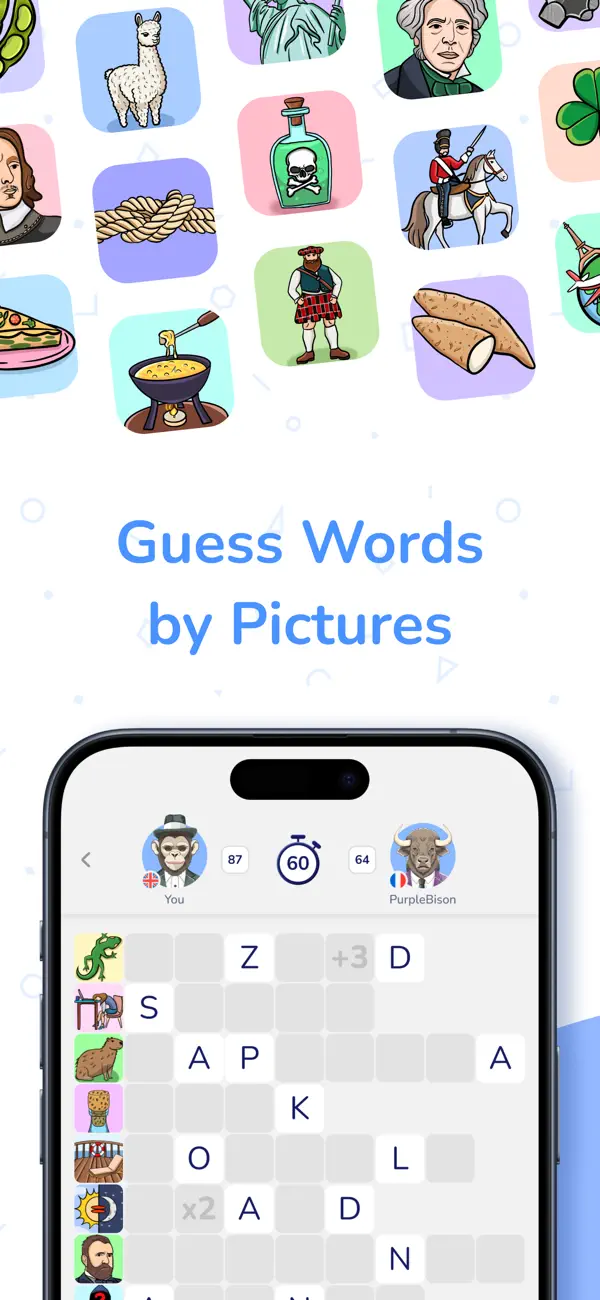
Dinsun here. I’ve always liked crosswords, but my eyes aren't what they used to be for reading tiny, obscure clues. WordPix using pictures is a clever move. It makes the game more approachable and less about knowing weird trivia from the 1950s. The difficulty is generally low, though some of the 'words' they want you to find are a bit of a stretch—sometimes you're looking for a specific color or a tiny detail in the background that feels like a reach. It’s a 'clean' game, but it lacks personality. The music is generic elevator jazz, and the UI is very 'stock mobile app.' It’s the kind of thing my wife and I might play together for 15 minutes before bed. It doesn't revolutionize the genre, but it's a competent puzzle game that doesn't feel like it's trying to rob you.
Word Bridges is essentially a digital crossword variant. It’s fine. It’s better than most of the garbage on the App Store because it at least requires you to have a vocabulary. But it’s still very much a 'mobile' experience—short levels, daily rewards, and ads to get hints. The 'logic' is often a bit reaching, with some word connections feeling like they were pulled from a very loose thesaurus. As a veteran gamer, I’d rather just do a real crossword or play Scrabble. This is wordplay lite. It’s a dignified way to kill ten minutes, but it won’t stick in your memory.
Enigmo takes me back to the early days of the iPhone. It was revolutionary then, and it’s still 'fine' now. The core loop of placing a bumper and watching a droplet bounce is satisfying in a basic way. However, the 3D graphics haven't aged gracefully—they look like early PS1 tech. The difficulty curve is also all over the place; you'll breeze through five levels and then hit a brick wall that makes you want to throw your phone. It’s a classic, but the world has moved on to more elegant physics puzzles like Portal or The Witness.
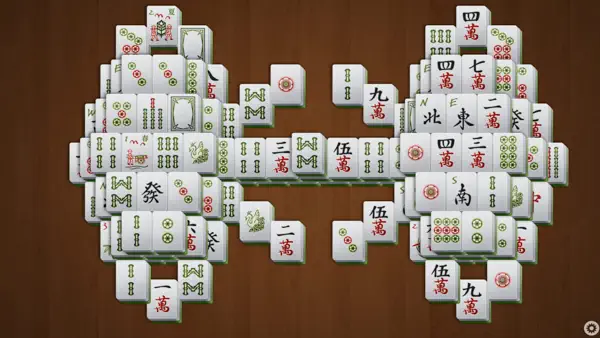
Look, it's Mahjong. We’ve been playing this on PCs since the 80s, and this version doesn't do much to justify its existence beyond portability. It’s competent enough—the tiles are legible and the touch controls don't fight you—but it lacks any sort of soul or modern flair. The variety of layouts is the only thing keeping it from being a total snooze-fest, though even those start to feel repetitive after an hour. It’s the kind of game you play while waiting for a flight because you have nothing better to do. It’s fine, but 'fine' doesn't get a high score in my book. If you're looking for innovation, keep walking; if you want a digital paperweight that occasionally lets you click tiles, here it is.
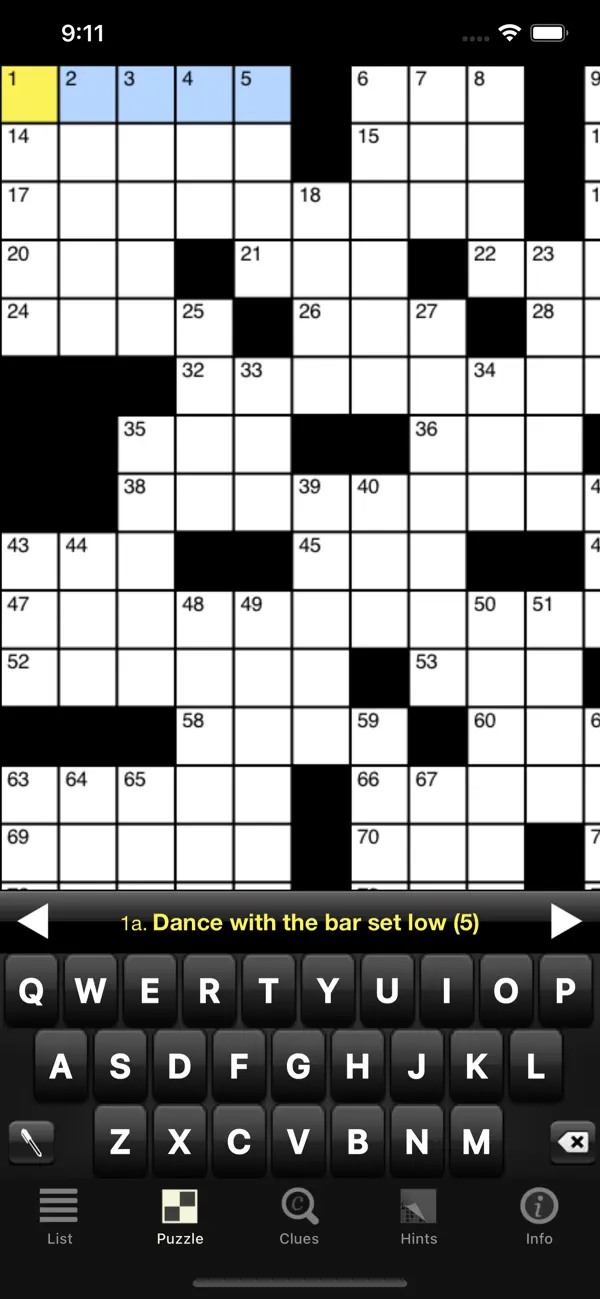
I've spent years with a pen and a newspaper, so I have a high bar for crosswords. This app manages to fit the content in, but it loses the tactile satisfaction of the real thing. The interface is utilitarian, which is better than being cluttered, but it feels sterile. The puzzle quality varies wildly depending on the source, and some of the clues are frankly nonsensical or dated. It does what it says on the tin, but I struggle to find the 'pro' in this 'classic' experience. It’s a decent way to kill time, but it won't replace a Sunday morning ritual for anyone who actually cares about the craft of puzzling. It's serviceable, but largely forgettable software.