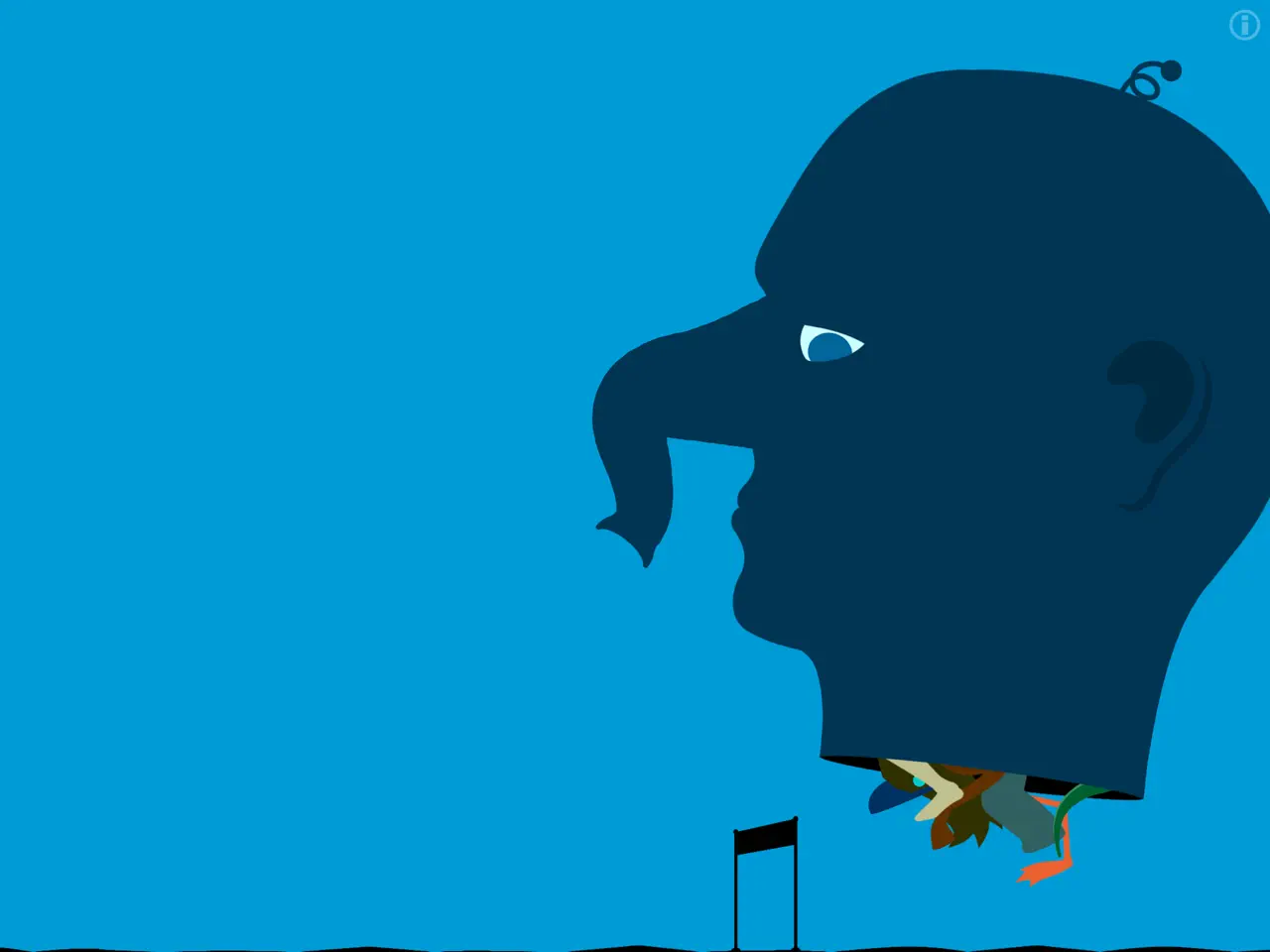
Feed The Head is less of a game and more of a digital interactive sculpture that defies traditional logic. Created by the surrealist masters at Vectorpark, it invites you to interact with a blue, floating head. There are no instructions, no UI, and no clear objectives—just a series of bizarre, hilarious, and often unsettling transformations triggered by your pokes and prods.
Everything about this experience is meticulously crafted, from the smooth, hand-drawn animations to the tactile sound design. It rewards curiosity in the purest way possible. You might pull on the nose and watch it turn into a bird, or feed the mouth and trigger a psychedelic sequence of events. It’s a masterpiece of interactive art that proves mobile devices are a perfect medium for surrealist play.
Vectorpark makes weird stuff. Feed the Head is essentially a digital toy. There is no winning, no losing, and no real point. You poke a blue head and it grows hands, or its eyes turn into birds. It’s creative, sure, but as a gamer, I find the lack of structure frustrating.
It’s the kind of thing you show someone for five minutes to prove how 'artistic' mobile apps can be, and then you never open it again. The animations are smooth and the logic is delightfully warped, but it’s over in a flash. If you’re looking for a puzzle or a challenge, look elsewhere. If you want a digital fever dream, this is it.
Performance: Perfect performance; clean vector art.
Buy if: You are a fan of surrealism and interactive art pieces.
Skip if: You want a game with goals, scores, or progression.
Available on: iPhone, iPad, iPod
Version 2.16Sat Feb 02 2019
Resized for newer devices.
The iOS adaptation of our classic surrealist toy. Poke the Head. Prod the Head. Tug the Head... but most importantly, Feed the Head. A living cartoon, the Head will unfold and transform in surprising, startling, and hilarious ways.
We won't spoil the fun by giving away too much, but we guarantee there is no other app quite like this one.
Requires iOS 8 or later. Compatible with iPhone, iPad, and iPod touch.The iOS adaptation of our classic surrealist toy. Poke the Head. Prod the Head. Tug the Head... but most importantly, Feed the Head. A living cartoon, the Head will unfold and transform in surprising, startling, and hilarious ways.
We won't spoil the fun by giving away too much, but we guarantee there is no other app quite like this one.


Feed The Head is a classic surrealist toy adapted for iOS. In this 'living cartoon,' players interact with a blue head that reacts to touches in unexpected ways. There are no levels or scores, only the joy of discovery as the head unfolds and transforms through a series of dream-like sequences. It is an experience designed for the curious, blending art and play into a unique digital toy.
Unique surrealist art style
Hand-drawn animations
No instructions or UI for pure discovery
Interactive physics-based play
The gameplay is entirely touch-based, focusing on experimentation with the character's features to trigger various animations.
There is no traditional 'winning'—the goal is to find all the hidden interactions and complete the head's transformation cycle.
Now this is something I can respect. Windosill isn't trying to sell you coins or show you ads; it’s trying to show you a vision. It’s short—you can finish it in under an hour—but every moment feels handcrafted. The puzzles aren't 'puzzles' in the sense of math or riddles; they are about curiosity. You poke at a thing, see how it moves, and eventually, a door opens. The vector art is crisp and timeless. It doesn't age because it doesn't try to be realistic. My only real complaint is the length. As a consumer, I like to feel like I’m getting a full meal, and this is more of an appetizer. But the quality is undeniable. It’s the kind of game that reminds you mobile devices can actually be used for art, not just exploitative gambling clones. It’s weird, it’s quiet, and it’s very well executed.
This is what happens when people call everything 'art'. It’s a ten-minute interactive animation where you drag plugs into holes. There’s no challenge, no real mechanics, just a series of 'weird for the sake of weird' visual metaphors. I respect the unique animation style, but paying money for something that offers zero replay value and finishes before my coffee is cold is a hard sell. It’s an interesting experiment, but a terrible 'game'. Go watch a video of it and save your dollar.
Dinsun here. Sputnik Eyes is a breath of fresh air. It’s a very simple concept—moving colored robots to their spots—but the execution is top-notch. The art style is clean and charming, the music is relaxing, and the puzzles are genuinely clever. It’s one of those games that starts out very easy but slowly builds its complexity until you’re staring at the screen for ten minutes before making a single move. It’s a quiet, contemplative game that respects the player’s intelligence. It doesn't have any of the modern mobile game bloat, just over 60 well-designed puzzles. It’s the kind of game that reminds me why I still enjoy this hobby.
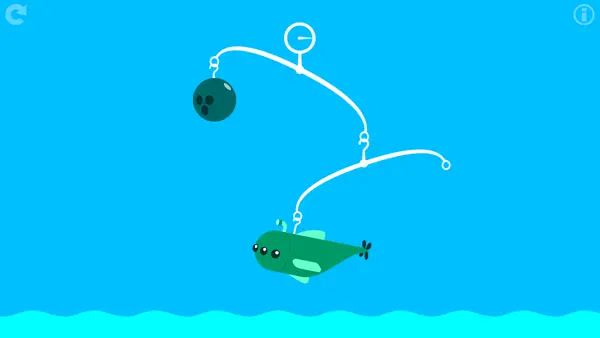
I usually have no patience for 'minimalist' games—most of the time it’s just an excuse for lack of effort. But Levers actually uses its simplicity to focus on a decent physics hook. There’s a genuine tension in placing that last piece, watching the whole structure wobble, and praying it holds. It’s quiet, it’s focused, and it doesn't try to sell me virtual currency every five minutes. That said, it’s a bit of a one-trick pony. Once you understand the weight distribution, the later levels feel like more of the same, just bigger. It lacks the 'aha!' moments of a truly great puzzler like Portal. It’s a good way to kill twenty minutes on a commute, but don’t expect it to change your life. It’s competent, which is more than I can say for 90% of the App Store.
Enigmo takes me back to the early days of the iPhone. It was revolutionary then, and it’s still 'fine' now. The core loop of placing a bumper and watching a droplet bounce is satisfying in a basic way. However, the 3D graphics haven't aged gracefully—they look like early PS1 tech. The difficulty curve is also all over the place; you'll breeze through five levels and then hit a brick wall that makes you want to throw your phone. It’s a classic, but the world has moved on to more elegant physics puzzles like Portal or The Witness.
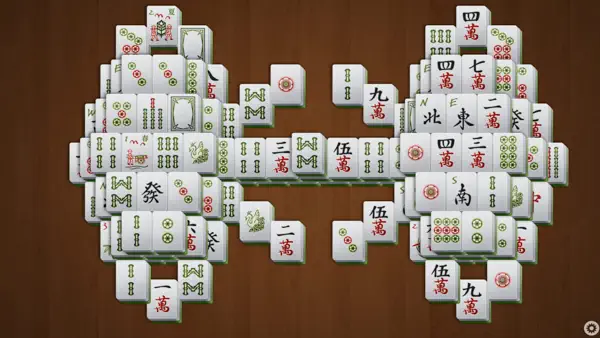
Look, it's Mahjong. We’ve been playing this on PCs since the 80s, and this version doesn't do much to justify its existence beyond portability. It’s competent enough—the tiles are legible and the touch controls don't fight you—but it lacks any sort of soul or modern flair. The variety of layouts is the only thing keeping it from being a total snooze-fest, though even those start to feel repetitive after an hour. It’s the kind of game you play while waiting for a flight because you have nothing better to do. It’s fine, but 'fine' doesn't get a high score in my book. If you're looking for innovation, keep walking; if you want a digital paperweight that occasionally lets you click tiles, here it is.
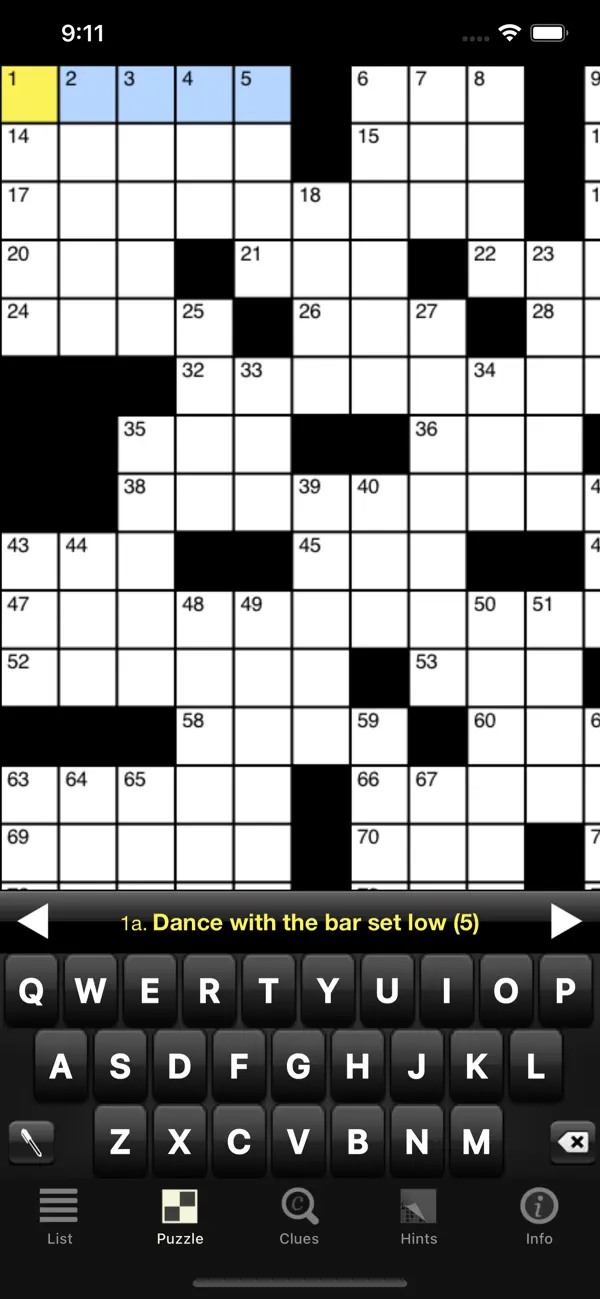
I've spent years with a pen and a newspaper, so I have a high bar for crosswords. This app manages to fit the content in, but it loses the tactile satisfaction of the real thing. The interface is utilitarian, which is better than being cluttered, but it feels sterile. The puzzle quality varies wildly depending on the source, and some of the clues are frankly nonsensical or dated. It does what it says on the tin, but I struggle to find the 'pro' in this 'classic' experience. It’s a decent way to kill time, but it won't replace a Sunday morning ritual for anyone who actually cares about the craft of puzzling. It's serviceable, but largely forgettable software.
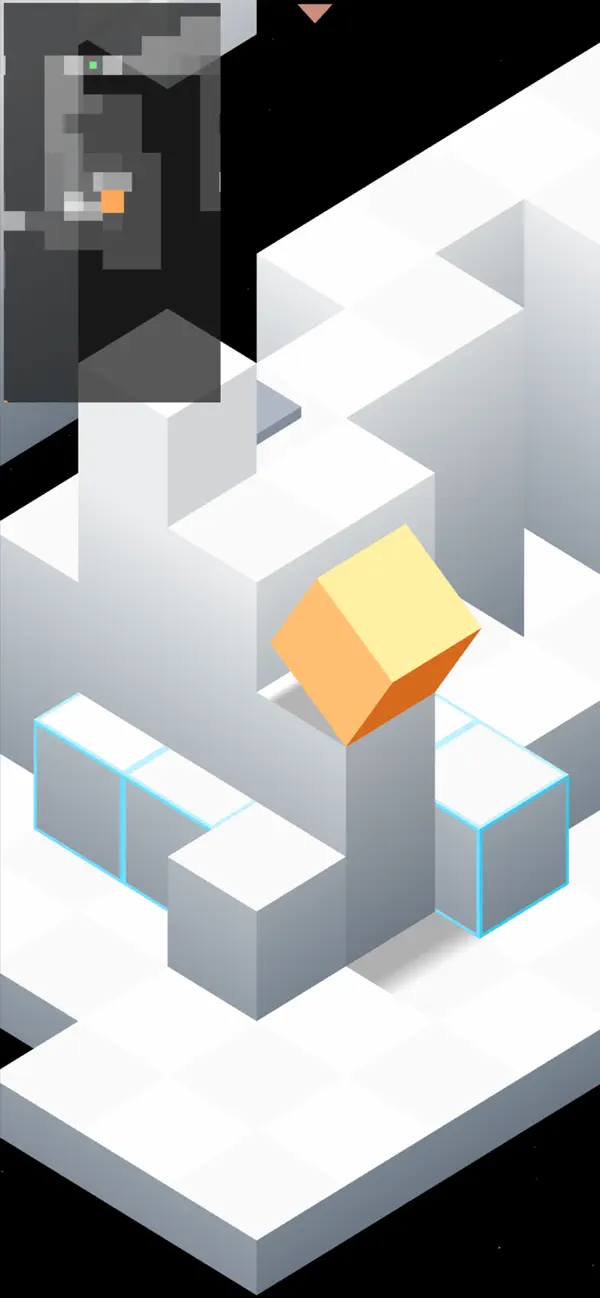
EDGE is a relic from a time when mobile games actually tried to be games rather than slot machines. Its brilliance lies in its simplicity. You're a cube. You roll. That's it. But the level design is so tight and the physics are so predictable that every failure feels like your own fault rather than a glitch in the system. The soundtrack is the real star here—a pulse-pounding electronic score that fits the 'cyber-industrial' aesthetic perfectly. My only real complaint is that the difficulty spikes can be frustrating, especially with touch controls that occasionally misinterpret a swipe. It hasn't changed much over the years, which is both its strength and its weakness. It’s a pure, unadulterated puzzle-platformer that doesn't feel the need to hold your hand.