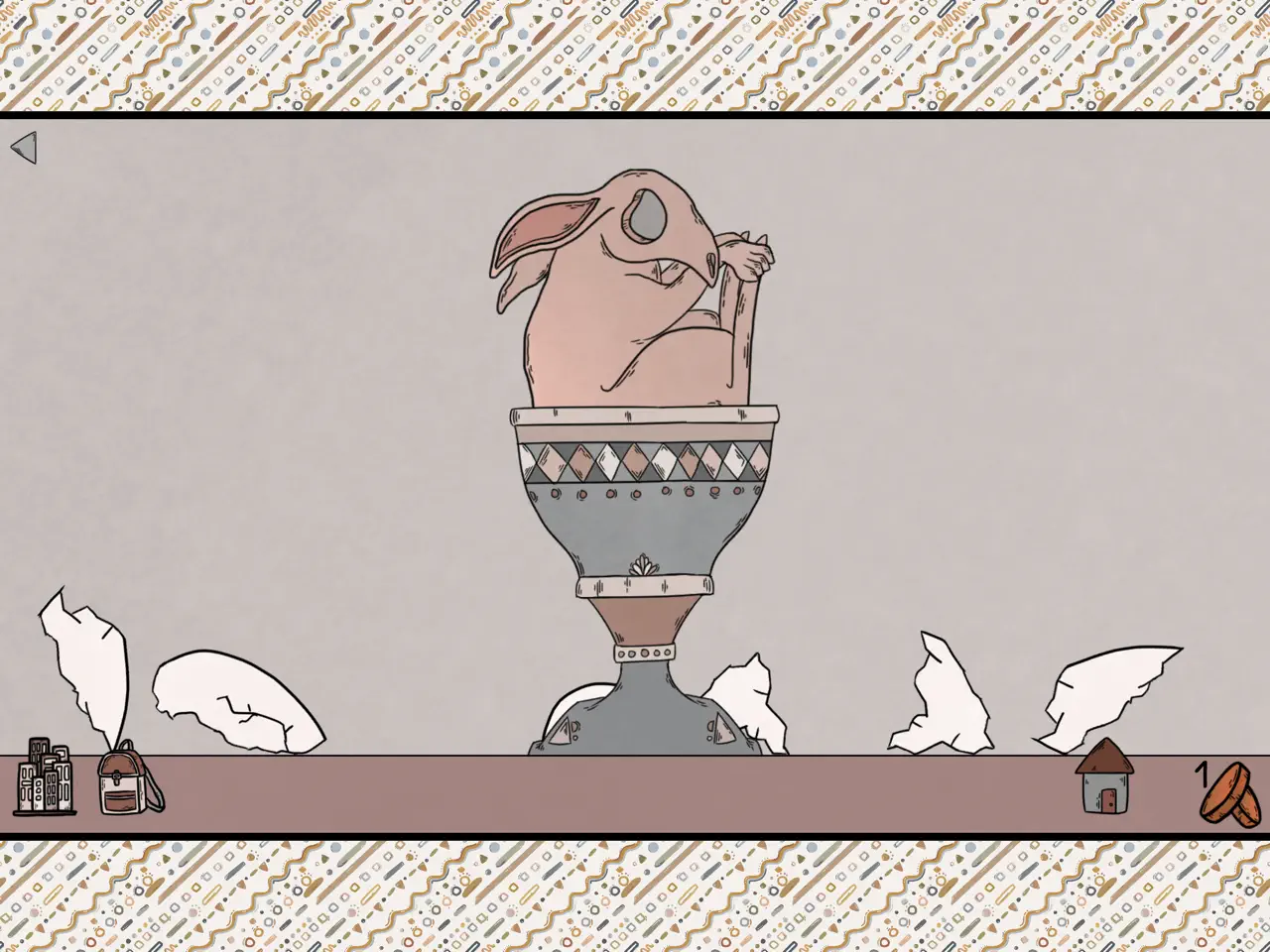
Birth is a rare masterpiece of visual storytelling that manages to be macabre, melancholy, and deeply heartwarming all at once. The premise—wandering a surreal city to collect biological parts for a companion—could easily have been a horror game, but instead, it feels like a soft, quiet embrace. Every screen is a hand-drawn work of art, filled with tiny, clickable details that make the world feel lived-in and breathing, even when you're looking at a jar of teeth.
The puzzles are tactile and grounded in physics, never feeling unfair but often requiring a 'sideways' way of thinking that perfectly matches the game's dreamlike logic. There’s a profound sense of satisfaction in assembling your friend, piece by piece, as you explore the vignettes of other lonely creatures in the city. It’s a short experience, but one that lingers in your mind long after the final bone is placed. It is, quite simply, one of the most beautiful indie games available on the App Store.
I don't usually care for the 'artsy' stuff, but Birth has a genuine identity. The hand-drawn aesthetic is unsettling in a way that feels intentional rather than cheap. The puzzles aren't overly difficult, but they require a level of observation that most mobile games have long abandoned for hand-holding tutorials. It’s too short, and some might find the subject matter a bit off-putting, but it's a solid piece of work for those who want a quiet evening of puzzling.
Performance: Flawless performance; the art scales beautifully on high-res screens.
Buy if: You appreciate hand-drawn art and moody, contemplative puzzles.
Skip if: You want high-octane action or an upbeat story.
Available on: Mac, iPhone, iPad, iPod
Version 1.0Mon Nov 23 2026
Requires iOS 13.0 or later. Compatible with iPhone, iPad, and iPod touch.Build a partner
You are alone. You will build a creature, a partner, a wet warm heart, a collection of bones.
Collect bones & organs in hand-drawn museums, coffee shops, alleys, flower shops, libraries, markets, bakeries and more.
Solve physics-based puzzles & interact with unique, interesting creatures.
Find & spend hidden tokens to discover secrets.


Birth is a unique, atmospheric puzzle game where you explore a bustling, surreal city. To soothe your loneliness, you must scavenge for parts—bones, hearts, and various trinkets—to construct a creature of your own. The game is filled with intricate physics-based puzzles and hidden interactions. Its art style is a blend of whimsical and macabre, creating a world that is both unsettling and deeply charming.
Beautiful hand-drawn art style
Unique physics-based puzzles
No dialogue; storytelling through visuals
Hidden secrets in every corner
Interact with every object. Often, the solution involves dragging items between unexpected NPCs or manipulating weird machines in the environment.
While it has macabre elements (bones and organs), it is a peaceful and touching experience.
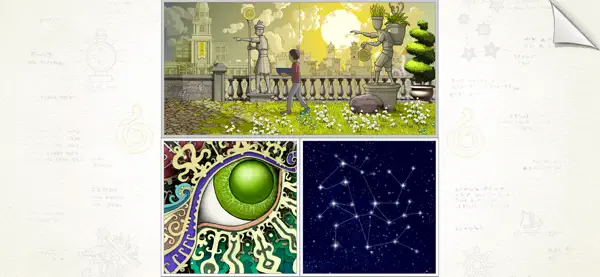
I don't often call games 'art,' but Gorogoa deserves the title. The way the panels interact—zooming in, sliding across, and layering over one another—is nothing short of magical. It requires a type of lateral thinking that most modern 'puzzlers' don't even attempt. Every frame is hand-drawn and meticulously detailed, making the act of discovery a genuine pleasure. However, I have to be the voice of reason here: it is incredibly short. I finished the entire experience in under two hours. For a premium-priced game, that’s a tough pill to swallow, no matter how beautiful the art is. There is zero replay value once you know the solutions. It’s a masterful experience while it lasts, but once the credits roll, you're left wishing there was ten times more content. It’s a high-quality product, but the value-to-playtime ratio is disappointing.
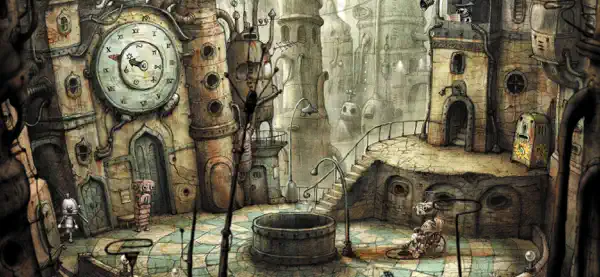
Now this is art. Machinarium is one of the few mobile games I’d call essential. The hand-drawn aesthetic is incredible—every screen feels like a painting. Amanita Design has a knack for world-building that most AAA studios would kill for. The puzzles are tough, and I mean *properly* tough. Some might find the lack of a traditional hint system (beyond the mini-game book) frustrating, but it forces you to actually engage with the world. My only minor complaint is that the 'hotspots' can be a bit pixel-hunty on a smaller phone screen. It’s better played on an iPad. It’s a somber, beautiful, and challenging experience that stands the test of time.
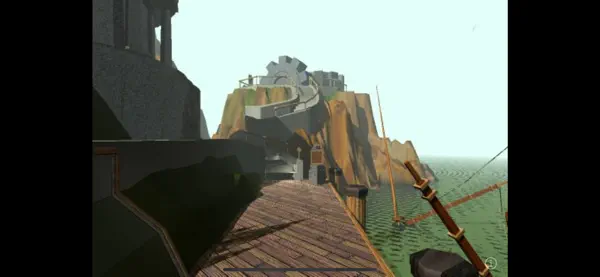
Myst is a game I respect more than I like. In 1993, it was a revelation. Today, on a tiny phone screen, it’s a bit of a nightmare. The puzzles are still brilliantly obtuse—they don't hold your hand, which I love—but the navigation is clunky. Tapping to move between static screens feels like peering through a straw. The 'Legacy' part is true; it’s the original game, warts and all. The lore is fantastic, and the sense of isolation is still unparalleled. But let’s be honest: without a guide, most modern players will give up in twenty minutes. It’s a slow, plodding experience that demands your full attention. I appreciate it for what it is, but it hasn't aged gracefully. It’s a museum piece you can play.
Look, I grew up with Don Bluth's animation, and there's no denying that Space Ace looks spectacular. Seeing these hand-drawn frames on a modern mobile screen is a treat for the eyes. But as a 'game,' it’s barely functional by modern standards. It’s a glorified memory test. You aren't playing; you're just reacting to prompts that appear for a split second. If you don't have the exact sequence memorized, you’re dead. There's no room for improvisation or actual skill beyond rote memorization. While this port is faithful and the video quality is crisp, the transition to touch controls makes the already unforgiving timing even more of a headache. It’s a piece of history, sure, but the novelty of 'interactive movies' wore off decades ago. If you want to appreciate the art, go watch a playthrough on YouTube. Paying to be punished by archaic trial-and-error mechanics feels like a step backward for anyone who appreciates actual gameplay depth.
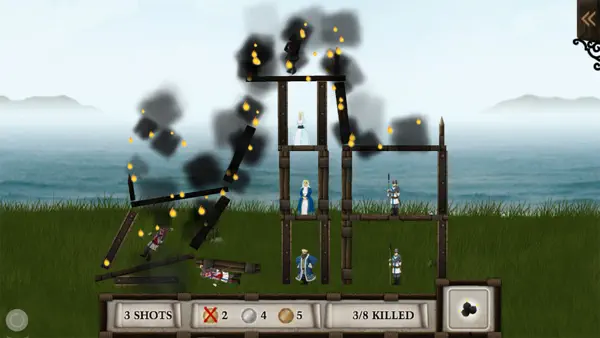
Back in the Flash days, this was the pinnacle of productivity-killing gameplay. Playing it now on mobile, I find myself frustrated by the lack of precision. It’s a simple loop: click once to swing, click again to release. If your timing is off by a millisecond, you’re hitting the dirt. There’s no arc trajectory helper here—you learn by failing. While I respect the purity of that, the physics can feel inconsistent, with heavy stones sometimes bouncing off wooden beams like they’re made of rubber. The progression is standard fare, and while the level editor adds some longevity, the core loop gets repetitive quickly. It lacks the polish and 'juice' of its successors. However, for those of us who remember a time before every game was designed to sell you power-ups, there's a certain stoic satisfaction in finally toppling a king with a well-timed rock. It’s functional, but it isn't going to win any awards for innovation in 2026.
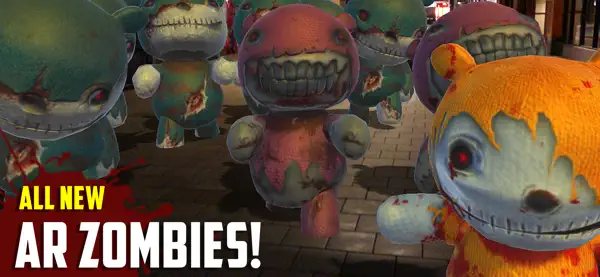
I'm too old to be waving my phone around in my living room like a madman. Battle Bears has always had a certain crude charm, but this AR version feels like a gimmick looking for a purpose. The tracking is jittery, and the novelty of seeing a teddy bear zombie on my coffee table wears off in about four minutes. After that, you're just left with a mediocre gallery shooter. The humor is clearly aimed at a younger crowd—lots of loud noises and 'wacky' designs. For a serious gamer, the depth just isn't there. You point, you tap, you repeat. It’s fine for a tech demo to show your friends what your new phone can do, but as a game? It’s shallow. Stick to the traditional versions if you must play Battle Bears.
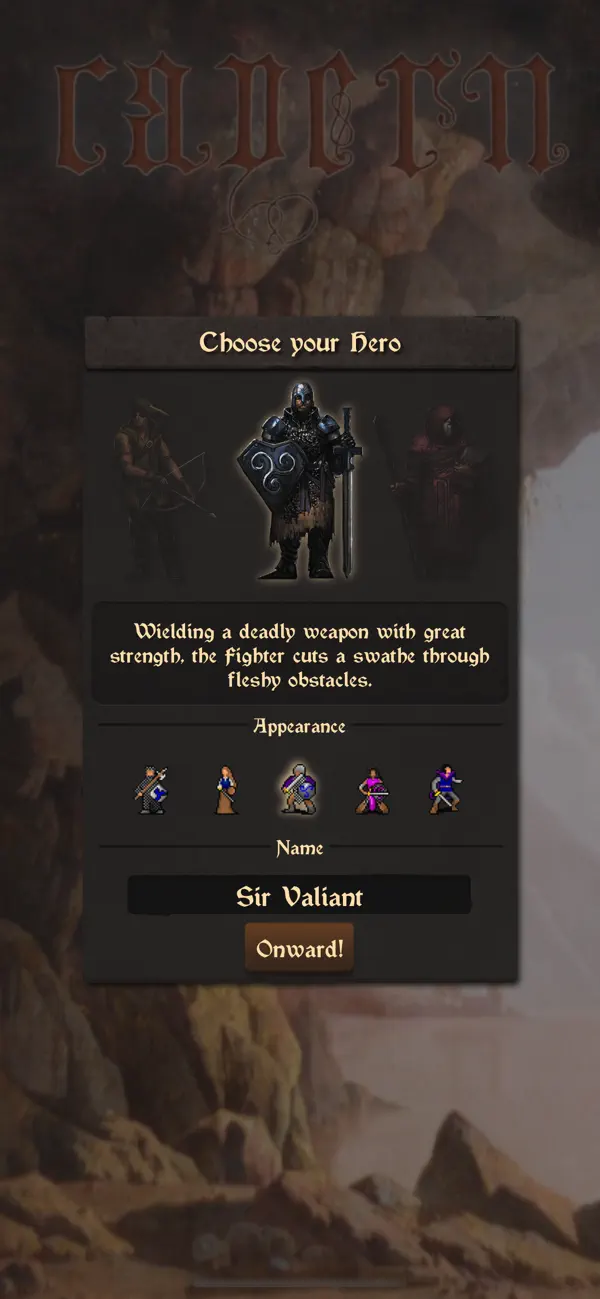
Look, I’ve been playing roguelikes since before most of these mobile developers were born, and Cavern is about as 'standard' as it gets. It understands the fundamental loop—move, hit, loot, die—but it doesn't do much to excite someone who has seen this a thousand times. The controls are serviceable for a touch screen, though I still prefer a physical keyboard for this kind of tactical movement. The procedural generation does its job, but the rooms start to look identical after about twenty minutes of play. What really grates on me is the lack of depth in the character progression. It feels like you're at the mercy of the RNG gods more than your own strategic foresight. If you find a good sword early, you're fine; if not, you're dead. That’s roguelike life, I suppose, but better titles in this genre provide more agency. It’s a decent enough distraction for a bus ride, but don't expect it to replace your desktop classics. It’s efficient, cold, and ultimately a bit hollow.
I’ll be honest: I have a soft spot for this one. It's essentially Pachinko with a fat cat, but the execution is flawless. The physics feel 'right'—the way the cat bounces off obstacles is predictable enough for strategy but chaotic enough to keep you on your toes. It’s one of those rare games where the visual style and the gameplay mechanics are in perfect harmony. It’s short, yes. You could probably finish the whole thing in an afternoon. But it’s an afternoon well spent. It doesn't try to be anything it isn't. It’s colorful, it’s funny, and there’s a genuine sense of satisfaction in watching that blue cat balloon up to massive proportions. My only real complaint is that it’s almost too easy for a veteran gamer. I would have liked more 'expert' levels that really tested my understanding of the physics. But for what it is, it’s a classic of the mobile era.